Dan Dan Noodles — Sichuan Spicy Noodles
Chengdu's famous street noodles: a slick, spicy-numbing sauce of chilli oil, Sichuan pepper, sesame paste and black vinegar pooled in the bottom of the bowl, topped with crisp stir-fried minced pork and savoury preserved mustard greens (ya cai). You toss it all together at the table — fiery, nutty, tingly and utterly addictive.
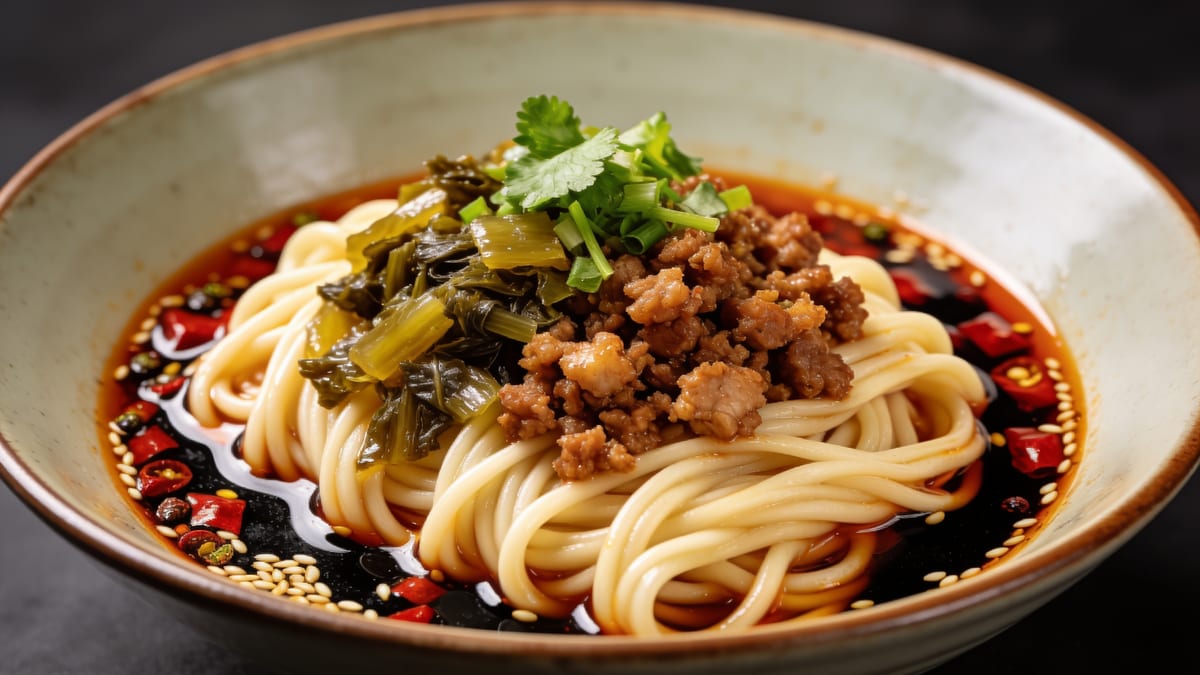
Build a sauce in each bowl from chilli oil with its sediment, Chinese sesame paste, soy sauce, black vinegar, a little sugar and ground toasted Sichuan pepper. Stir-fry minced pork with ya cai (preserved mustard greens) until dark and crisp. Boil noodles, lift them onto the sauce, top with the pork, and toss everything together before eating.
- Toast and grind your own Sichuan peppercorns for the true tingly 'ma' numbness.
- Ya cai (preserved mustard greens) gives the pork its signature savoury-funky depth — worth seeking out.
- The sauce sits in the bottom of the bowl; you toss it through the hot noodles at the table.
Equipment
- Wok or frying pan
- Pot for noodles
- Mortar and pestle (for Sichuan pepper)
วัตถุดิบ
Sauce (per bowl, divided)
- 30 ml Sichuan chilli oil, with sediment
- 15 g Chinese sesame paste, or tahini
- 20 ml light soy sauce
- 10 ml Chinkiang black vinegar
- 1 tsp sugar
- ½ tsp ground toasted Sichuan pepper
- 1 clove garlic, grated
Pork topping
- 200 g minced pork
- 40 g ya cai (preserved mustard greens), or sui mi ya cai
- 10 ml dark soy sauce
- 10 ml Shaoxing wine
- Neutral oil, for frying
To serve
- 200 g fresh thin wheat noodles
- 2 spring onions, sliced
- Toasted peanuts, crushed (optional)
วิธีทำ
- ขั้น01
Divide the chilli oil, sesame paste, soy, black vinegar, sugar, ground Sichuan pepper and garlic between two deep bowls and stir each into a loose paste.
- ขั้น02
Stir-fry the minced pork in a little oil over high heat, breaking it up, until dry and starting to crisp. Add the ya cai, dark soy and Shaoxing wine and fry until the pork is dark, fragrant and crisp.
- ขั้น03
Cook the noodles in boiling water until just tender. Scoop out a little noodle water first.
- ขั้น04
Loosen each bowl of sauce with a splash of hot noodle water. Lift the drained noodles onto the sauce, then spoon the crisp pork on top.
- ขั้น05
Scatter with spring onion and crushed peanuts. Toss everything together thoroughly from the bottom of the bowl just before eating, so every strand is coated in the spicy, numbing, nutty sauce.
Make ahead
Make the crisp pork-and-ya-cai topping ahead (it keeps and reheats beautifully) and pre-mix the chilli oil. Then it's a 5-minute assembly once the noodles boil.
Storage
Best assembled and eaten immediately. The pork topping keeps 3 days refrigerated and reheats well — make extra. Keep sauce components, pork and noodles separate and combine fresh.
Variations
Soupy dan dan
Loosen the sauce with more hot stock for a brothy version, common outside Sichuan.
Extra mala
Add more chilli oil and Sichuan pepper for serious heat and numbness.
Vegetarian
Replace the pork with crisp-fried minced mushrooms or crumbled firm tofu cooked with the ya cai.
Serve with
Nutrition per serving
Nutrition values are estimates based on the metric measurements. Adjust as needed.
คำถามพบบ่อย
What is the 'mala' flavour in dan dan noodles?
Mala (麻辣) means 'numbing-spicy' — the combination of fiery chilli heat (la) and the tingling, almost electric numbness (ma) from Sichuan peppercorns. Toasting and grinding fresh Sichuan pepper is what delivers that signature buzz.
What is ya cai and can I substitute it?
Ya cai is Sichuan preserved mustard greens — savoury, slightly funky and salty, and the traditional topping fried with the pork. Sui mi ya cai is the finely chopped version. If you can't find it, preserved/pickled mustard greens or zha cai are the closest substitutes.
Do dan dan noodles have soup?
Classic Chengdu street-style dan dan noodles are 'dry' — a small pool of intense sauce in the bottom of the bowl that you toss through the noodles, not a soup. A brothier version exists, but the original is concentrated and clinging.
What sesame paste should I use?
Chinese sesame paste (made from toasted sesame) is ideal for its deep, nutty flavour. Tahini works as a substitute but is milder and paler — add a touch more for body, and a drop of toasted sesame oil for aroma.
Which noodles are best?
Thin, fresh wheat noodles are traditional and cook in a couple of minutes. Dried thin wheat noodles work too. The key is a noodle slim enough to coat well in the thick sauce.
Cooked this? Rate it.
Real ratings from real cooks. We only show a score once enough of you have weighed in — no fabricated stars.