เต้าหู้หมาโผว
Numbing, hot, fragrant — má-là in technical balance. Silken tofu in a deep red gravy of doubanjiang, ground pork, and roasted Sichuan peppercorn. Twenty minutes from pantry to plate.
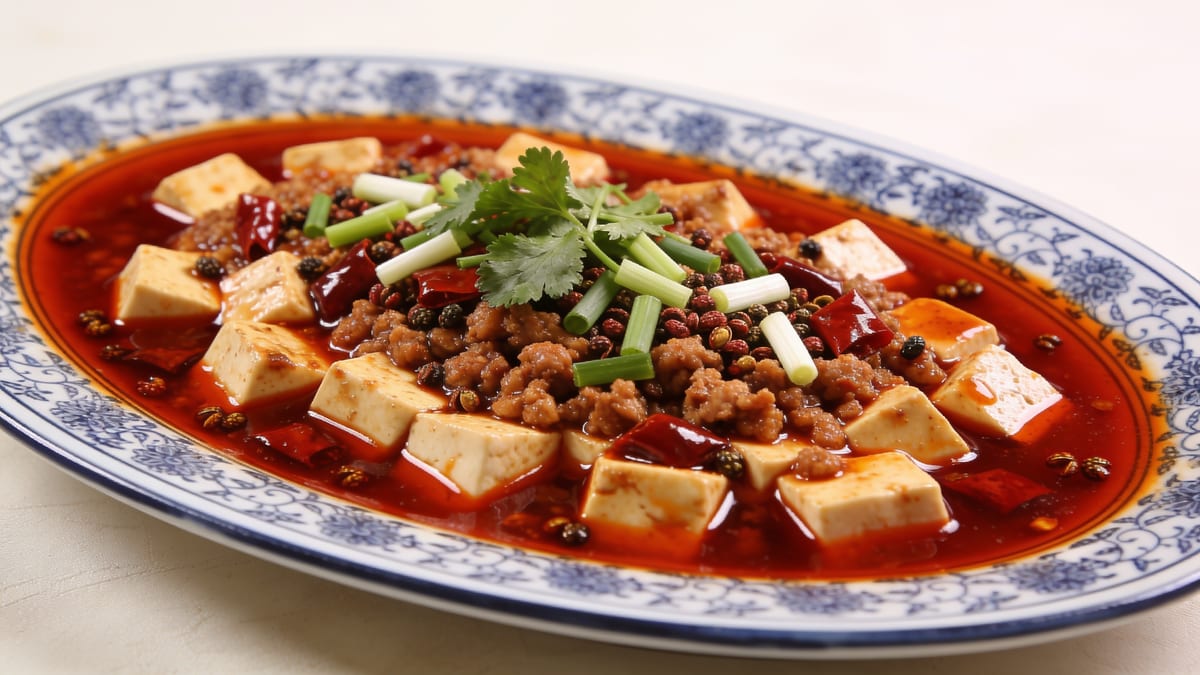
Brown ground pork in oil. Add Pixian doubanjiang and douchi, stir until aromatic and the oil reddens. Add stock, soy, sugar. Slide in cubed silken tofu, simmer gently 3 minutes. Thicken with cornstarch slurry in 2 stages. Finish with ground roasted Sichuan peppercorn and scallion green.
- Pixian doubanjiang (Sichuan chili-bean paste, aged) is the soul of the dish — no substitute.
- Roasted, then ground, Sichuan peppercorn at the very end keeps the má (numbing tingle) bright.
- Cornstarch slurry in TWO stages — first thickens, second binds. Looks deeply red and glossy.
Equipment
- Wok or wide sauté pan
- Spice grinder or mortar (for Sichuan peppercorn)
- Wok spatula
วัตถุดิบ
Pork base
- 20 ml neutral oil
- 120 g ground pork
- 30 g Pixian doubanjiang, finely chopped
- 10 g douchi (fermented black beans), rinsed and chopped
- 2 garlic cloves, finely chopped
- 1 thumb ginger, finely chopped
Gravy
- 300 ml chicken stock, or water
- 10 ml light soy sauce
- 5 g sugar
- 5 g Sichuan chili flakes (er jing tiao), optional for extra colour
- 500 g silken tofu, in 2 cm cubes, blanched 30 seconds in salted water
Thickener and finish
- 15 g cornstarch, whisked with 45 ml / 3 tbsp water
- 5 g whole Sichuan peppercorns, dry-roasted and ground
- 3 scallion greens, finely sliced
- 5 ml toasted sesame oil, optional
วิธีทำ
- ขั้น01
In a dry small pan, roast the Sichuan peppercorns over medium heat for 90 seconds, swirling, until fragrant and the husks are slightly darker. Grind to a fine powder. Set aside.
- ขั้น02
Bring a small pot of lightly salted water to a bare simmer. Slide in the cubed tofu and let it sit 30 seconds — it firms slightly and seasons gently. Drain carefully.
- ขั้น03
Heat the oil in the wok over medium-high. Add the pork, breaking it up into small bits. Cook until just barely no-longer-pink — about 2 minutes.
- ขั้น04
Push the pork to the side. Add the chopped doubanjiang and douchi to the cleared space. Stir 60 seconds in the oil until the oil turns deep red and smells fragrant — this is the most important step.
- ขั้น05
Add garlic and ginger. Stir 30 seconds until fragrant. Combine everything in the pan.
- ขั้น06
Pour in the stock, light soy, sugar, and (optional) chili flakes. Bring to a simmer.
- ขั้น07
Slide in the blanched tofu gently — don't break it up. Use the spatula to push the sauce around, not the tofu. Simmer 3 minutes for the flavours to penetrate.
- ขั้น08
Re-whisk the cornstarch slurry. Drizzle in HALF, swirling the pan gently. Cook 30 seconds to a glossy sheen. Drizzle in the remaining half, swirl, cook another 30 seconds. The sauce should coat a spoon thickly.
- ขั้น09
Off the heat. Scatter the ground roasted Sichuan peppercorn and the scallion greens over the top. Drizzle sesame oil. Tip into a deep bowl. Serve with hot rice — never on top of.
Make ahead
Roast and grind the Sichuan peppercorn up to 1 week ahead, stored airtight. Cook the dish à la minute.
Storage
2 days refrigerated. The texture of the tofu degrades after that. Reheat gently — high heat curdles the gravy.
Variations
Vegetarian mapo
Skip the pork. Use 80 g finely chopped fresh shiitake mushrooms in its place, sautéed in 2 tbsp oil until deeply browned. The savoury depth is genuine.
Beef mapo
Swap pork for ground beef. Slightly more robust, slightly less Sichuanese-classic. Use sparingly.
Mapo no spice (impossible mode)
Drop the doubanjiang to 1 tbsp, skip the chili flakes, halve the Sichuan peppercorn. It is no longer mapo tofu in the strict sense, but a kid-friendly braised tofu that retains some of the character.
Serve with
Nutrition per serving
Nutrition values are estimates based on the metric measurements. Adjust as needed.
คำถามพบบ่อย
Is there a substitute for doubanjiang?
No real substitute. Pixian doubanjiang is the legally protected, aged Sichuan version — you want it labelled '郫县豆瓣酱'. Korean gochujang has chili but no fermented bean depth. If you genuinely cannot get it, mix 2 tbsp red miso + 1 tbsp chili paste — it is a sad cousin.
What's the difference between má and là?
Má (麻) is the tongue-numbing tingle from Sichuan peppercorn — a citrus-tinged buzz. Là (辣) is the burn from chili. Mapo tofu is má-là — both, in balance. Without the peppercorn it's just spicy tofu.
Why blanch the tofu?
Light blanching seasons the tofu inside, removes the slight beany taste, and firms it just enough to survive the gravy without falling apart. Skip and the cubes break up.
Can I use firm tofu?
You can but the texture of mapo is meant to be silken — like wobbly custard set into the gravy. Firm tofu makes a perfectly nice dish but is not mapo.
Why two cornstarch additions?
First slurry thickens the body of the sauce. Second slurry binds the released water from the tofu so the gravy stays cohesive on the plate. Restaurants do this without thinking; it's the difference between glossy and watery.
Cooked this? Rate it.
Real ratings from real cooks. We only show a score once enough of you have weighed in — no fabricated stars.