Cá Kho Tộ — Vietnamese Caramelized Braised Fish
Vietnamese home cooking at its most soulful: chunks of firm fish braised in a clay pot in a glossy, savoury-sweet caramel (nước màu) with fish sauce, garlic, ginger and a hit of black pepper, until the sauce clings dark and sticky. Cá kho tộ is everyday comfort — deeply umami, a little sweet, a little smoky-bitter from the caramel — and best eaten with plain steamed rice and a simple bowl of soup to balance its bold, salty richness.
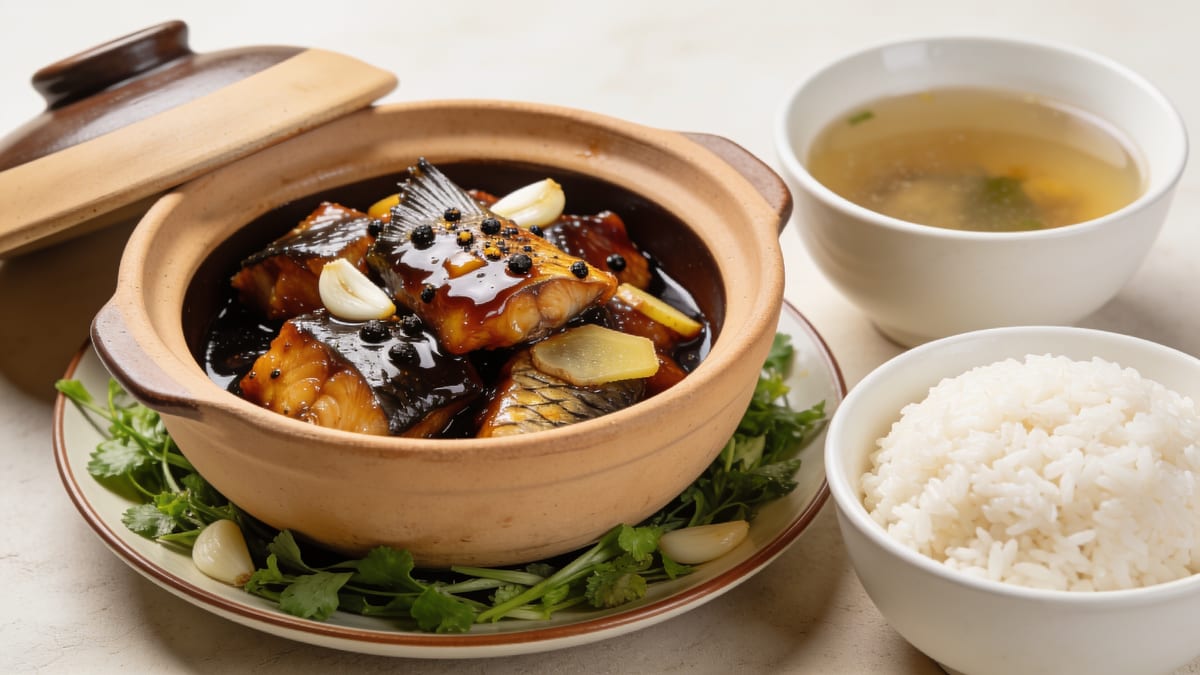
Make a caramel (nước màu) by melting sugar with a little water until it's a deep amber — stop just before it turns bitter and add a splash of water to loosen it. Marinate firm fish steaks (catfish, basa or mackerel) briefly in fish sauce, shallot, garlic and pepper. Layer the fish in a clay pot (or heavy pan), pour over the caramel and the marinade with a little water, and braise gently, basting and turning once, until the sauce reduces to a thick, dark, glossy glaze that clings to the fish. Finish with lots of cracked black pepper and chilli, and serve with steamed rice.
- The caramel (nước màu) is the soul — take it to deep amber but stop before it scorches bitter.
- Use firm fish steaks that hold together (catfish/basa, mackerel) and braise gently, basting.
- Reduce the sauce to a thick, dark, sticky glaze and finish with plenty of black pepper.
Equipment
- Clay pot (tộ) or heavy pan/pot
- Small pan (for caramel)
Malzemeler
Fish & marinade
- 600 g firm fish steaks (catfish/basa, or mackerel), in chunks
- 2 tbsp fish sauce; 2 shallots, 3 garlic cloves, minced
- 1 tsp grated ginger; black pepper
Caramel & braise
- 3 tbsp sugar (for the caramel, nước màu)
- 2 tbsp water (plus more to loosen)
- 1 tbsp fish sauce; splash water/coconut water for braising
To finish
- Cracked black pepper; sliced red chilli
- Spring onion; steamed rice, to serve
Yapılışı
- ADIM01
Toss the fish chunks with the fish sauce, minced shallot, garlic, ginger and pepper, and leave to marinate 15–20 minutes.
- ADIM02
In a small pan, melt the sugar with the water over medium heat, swirling (don't stir), until it turns a deep amber — watch closely and stop before it scorches and turns bitter. Carefully add a splash of water to loosen it (it will hiss).
- ADIM03
Arrange the marinated fish in a clay pot or heavy pan. Pour over the caramel, the marinade and a little water (or coconut water) to come partway up. Bring to a gentle simmer.
- ADIM04
Braise gently, partly covered, basting the fish and turning once carefully, until the sauce reduces to a thick, dark, glossy glaze that coats the fish, about 20–25 minutes. Don't let it dry out or catch.
- ADIM05
Finish with lots of cracked black pepper, sliced chilli and spring onion. Serve hot from the pot with plenty of plain steamed rice (and a light soup or boiled greens to balance the richness).
Make ahead
Genuinely better made ahead — like many kho (braised) dishes, the flavour deepens as it sits and the fish absorbs the sauce overnight. Make it a day before and reheat gently to serve. The caramel can also be made in a batch and kept in a jar for future kho dishes.
Storage
Keeps 3 days refrigerated and is even better the next day as the fish soaks up more of the caramel sauce — a classic Vietnamese 'tastes better reheated' dish. Reheat gently in a pan with a splash of water. The bold, salty-sweet glaze keeps well; serve with fresh rice.
Variations
Cá kho tộ (catfish)
The southern clay-pot classic with catfish; basa or other firm fish work too.
Thịt kho (pork & egg)
The same caramel-braise technique with pork belly and boiled eggs (thịt kho trứng) — a Tết staple.
With coconut water
Braise with coconut water for a rounder, subtly sweet southern-style sauce.
Serve with
Nutrition per serving
Nutrition values are estimates based on the metric measurements. Adjust as needed.
Sık sorulanlar
What is nước màu (caramel sauce)?
Nước màu (or nước hàng) is Vietnamese caramel sauce — sugar melted to a deep amber and loosened with water — used to give kho (braised) dishes their characteristic dark colour and savoury-sweet, faintly bitter depth. It's not dessert-sweet; the slight bitterness of well-made caramel balances the salty fish sauce. You can make a batch and keep it in a jar.
What fish is best for cá kho tộ?
Firm fish that holds together during braising — catfish and basa are the southern Vietnamese classics, but mackerel, salmon steaks, or other firm, slightly oily fish work well too. Use steaks or thick chunks (often bone-in for flavour) rather than delicate fillets that would fall apart in the sauce.
How do I make the caramel without it turning bitter?
Melt the sugar with a little water over medium heat and watch it closely — swirl the pan rather than stirring, and take it off the heat the moment it reaches a deep amber colour, just before it starts to smoke and darken to bitter. Then carefully add a splash of water (stand back, it spatters) to stop the cooking and loosen it. A touch of bitterness is good; burnt is not.
Do I need a clay pot (tộ)?
The clay pot (tộ) is traditional and retains heat well for a gentle, even braise — and it's part of the dish's identity (the name means 'fish braised in a clay pot'). But any heavy pot or pan works fine at home; the technique and flavour are the same. The key is a gentle braise that reduces the sauce to a sticky glaze.
Why does cá kho taste better the next day?
Like many Vietnamese kho (braised) dishes, cá kho tộ deepens in flavour as it rests — the fish continues to absorb the salty-sweet caramel sauce, and the flavours meld and mellow. Making it a day ahead and reheating gently is common practice, and many families think the second-day version is the best.
Cooked this? Rate it.
Real ratings from real cooks. We only show a score once enough of you have weighed in — no fabricated stars.