Focaccia — Italian Olive Oil Bread
Italy's golden olive-oil bread: a wet, slow-risen dough drenched in good olive oil, dimpled all over with your fingers, scattered with rosemary and flaky salt, and baked until crisp-bottomed and pillowy within. Forgiving, deeply satisfying and endlessly adaptable — proof that flour, water, salt, yeast and great oil can make something extraordinary.
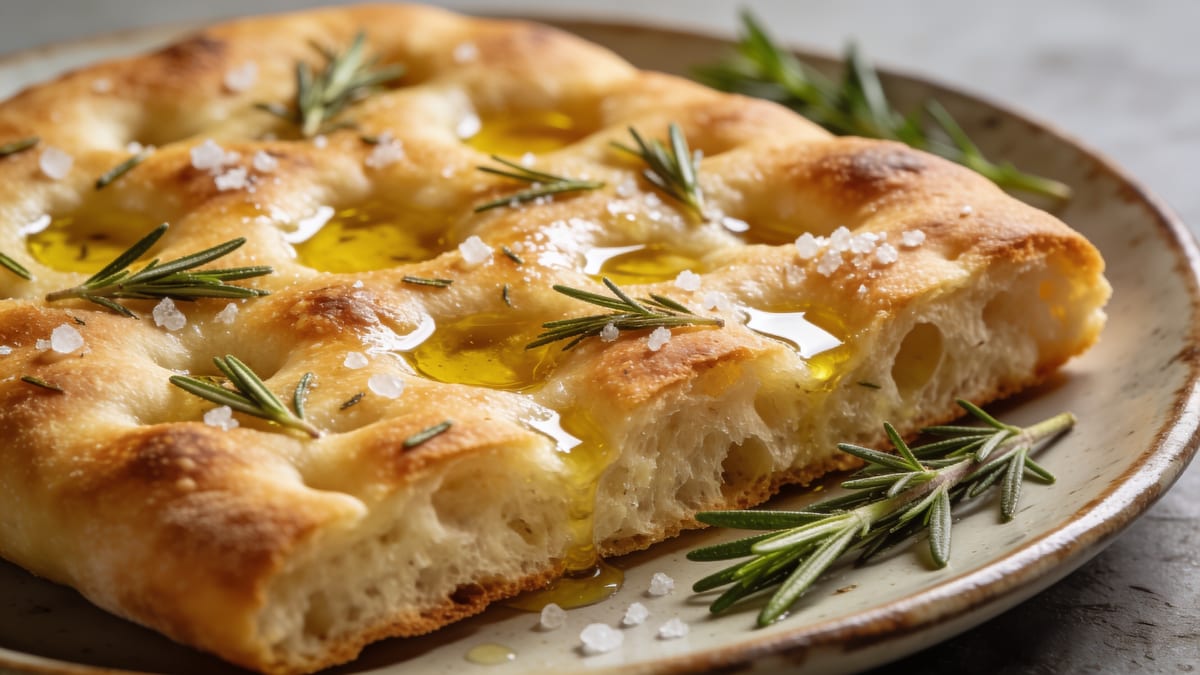
Mix a wet dough of strong flour, water, yeast, salt and olive oil — no kneading, just stir until shaggy. Let it rise slowly (a few hours at room temperature, or overnight in the fridge) until bubbly and doubled. Tip into a generously oiled tray, stretch to fill, and rest again. Drizzle with more olive oil, dimple all over with oiled fingers, scatter with rosemary and flaky salt, and bake hot until deep golden and crisp on the bottom.
- Keep the dough wet (high hydration) and don't knead — that open, airy crumb comes from water and time, not effort.
- Be generous with good olive oil, in the tray and on top — it fries the base crisp and golden.
- A long, slow rise (ideally overnight in the fridge) builds flavour and big bubbles.
Equipment
- Large bowl
- Rimmed baking tray (about 30×40 cm)
- Oven
Malzemeler
Dough
- 500 g strong white bread flour
- 400 ml lukewarm water
- 7 g instant yeast
- 10 g salt
- 30 ml olive oil, plus plenty more for the tray and top
Topping
- Extra virgin olive oil, generously
- Fresh rosemary; flaky sea salt
- Optional: cherry tomatoes, olives, thinly sliced onion
Yapılışı
- ADIM01
Stir the flour, yeast and salt together, add the water and olive oil, and mix to a wet, shaggy dough — no kneading. Cover.
- ADIM02
Let the dough rise until bubbly and at least doubled — 2–4 hours at warm room temperature, or (best) overnight in the fridge for more flavour. A few folds in the bowl early on help structure.
- ADIM03
Pour plenty of olive oil into the tray. Tip in the dough and gently stretch it towards the edges (let it relax and stretch again if it springs back). Rest 30–45 minutes until puffy.
- ADIM04
Drizzle generously with more olive oil, then press your oiled fingertips all the way down through the dough to make deep dimples all over. Scatter with rosemary, flaky salt and any toppings.
- ADIM05
Bake at 220°C/425°F until deep golden on top and crisp and golden on the bottom, 20–25 minutes. Lift out of the tray onto a rack so the base stays crisp. Eat warm.
Make ahead
The slow rise is the make-ahead step — mix the dough and let it rise overnight in the fridge, then pan, dimple and bake fresh the next day. Baked focaccia also freezes well.
Storage
Best the day it's baked, still slightly warm. Keeps 2 days at room temperature in a paper bag; refresh in a hot oven for a few minutes. Freezes well — slice and reheat from frozen. Day-old focaccia makes excellent sandwiches.
Variations
Focaccia genovese
Brush with a salty oil-and-water emulsion (salamoia) before baking for the classic Ligurian style.
Focaccia di Recco
A different, thin unleavened focaccia filled with soft cheese — a regional specialty.
Loaded toppings
Press in cherry tomatoes, olives, thinly sliced onion, or grapes (schiacciata) before baking.
Serve with
Nutrition per serving
Nutrition values are estimates based on the metric measurements. Adjust as needed.
Sık sorulanlar
Why is my focaccia dense, not airy?
Usually the dough was too dry, under-risen, or knocked back too much. Keep it wet (high hydration), give it a long, full rise until bubbly and at least doubled, and handle it gently when stretching and dimpling so you don't crush out the air. The big bubbles come from water and time.
Do I need to knead focaccia dough?
No — focaccia is a classic no-knead bread. A wet dough plus a long, slow rise (and a few gentle folds early on) develops the gluten and structure on its own. Just stir until combined, then let time do the work.
How much olive oil should I use?
Be generous — it's a defining feature. A good pour in the tray fries the base to a crisp, golden crust, and another drizzle on top before dimpling gives the characteristic rich, golden surface. Use a good extra virgin oil since you really taste it.
Can I do an overnight rise?
Yes, and it's recommended — a slow, cold rise overnight in the fridge develops far more flavour and a better open crumb than a quick warm rise. Bring it to the tray, let it come up and puff, then dimple and bake the next day.
Why dimple the dough?
Pressing deep dimples with oiled fingers stops the focaccia from doming, creates little wells that hold pools of olive oil (and toppings), and gives it its signature dappled look and varied texture — crisp edges around soft, oil-rich hollows.
Cooked this? Rate it.
Real ratings from real cooks. We only show a score once enough of you have weighed in — no fabricated stars.