Garlic Aioli
Garlic aioli is a silky, garlic-forward emulsified sauce from the French and Provençal tradition — think of it as a bolder, richer cousin of mayonnaise. Raw garlic pounded with salt gets whisked into egg yolks, then slowly beaten with oil until thick enough to hold a soft peak, with a bright hit of lemon to keep it from feeling heavy. Building the emulsion by hand and blending neutral oil with just a splash of olive oil gives you a glossy, spoonable aioli that clings to fries and seafood without turning bitter.
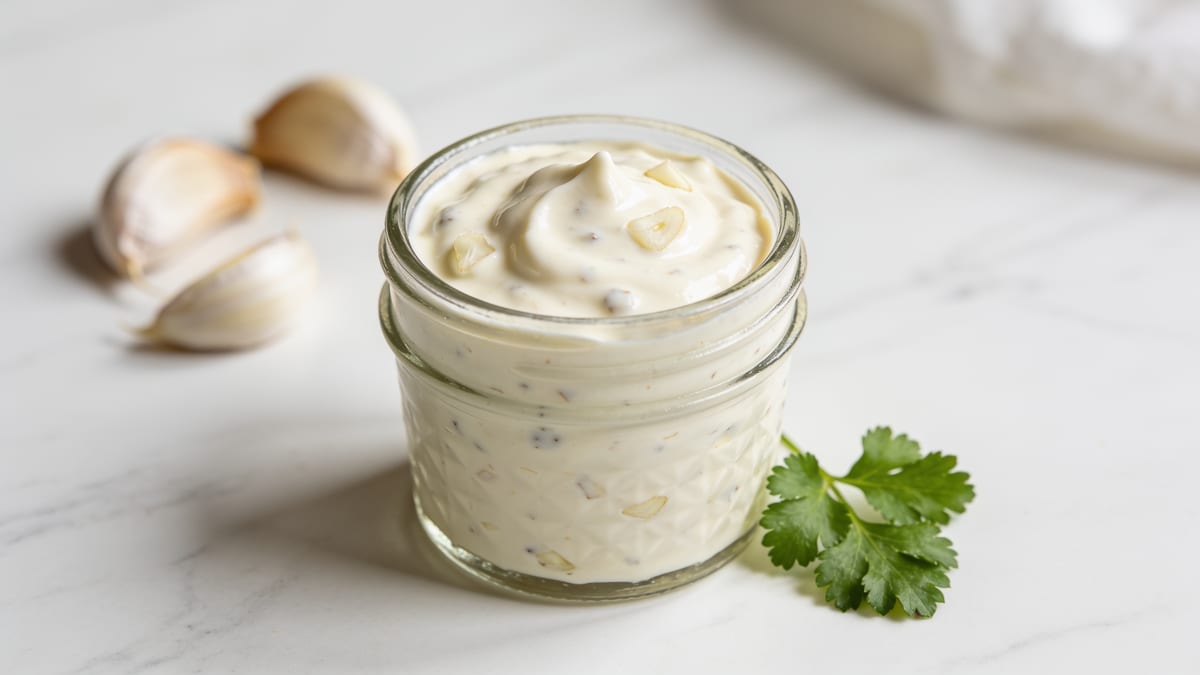
Smash 4 garlic cloves with 1/2 teaspoon fine salt into a smooth paste, then whisk it in a bowl with 2 egg yolks, 1 teaspoon Dijon, and half a tablespoon of lemon juice. Set the bowl on a damp towel so it can't spin and begin adding a blend of 3/4 cup neutral oil and 1/4 cup extra-virgin olive oil literally drop by drop, whisking constantly until the mixture visibly thickens and turns pale. Once the emulsion catches, pour the remaining oil in a slow, steady stream while whisking; finish with the rest of the lemon juice, a teaspoon or two of cold water to loosen, and salt to taste, then chill 30 minutes before serving.
- Bring the egg yolks, oil, and lemon to room temperature first — cold ingredients emulsify poorly and are the number-one cause of a broken aioli.
- Add the first third of the oil drop by drop; rushing here is what makes the sauce split. Only speed up once the base is visibly thick and pale.
- Use mostly neutral oil with just a splash of extra-virgin olive oil — whisking pure EVOO turns aioli unpleasantly bitter.
Equipment
- Mortar and pestle (or microplane grater)
- Medium mixing bowl
- Balloon whisk
- Measuring cups and spoons
- Rubber spatula
Malzemeler
Base
- garlic cloves, about 1 tbsp mashed
- 3 g fine sea salt, plus more to taste
- large egg yolks, room temperature, preferably pasteurized
- 5 g Dijon mustard, helps the emulsion
- 15 ml fresh lemon juice, divided
- 10 ml cold water, as needed, to loosen
Oils
- 180 ml neutral oil, grapeseed, canola, or sunflower
- 60 ml extra-virgin olive oil, use a mild, fruity one
Yapılışı
- ADIM01
Peel the garlic cloves and add them to a mortar with the fine sea salt. Pound to a smooth, wet paste — or grate the garlic on a microplane and mash it with the salt using the flat of a knife. The salt acts as an abrasive that breaks the garlic down evenly and tames its raw bite.
- ADIM02
Set a mixing bowl on a damp kitchen towel so it stays put while you whisk with both hands free. Add the egg yolks, garlic paste, Dijon mustard, and half of the lemon juice. Whisk until smooth and slightly lightened, about 30 seconds.
- ADIM03
Combine the neutral oil and olive oil in a measuring cup. Whisking constantly, add the oil just a few drops at a time, letting each addition fully disappear before adding more. After about a third of the oil is in, the mixture should look noticeably thick, glossy, and pale — that's the emulsion catching.
- ADIM04
Now that the emulsion is stable, pour the rest of the oil in a thin, steady stream while whisking continuously. Keep going until all the oil is incorporated and the aioli mounds softly on the whisk. If it gets stiffer than you'd like, whisk in a teaspoon of cold water to loosen.
- ADIM05
Whisk in the remaining lemon juice and taste. Adjust with more salt, a little extra lemon for brightness, or a teaspoon or two of cold water to reach a spoonable, dip-able consistency. It should taste boldly of garlic with a clean, tangy finish.
- ADIM06
Cover and refrigerate for at least 30 minutes to let the flavors meld and the texture firm up. Stir briefly before serving. Serve cool alongside fries, roasted vegetables, or seafood.
Make ahead
You can make garlic aioli up to a day ahead, and a 30-minute chill actually improves it as the flavors meld. Note that the raw garlic intensifies overnight, so a same-day batch tastes milder than a next-day one.
Storage
Keep refrigerated in an airtight container for up to 3 days. Do not freeze — the emulsion separates on thawing. Because it contains raw egg, don't leave it at room temperature for more than 2 hours.
Variations
Vegan aquafaba aioli
Swap the two egg yolks for 3 tablespoons of aquafaba (the liquid from a can of chickpeas). Blend the aquafaba with the garlic, mustard, and lemon, then stream in the oil with an immersion blender until thick. It's fully plant-based and holds an emulsion surprisingly well.
Roasted garlic aioli
For a sweet, mellow, spreadable version, roast a whole head of garlic wrapped in foil at 400°F (200°C) for about 40 minutes until soft, then squeeze out the cloves and mash them in place of the raw garlic. Ideal on burgers and sandwiches where raw garlic would overpower.
Smoky chipotle-lime aioli
Whisk in 1–2 teaspoons of minced chipotle in adobo plus a pinch of smoked paprika, and swap the lemon for lime juice. This smoky, spicy variation is perfect with sweet potato fries, tacos, and grilled corn.
Serve with
Nutrition per serving
Nutrition values are estimates based on the metric measurements. Adjust as needed.
Sık sorulanlar
How do I make garlic aioli that stays thick and doesn't break?
The secret to how to make garlic aioli that holds together is temperature and patience: start with room-temperature egg yolks and add the oil drop by drop until the base turns thick and pale before you stream in the rest. If it does break, whisk a fresh yolk (or a teaspoon of the broken sauce) in a clean bowl and slowly beat the split mixture back into it — it will re-emulsify.
Is aioli the same as garlic mayonnaise?
They're close relatives. Traditional Provençal aioli is just garlic and olive oil emulsified, sometimes with a yolk, while mayonnaise is egg yolk, neutral oil, and acid. This version splits the difference — egg yolk for stability plus plenty of garlic — so it's technically a garlic mayonnaise, but the pronounced garlic and olive-oil character is what earns it the name aioli.
Can I make garlic aioli with a blender or immersion blender?
Yes. Use one whole egg instead of two yolks, add all the ingredients and the oil to a tall, narrow cup, and lower an immersion blender to the bottom. Blitz without moving it for about 10 seconds until the base emulsifies, then slowly lift the blender. It's faster and nearly foolproof, though a touch less rich than the hand-whisked version.
Is the raw egg safe to eat?
The eggs are uncooked, so use the freshest eggs you can and keep the aioli refrigerated. For anyone pregnant, elderly, very young, or immunocompromised, use pasteurized eggs (in-shell or cartoned yolks) — they eliminate the salmonella risk without changing the texture.
How long does homemade garlic aioli keep?
Store it in an airtight container in the fridge for up to 3 days. The raw garlic actually grows sharper over the first day, so a batch made in the morning is punchier by dinner; if you prefer a mellower flavor, use roasted garlic. Don't leave it out at room temperature for more than 2 hours.
Cooked this? Rate it.
Real ratings from real cooks. We only show a score once enough of you have weighed in — no fabricated stars.