Schweinebraten — Bavarian Roast Pork with Crackling
Bavaria's beloved Sunday roast: a joint of pork (often shoulder) with a scored rind, roasted slowly with onions, carrots and caraway and basted with dark beer until the meat is tender and the skin crackles into glassy crackling (Kruste). The flavourful pan juices become a rich, dark gravy. Schweinebraten is the centrepiece of the beer garden and the family table, traditionally served with bread or potato dumplings (Knödel) and sauerkraut or a cabbage salad.
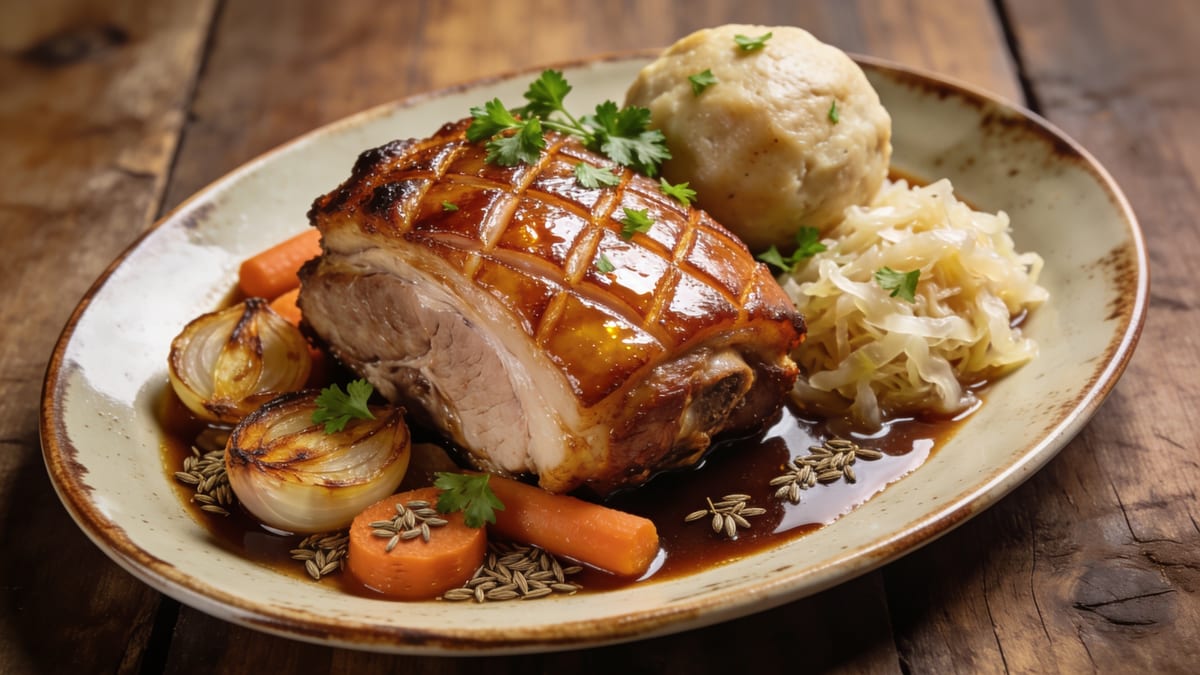
Score the pork rind in a crosshatch and rub the meat with salt, pepper and caraway. Roast it on a bed of onion, carrot and celery, meat-side down at first, then turn it rind-up and baste regularly with dark beer and the pan juices as it roasts low and slow until tender. Near the end, blast the heat (or brush the rind with salty beer) so the skin blisters into crackling. Rest the roast, then strain and thicken the pan juices into a dark gravy. Serve with potato or bread dumplings and sauerkraut.
- Score the rind and roast it rind-up at the end with high heat for proper glassy crackling (Kruste).
- Baste with dark beer and the pan juices throughout for flavour and a rich gravy.
- Roast low and slow for tender meat, rest it, then make the dark gravy from the strained pan juices.
Equipment
- Roasting tin
- Sharp knife (to score)
- Sieve (for gravy)
Malzemeler
Pork
- 1.5 kg pork shoulder (with rind)
- Salt, pepper, caraway seeds
Roasting base
- 2 onions, 2 carrots, 1 celery stalk, roughly chopped
- Garlic; 2 bay leaves
- 500 ml dark beer (dunkel), for basting
- Stock, as needed
To serve
- Potato or bread dumplings (Knödel/Semmelknödel)
- Sauerkraut or cabbage salad
Yapılışı
- ADIM01
Score the pork rind in a fine crosshatch (cut through the skin, not into the meat). Rub the meat all over with salt, pepper and caraway seeds.
- ADIM02
Scatter the chopped vegetables, garlic and bay in a roasting tin. Place the pork meat-side down on top, add a little beer/stock, and roast at 160°C/325°F to start the meat cooking and flavour the base, about 45 minutes.
- ADIM03
Turn the pork rind-side up. Continue roasting low and slow, basting regularly with the dark beer and pan juices, until the meat is tender, another 1–1.5 hours. Top up with beer/stock so the base doesn't dry.
- ADIM04
Raise the oven to its highest heat (or use the grill) for the last 15–20 minutes, brushing the rind with a little salty beer, until the skin blisters and crackles into deep golden Kruste — watch it doesn't burn.
- ADIM05
Rest the roast 15 minutes. Strain the pan juices (press the vegetables), skim the fat, and reduce/thicken into a rich dark gravy, adjusting with stock. Carve the pork (with shards of crackling) and serve with dumplings, sauerkraut and the gravy.
Make ahead
You can roast the pork and make the gravy a day ahead and reheat gently in the gravy — the flavour is great, though the crackling is best fresh (re-crisp it in a hot oven). For entertaining, roast ahead to the tender stage, then blast the crackling and warm through before serving. The dumplings and sauerkraut can be made ahead too.
Storage
Keeps 3 days refrigerated; the meat reheats well in the gravy (the crackling softens once stored — best eaten fresh). The gravy keeps and freezes well. Leftover roast pork is great in sandwiches or sliced cold. Reheat the meat gently in gravy or stock so it stays moist; re-crisp any rind in a hot oven if you can.
Variations
Schweinshaxe
The same flavours on a whole pork knuckle (hock) — the beer-hall classic with extra-crackly skin.
With dumplings
Serve with Semmelknödel (bread dumplings) or potato dumplings to soak up the gravy — the Bavarian way.
Beer choice
Use a Bavarian dunkel (dark lager) for the most authentic, malty gravy.
Serve with
Nutrition per serving
Nutrition values are estimates based on the metric measurements. Adjust as needed.
Sık sorulanlar
How do I get crackling (Kruste) on Schweinebraten?
Score the rind in a fine crosshatch (cutting the skin but not the meat), rub it with salt, and — crucially — finish the roast with a blast of very high heat (or under the grill) with the rind facing up, so the skin blisters and puffs into crisp crackling. Brushing the rind with a little salty beer or water before the high-heat blast helps. Dry skin crisps best, so don't keep the rind submerged in liquid.
What beer should I use?
A Bavarian dark lager (dunkel) is traditional and gives the gravy a lovely malty, slightly sweet depth, but any decent dark or amber beer works. You baste the roast with it and it forms the base of the gravy. If you'd rather not use beer, stock works for the braising, though the beer is part of the classic flavour. Avoid very hoppy, bitter beers, which can make the gravy bitter.
What cut of pork is best?
Pork shoulder (with the rind on) is the classic choice — it has enough fat and connective tissue to stay juicy and tender over a long roast, and the rind crackles beautifully. Pork neck or a whole knuckle (for Schweinshaxe) are also traditional. Make sure the rind is well scored. Leaner cuts like loin can dry out, so shoulder is the safe, flavourful pick.
What do you serve with Schweinebraten?
The Bavarian classics: potato dumplings or bread dumplings (Knödel / Semmelknödel) to soak up the dark gravy, and sauerkraut or a cabbage salad (Krautsalat) for tang and freshness. A rich beer gravy ties it together, and a cold Bavarian beer is the natural drink. It's hearty, festive Sunday-lunch and beer-garden food.
Can I make the gravy without thickening agents?
Yes — the roasting vegetables and the reduced pan juices naturally create a flavourful gravy. Strain and press the softened onions, carrots and celery (which add body), skim the excess fat, and reduce the liquid to concentrate it. If you want it thicker, you can whisk in a little flour or cornflour slurry, or a piece of dark bread (a traditional trick), but a good reduction of the beery pan juices is often rich enough on its own.
Cooked this? Rate it.
Real ratings from real cooks. We only show a score once enough of you have weighed in — no fabricated stars.