Tom Yum Goong — Thai Hot & Sour Shrimp Soup
Thailand's most famous soup: a fragrant, fiery, sour broth alive with lemongrass, galangal, kaffir lime leaf and chilli, studded with plump shrimp and mushrooms, balanced with fish sauce and lime. Tom yum goong walks the Thai tightrope of hot, sour, salty and a touch of sweet — clear-broth or creamy with a spoon of chilli paste and evaporated milk. Bright, aromatic and ready in 20 minutes.
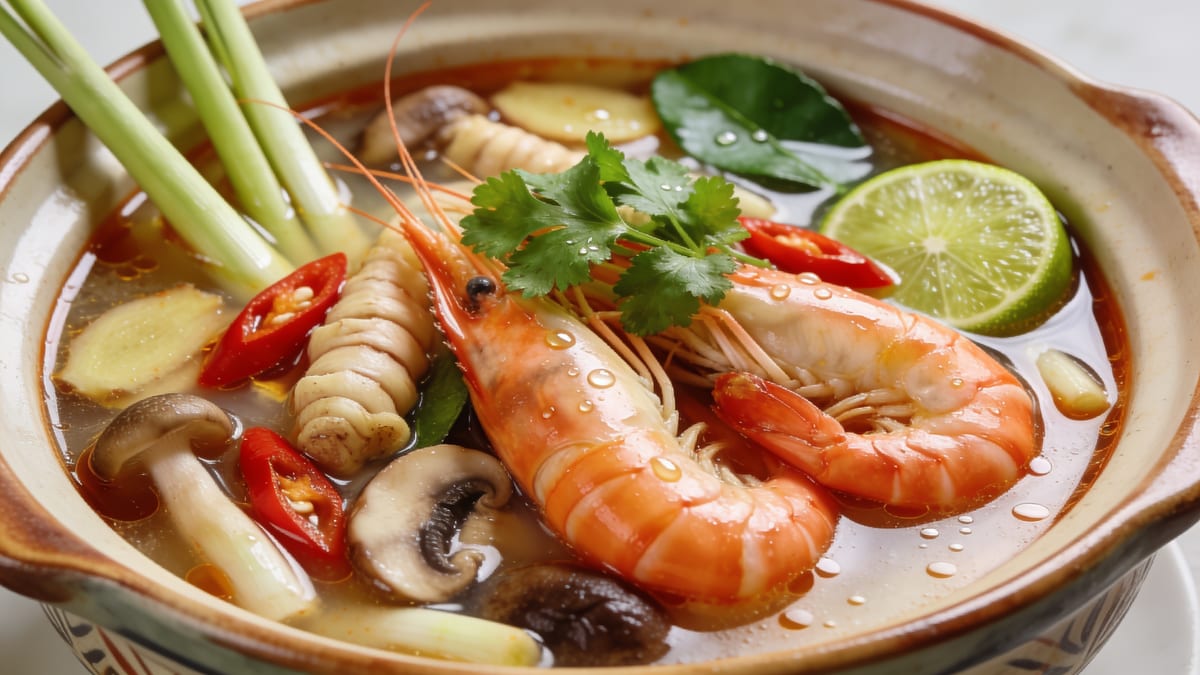
Bruise lemongrass, galangal and kaffir lime leaves and simmer them in stock (or shrimp-shell broth) for a few minutes to release their aroma. Add mushrooms, then the shrimp, and cook just until pink. Take off the heat and season with fish sauce, lime juice and crushed chillies (and a spoon of nam prik pao chilli paste for the creamy version). Taste and balance hot-sour-salty, scatter with cilantro, and serve hot. Don't boil hard once the lime goes in.
- The aromatics — lemongrass, galangal, kaffir lime leaf — are the soul; bruise them and don't substitute dried.
- Season off the heat with fish sauce and lime, and balance hot/sour/salty to taste at the end.
- For tom yum nam khon (creamy), stir in nam prik pao and a little evaporated milk; for nam sai, leave it clear.
Equipment
- Saucepan
- Knife (to bruise aromatics)
Malzemeler
Broth & aromatics
- 1.2 L chicken or shrimp stock (or water)
- 2 stalks lemongrass, bruised and cut
- 5 slices galangal; 4 kaffir lime leaves, torn
- 3–5 Thai chillies, crushed; 2 shallots, smashed
Soup
- 400 g shrimp (prawns), peeled, shells reserved
- 200 g mushrooms (straw or button), halved
- 2–3 tbsp fish sauce
- 3 tbsp lime juice (to taste)
Optional / finish
- 1–2 tbsp nam prik pao (roasted chilli paste)
- Splash of evaporated milk (for nam khon style)
- Cilantro; 1 tsp sugar to balance
Yapılışı
- ADIM01
Bring the stock to a simmer (simmer the reserved shrimp shells in it first for 10 minutes, then strain, for extra depth). Add the bruised lemongrass, galangal, lime leaves, shallots and chillies and simmer 3–5 minutes to release their fragrance.
- ADIM02
Add the mushrooms and (if using) the nam prik pao, and simmer until the mushrooms soften, a couple of minutes.
- ADIM03
Add the shrimp and cook just until they turn pink and curl, 2–3 minutes. Don't overcook them.
- ADIM04
Turn off the heat. Stir in the fish sauce and lime juice (and a splash of evaporated milk for the creamy style). Taste and balance — it should be sour, salty and hot, with just a hint of sweet.
- ADIM05
Scatter with cilantro and serve hot, with steamed jasmine rice alongside. The aromatics aren't eaten — push them aside.
Make ahead
Make the aromatic broth (with the shrimp-shell step) ahead and refrigerate or freeze. To serve, bring it back to a simmer, add mushrooms and fresh shrimp, and season with fish sauce and lime off the heat. Fast and fragrant on the night.
Storage
Best fresh, as the shrimp toughen on reheating. The aromatic broth keeps 3 days refrigerated and freezes well — make it ahead and add fresh shrimp when you reheat. Add the lime juice fresh each time rather than storing it in, as it dulls.
Variations
Tom yum nam khon (creamy)
Stir in nam prik pao and a splash of evaporated milk for the rich, cloudy version.
Tom yum nam sai (clear)
Skip the chilli paste and milk for the lighter, clear-broth original.
Tom yum gai / talay
Use chicken (gai) or mixed seafood (talay) instead of, or with, the shrimp.
Serve with
Nutrition per serving
Nutrition values are estimates based on the metric measurements. Adjust as needed.
Sık sorulanlar
What's the difference between clear and creamy tom yum?
Tom yum nam sai is the clear-broth original — just the aromatic, hot-sour broth with shrimp. Tom yum nam khon is the creamy, cloudy version made by stirring in nam prik pao (roasted chilli paste) and a splash of evaporated milk. Both are authentic; the creamy style is the one most often seen outside Thailand.
Can I use dried lemongrass and galangal?
Fresh is strongly preferred — the bright, citrusy, almost piney aromatics are the heart of tom yum, and dried versions are muted. Look for fresh or frozen lemongrass, galangal and kaffir lime leaves at Asian groceries. Galangal in particular tastes quite different from ginger; don't substitute ginger if you can avoid it.
Why is my tom yum bitter?
Usually from boiling the aromatics too hard or too long (especially kaffir lime leaves and galangal), or adding lime juice while it's boiling. Simmer the aromatics gently for just a few minutes, and always season with the lime off the heat. Over-reducing can also concentrate bitterness.
How do I balance the flavours?
Tom yum is about balancing hot (chilli), sour (lime), salty (fish sauce) and a touch of sweet. Season at the end and taste as you go: add fish sauce for salt, lime for sourness, chilli for heat, and a pinch of sugar to round it out. Adjust until it sings — it should be bold and bright.
Do you eat the lemongrass and galangal?
No — the bruised lemongrass, galangal slices and torn lime leaves are there to flavour the broth, not to be eaten. They're left in the bowl for looks and aroma; just push them aside as you eat. If you prefer, you can strain them out before serving.
Cooked this? Rate it.
Real ratings from real cooks. We only show a score once enough of you have weighed in — no fabricated stars.