Quiche Lorraine — French Bacon & Cream Tart
The classic from north-eastern France: a crisp shortcrust shell filled with a silky custard of egg, cream and smoky lardons, baked until just set and golden. Purists keep it cheese-free; many add Gruyère. Either way it's the benchmark savoury tart — glorious warm, room temperature, or packed for a picnic.
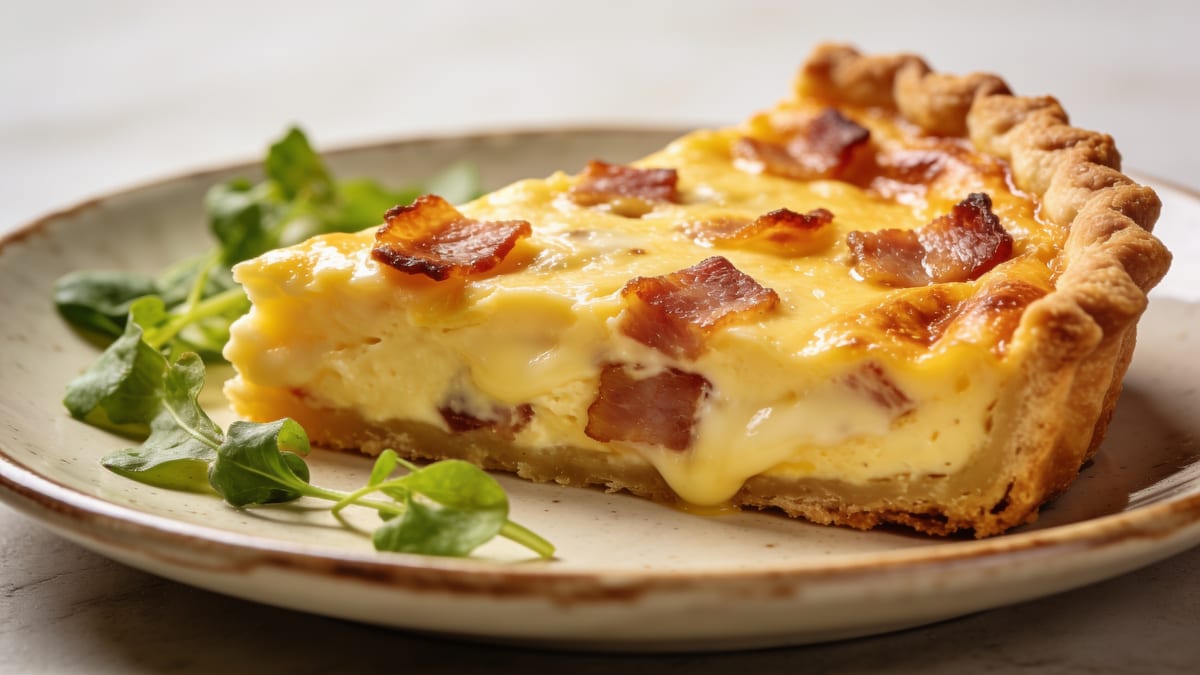
Line a tart tin with shortcrust pastry, chill, then blind-bake until the base is dry and pale gold. Fry smoked lardons until just coloured and scatter over the base (with grated Gruyère, if using). Whisk eggs, cream and a little milk with nutmeg, salt and pepper, pour into the shell, and bake at moderate heat until the custard is just set with a slight wobble. Rest before slicing.
- Blind-bake the shell first so the base stays crisp under the custard — no soggy bottom.
- Don't overbake: pull it while the centre still has a slight wobble; it sets as it cools.
- Traditional Lorraine has no cheese; Gruyère is a popular, non-purist addition.
Equipment
- 23 cm tart tin
- Baking beans
- Frying pan
- Whisk
Nguyên liệu
Pastry
- 200 g plain flour
- 100 g cold butter, cubed
- 1 egg yolk
- 2–3 tbsp ice water
- Pinch of salt
Filling
- 200 g smoked lardons or bacon, diced
- 3 eggs
- 200 ml double (heavy) cream
- 100 ml whole milk
- 80 g Gruyère, grated, optional
- Grated nutmeg, salt, white pepper
Cách làm
- BƯỚC01
Rub the butter into the flour and salt until sandy, then bind with the yolk and just enough ice water to form a dough. Flatten, wrap and chill 30 minutes.
- BƯỚC02
Roll out and line the tart tin, leaving a little overhang. Prick the base, line with paper and baking beans, and chill again while the oven heats to 190°C/375°F.
- BƯỚC03
Bake with the beans 15 minutes, then remove the paper and beans and bake 5–8 minutes more until the base is dry and pale gold. Trim the overhang.
- BƯỚC04
Fry the lardons until just coloured and scatter over the base with the Gruyère, if using. Whisk the eggs, cream, milk, nutmeg, salt and pepper and pour into the shell.
- BƯỚC05
Bake at 180°C/350°F for 25–30 minutes until puffed at the edges and just set with a slight wobble in the centre. Rest 10 minutes before slicing — it firms as it cools.
Make ahead
Make the pastry case (even blind-baked) a day ahead, or bake the whole quiche and reheat. It's a brilliant picnic and packed-lunch dish, good warm or cold.
Storage
Keeps 3 days refrigerated and freezes well (whole or in slices). Reheat in a moderate oven to re-crisp the pastry; it's also excellent at room temperature, which is how it's often served in France.
Variations
Quiche aux poireaux
Add softened leeks for a classic leek variation (or to stretch the bacon).
Vegetarian
Skip the lardons and fill with sautéed mushrooms, spinach or roasted vegetables, plus the Gruyère.
Crustless
Pour the filling into a buttered dish without pastry for a lighter, gluten-free 'quiche'.
Serve with
Nutrition per serving
Nutrition values are estimates based on the metric measurements. Adjust as needed.
Câu hỏi thường gặp
Does authentic quiche Lorraine have cheese?
Strictly, the traditional Lorraine is made only with eggs, cream and smoked lardons — no cheese. Adding Gruyère is extremely common and delicious, but purists consider a cheese-topped version a 'quiche vosgienne' or simply a variation.
Why blind-bake the pastry?
Blind-baking (pre-baking the empty shell with weights) sets and dries the base before the wet custard goes in, preventing a soggy bottom. It's the single most important step for a crisp quiche.
How do I know when the quiche is done?
The edges should be set and lightly puffed while the very centre still has a slight wobble. It continues cooking and firms up as it rests, so pulling it a touch early keeps the custard silky rather than rubbery.
Can I use milk instead of cream?
You can, but the custard will be lighter and less rich. The classic uses cream (often with a little milk) for that silky set. All milk works but tastes leaner; all cream is very rich.
Can I make quiche ahead and reheat?
Yes — it reheats beautifully in a moderate oven, which re-crisps the pastry. It's also traditionally served at room temperature, making it ideal for picnics, brunches and packed lunches.
Cooked this? Rate it.
Real ratings from real cooks. We only show a score once enough of you have weighed in — no fabricated stars.