波兰芝士蛋糕
Poland's beloved cheesecake — denser, less sweet and more delicate than the American kind, made with twaróg, the fresh Polish curd cheese, rather than cream cheese. Ground smooth and enriched with egg yolks, sugar and vanilla (and often lemon zest and raisins), the filling bakes on a buttery shortcrust base into a tender, slightly tangy, custardy cake. Sernik is a staple of Polish home baking and the holiday table — every grandmother has her version — and its clean, milky flavour sets it apart from heavier cheesecakes.
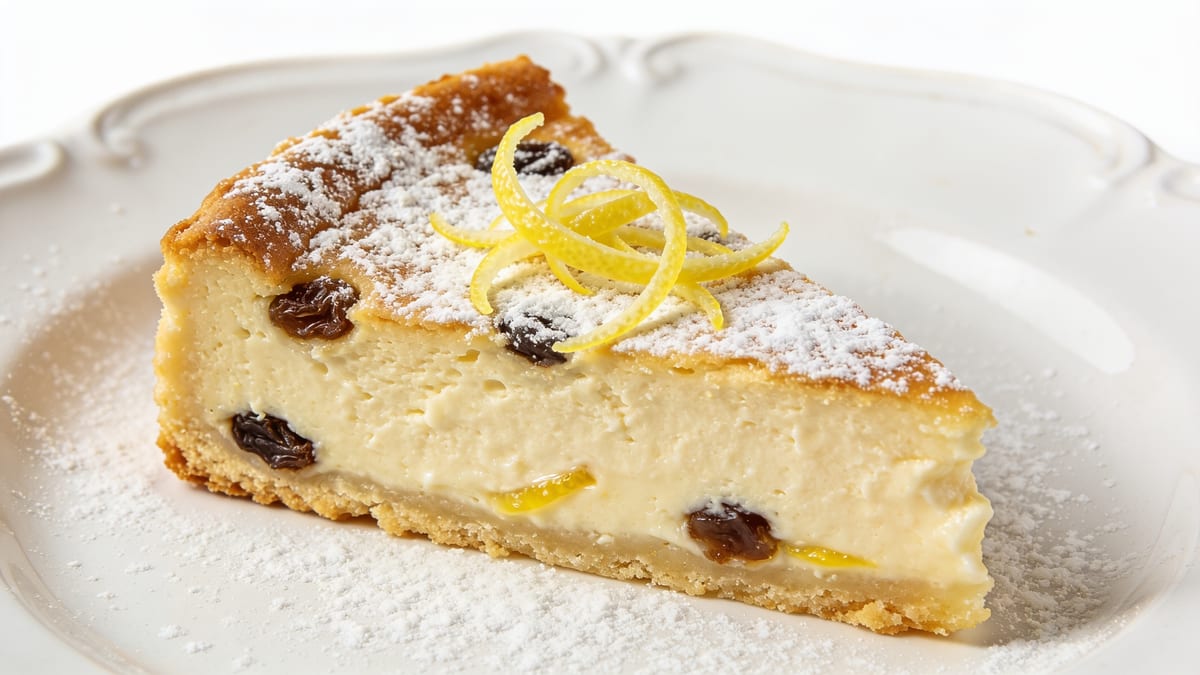
Use twaróg (Polish curd cheese), and grind or blend it very smooth — this is the key to a fine texture. Make a simple shortcrust base, press it into a lined tin and pre-bake it. Beat butter and sugar, add egg yolks one at a time, then beat in the smooth twaróg with vanilla, lemon zest and a little potato starch; fold in whipped egg whites for lightness. Pour over the base, scatter raisins if using, and bake low and slow until just set with a slight wobble. Cool it gradually (ideally in the turned-off oven) to stop it cracking and sinking, then chill before serving.
- Use twaróg and blend it really smooth — cream cheese gives a different, denser result; twaróg is what makes it sernik.
- Beat well and fold in whipped egg whites for a light, tender crumb.
- Bake low and slow and cool gradually (in the oven, door ajar) to prevent cracks and sinking.
Equipment
- 23cm springform tin
- Food processor or grinder
- Electric mixer
食材
Shortcrust base
- 200 g plain flour
- 100 g cold butter; 50 g sugar; 1 egg yolk
Filling
- 1 kg twaróg (Polish curd cheese), ground smooth
- 150 g sugar; 120 g soft butter
- 5 eggs, separated
- 1 tbsp potato starch; vanilla; lemon zest; raisins (optional)
步骤
- 步骤01
Rub the cold butter into the flour and sugar, mix in the yolk to a dough, press into a lined 23cm springform tin and chill briefly. Pre-bake at 180°C until pale golden, about 15 minutes.
- 步骤02
Grind or blend the twaróg until completely smooth and creamy — pass it through twice if needed. This step is what gives sernik its fine texture, so don't skip it.
- 步骤03
Beat the soft butter with the sugar until fluffy, then beat in the egg yolks one at a time. Add the smooth twaróg, potato starch, vanilla and lemon zest and beat to a smooth batter. In a clean bowl, whip the egg whites to soft peaks and gently fold them in for lightness.
- 步骤04
Pour the filling over the pre-baked base, smooth the top and scatter in raisins if using. Bake at 160°C until the cheesecake is just set with a slight wobble in the centre, about 60–70 minutes. Don't overbake.
- 步骤05
Turn off the oven, crack the door and let the sernik cool inside for an hour — this gradual cooling prevents cracks and sinking. Then cool fully and refrigerate several hours (ideally overnight) before releasing and slicing.
Make ahead
Sernik is a great make-ahead dessert — it needs to chill for several hours (ideally overnight) before slicing anyway, so making it a day ahead is ideal, and the flavour deepens. It also freezes well, making it handy for holidays when it's traditionally served. Bake it a day or two before, chill, and simply slice to serve.
Storage
Sernik keeps 4–5 days refrigerated, covered, and the flavour and texture are arguably best on day two. Bring slices to cool room temperature before eating for the fullest flavour. It freezes well — freeze whole or in slices, wrapped, and thaw in the fridge. Because it's a baked custard cheesecake, keep it chilled rather than at room temperature for long.
Variations
Sernik krakowski
The Kraków style, topped with a lattice of shortcrust pastry over the cheese filling.
Cold / no-bake
'Sernik na zimno' is a set, no-bake version with gelatine — lighter and summery, a different texture.
Chocolate or fruit
Add cocoa for a marbled sernik, or top with fruit or a crumble; raisins soaked in rum are traditional.
Serve with
Nutrition per serving
Nutrition values are estimates based on the metric measurements. Adjust as needed.
常见问题
What is sernik?
Sernik is the traditional Polish cheesecake, made with twaróg — a fresh white curd cheese — rather than the cream cheese used in American cheesecake. It's baked (most classically) on a shortcrust base into a dense yet tender, lightly tangy, not-too-sweet cake, often flavoured with vanilla, lemon zest and raisins. It's one of Poland's most beloved cakes, a fixture of home baking and holidays like Easter and Christmas, with countless regional and family versions.
Can I make sernik without twaróg?
Twaróg is what gives sernik its characteristic milky, slightly tangy flavour and delicate texture, so it's worth seeking out at Polish or Eastern European shops (sometimes sold as 'farmer's cheese' or 'curd cheese'). If you can't find it, you can approximate it by blending well-drained ricotta or full-fat cottage cheese until smooth, or mixing those with some cream cheese — but the result will be a little different from authentic sernik. Whatever you use, blend it very smooth.
Why did my sernik crack or sink?
Cracking and sinking are usually caused by baking too hot or cooling too fast. Bake low and slow (around 160°C) until just set with a slight wobble — overbaking dries it and makes it crack. Then cool it gradually: turn off the oven, crack the door, and let it come down slowly before chilling, rather than moving it straight into cold air. Folding in whipped egg whites also makes it lighter but more delicate, so gentle cooling matters.
How is sernik different from New York cheesecake?
The main difference is the cheese: sernik uses twaróg (fresh curd cheese), while New York cheesecake uses cream cheese, which makes the American version much richer, denser and more lush. Sernik is lighter, milkier, less sweet and a touch tangy, often with a shortcrust (rather than biscuit) base and raisins or lemon. Both are baked, but they taste and feel quite distinct — sernik is more delicate and homey.
Do I have to add raisins?
No — raisins are traditional in many Polish family recipes (often soaked in a little rum or hot water first so they plump and don't sink), but plenty of people leave them out or aren't keen on them. The cheesecake is delicious either way. You can also swap in lemon or orange zest, a marbling of cocoa, or top it with fruit. Sernik is very adaptable, which is why nearly every Polish household has its own version.
Cooked this? Rate it.
Real ratings from real cooks. We only show a score once enough of you have weighed in — no fabricated stars.