Cao Lầu — Hoi An Pork & Noodle Bowl
The singular noodle dish of Hoi An, found almost nowhere else: thick, chewy, faintly smoky noodles — traditionally made with water from a particular ancient well and ash lye, giving them their unique bite and tawny colour — topped with slices of five-spice marinated char siu-style pork, fresh herbs and bean sprouts, crunchy croutons of fried noodle, and just a little intense broth pooled at the bottom. Cao lầu is dry-ish, not soupy, mixed together before eating — a study in texture and balance, with Chinese, Japanese and Vietnamese influences reflecting Hoi An's history as a trading port. It's one of Vietnam's most distinctive bowls.
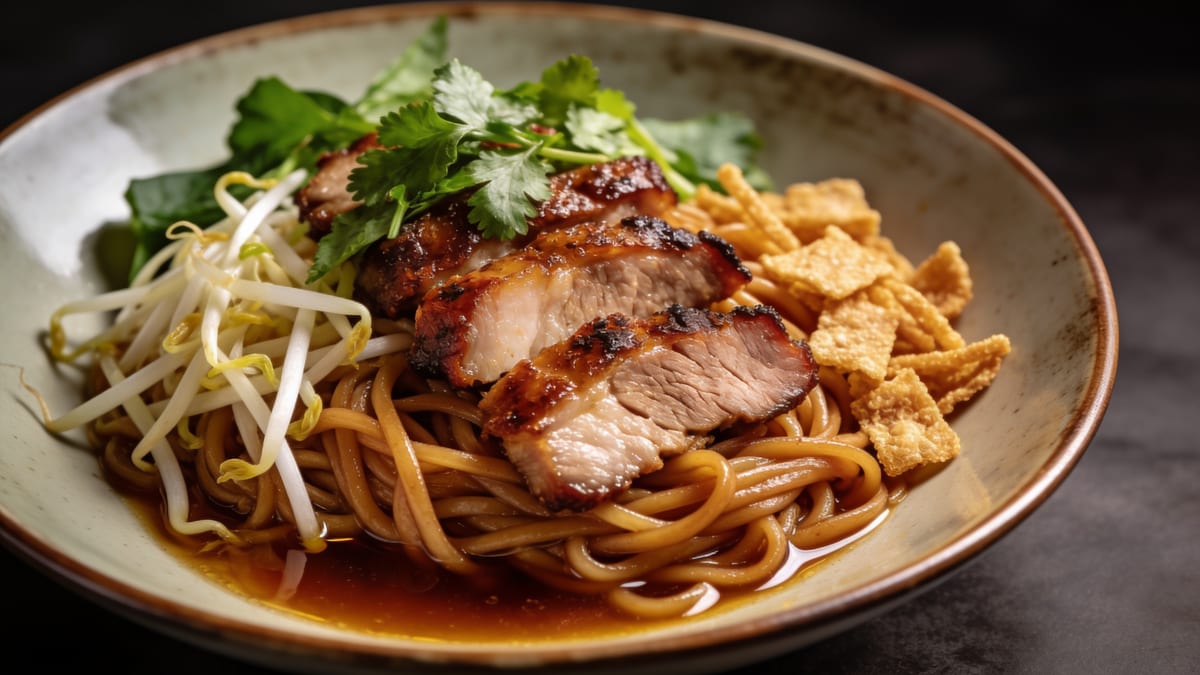
Marinate pork (shoulder or loin) with five-spice, garlic, soy and a little sugar, then roast or braise it char siu-style until tender and lacquered, and slice it. Make a small amount of intense, savoury pork broth seasoned with soy and five-spice — cao lầu has only a little broth, just enough to moisten, not a soup. Cook the thick cao lầu noodles (or substitute thick udon, which is the closest), and fry a few extra noodles or pieces of noodle dough until crisp for the signature crunchy croutons. Assemble each bowl: noodles topped with sliced pork, a small ladle of broth, lots of fresh herbs and bean sprouts, and the crispy noodle bits. Toss it all together at the table before eating — it's meant to be mixed, not slurped as a soup.
- Cao lầu is dry-ish, not a soup — use only a little intense broth, just enough to coat the noodles.
- True cao lầu noodles are unique to Hoi An; thick udon is the most practical substitute for the chewy texture.
- Don't skip the crispy fried-noodle croutons and the pile of fresh herbs — they make the dish's texture and freshness.
Equipment
- Roasting tin or pan (for pork)
- Pot (for noodles & broth)
- Small fryer (for croutons)
المكونات
Char siu-style pork
- 500 g pork shoulder or loin
- Five-spice, garlic, soy sauce, sugar, a little dark soy (marinade)
Bowl
- 400 g thick cao lầu noodles (or thick udon)
- A little intense pork broth (soy + five-spice)
- Bean sprouts; mint, Vietnamese herbs, lettuce
- Crispy fried noodle croutons; chilli, lime
الطريقة
- خطوة01
Marinate the pork with five-spice, garlic, soy, sugar and a little dark soy for colour, ideally a couple of hours. Roast or pan-braise it char siu-style until tender and glazed, basting, then rest and slice thinly. Keep any juices for the broth.
- خطوة02
Make a small amount of concentrated, savoury broth from the pork juices and a little stock, seasoned with soy and five-spice. Cao lầu uses only a little broth — just enough to moisten the noodles, not fill a soup bowl.
- خطوة03
Fry a handful of extra noodles (or squares of noodle dough) in hot oil until crisp and golden, for the signature crunchy topping. Drain.
- خطوة04
Cook the thick cao lầu noodles (or thick udon) until chewy-tender, drain well, and divide between bowls.
- خطوة05
Top the noodles with sliced pork, a small ladle of the intense broth, a generous pile of bean sprouts and fresh herbs, and the crispy noodle croutons. Add chilli and a squeeze of lime. Toss everything together before eating — cao lầu is mixed and eaten dry-ish, not slurped as a soup.
Make ahead
Cao lầu is well suited to making the components ahead: cook the char siu-style pork (it keeps several days and even slices better cold), make the concentrated broth, and fry the crispy noodle croutons in advance. Then assembly is quick — just cook the noodles fresh and build the bowls with herbs and sprouts. Keep everything separate until serving so the textures stay distinct, then toss each bowl together at the table.
Storage
Cao lầu is best assembled and eaten fresh, so the noodles stay chewy, the herbs vibrant and the croutons crunchy. The components store separately and that's the smart way to keep it: the cooked pork keeps 3 days refrigerated (and reheats or is sliced cold), the broth keeps several days or freezes, and the crispy croutons keep a day or two in an airtight container. Cook the noodles fresh and assemble at the last minute. Don't pre-mix bowls, as the noodles soften and croutons go soft.
Variations
Noodle substitute
Authentic cao lầu noodles are unique to Hoi An; thick udon (or even thick rice noodles) is the most common substitute elsewhere for the chewy texture.
Crouton style
The crispy bits can be fried noodle pieces or small crisp wonton/rice crackers.
More or less broth
Adjust the small amount of broth to taste, but keep it dry-ish — it's not pho.
Serve with
Nutrition per serving
Nutrition values are estimates based on the metric measurements. Adjust as needed.
الأسئلة الشائعة
What is cao lầu?
Cao lầu is a regional noodle dish unique to Hoi An, in central Vietnam, found almost nowhere else. It features thick, chewy, slightly smoky noodles topped with slices of five-spice char siu-style pork, fresh herbs, bean sprouts and crunchy fried-noodle croutons, with only a small amount of intense broth — it's a dry-ish bowl that you toss together, not a soup. Its blend of Chinese, Japanese and Vietnamese influences reflects Hoi An's history as an international trading port. It's one of Vietnam's most distinctive and beloved local specialities.
Why are cao lầu noodles special?
Authentic cao lầu noodles are famously made only in Hoi An, traditionally using water drawn from a specific ancient well (the Ba Le well) and lye ash from trees on the nearby Cham Islands, which give them their unique chewy, springy texture and pale tawny-grey colour. This is why true cao lầu is said to be impossible to replicate exactly elsewhere. Outside Hoi An, cooks use the closest available thick noodle — most often thick udon — to approximate the signature bite, since the real noodles are so local.
Is cao lầu a soup like pho?
No — that's a key thing to know. Unlike pho or many Vietnamese noodle soups, cao lầu is a dry-ish dish with only a small amount of concentrated, savoury broth pooled at the bottom — just enough to moisten and flavour the noodles, not to fill a soup bowl. You toss everything together before eating so the noodles, pork, herbs and crispy bits all coat in that little bit of broth. Think of it as a mixed noodle bowl rather than a noodle soup.
What can I use instead of real cao lầu noodles?
Since genuine cao lầu noodles are essentially impossible to get outside Hoi An, the most practical and common substitute is thick udon noodles, which have a similar chewy, springy texture. Some cooks use thick fresh rice noodles or even soba for colour. It won't be identical to the real thing — the authentic noodles are part of what makes cao lầu unique — but thick udon gives you the closest experience of the chewy noodle and lets you enjoy the dish's flavours and textures at home.
What are the crispy bits on top?
The crunchy croutons are a defining texture of cao lầu — small pieces of the noodle dough (or extra noodles) deep-fried until crisp and golden, scattered over the bowl. They add a contrasting crunch against the chewy noodles and tender pork. Some versions use crisp-fried wonton-like crackers. Along with the generous pile of fresh herbs and bean sprouts, these crispy bits are essential to the dish's signature interplay of textures, so don't leave them out.
Cooked this? Rate it.
Real ratings from real cooks. We only show a score once enough of you have weighed in — no fabricated stars.