Pot-au-feu — French Boiled Beef & Vegetables
قِدر فرنسا الكبير في الطبخ المنزلي: قطع من لحم البقر تُسلق بهدوء لساعات مع عظام النخاع وتشكيلة من خضار الحديقة — جزر وكراث ولفت وكرفس — حتى ينضج كل شيء وتحصل على مرق صافٍ عميق النكهة. البوت أو فو طبقان في قدر واحد: يُقدَّم المرق العطري أولًا مع خبز محمّص، ثم اللحم والخضار مع الملح الخشن والخردل والكورنيشون والنخاع على الخبز المحمّص. طبق ريفي مقتصد وفاخر بهدوء في آن.
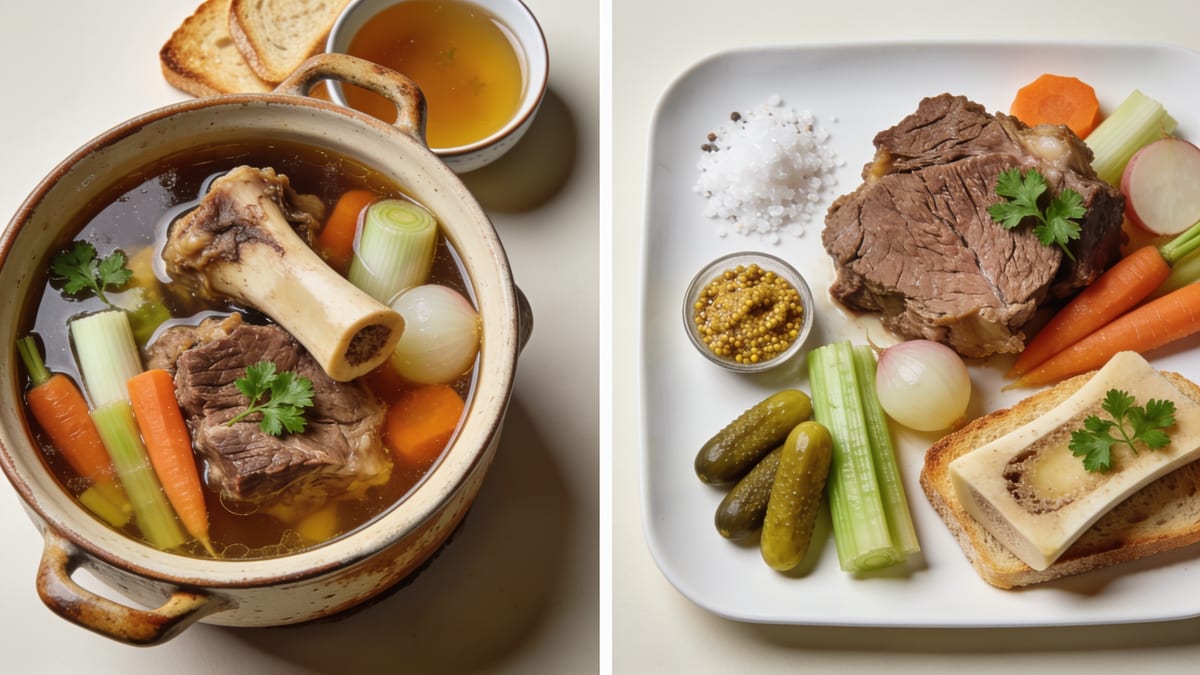
غطِّ تشكيلة من قطع لحم البقر (مزيج من الهبرة والغنية بالجيلاتين، إضافة إلى عظام النخاع) بماء بارد، وارفعها ببطء إلى غليان خفيف جدًا مع كشط الرغوة جيدًا. أضف المنكّهات — بصلة مغروسة بكبش القرنفل، وثومًا، وباقة أعشاب، وحبوب فلفل — واسلق بهدوء شديد لمدة 2.5–3 ساعات حتى يطرى اللحم. أضف الخضار (الجزر والكراث واللفت والكرفس، والبطاطس قرب النهاية) واتركها على نار هادئة حتى تنضج بالكاد. قدّم المرق المصفّى أولًا مع خبز محمّص، ثم شرائح اللحم والنخاع والخضار مع الملح الخشن وخردل ديجون والكورنيشون.
- استخدم مزيجًا من قطع لحم البقر (هبرة + غنية بالجيلاتين) وعظام النخاع لمرق غني وقوام متنوع.
- أبقِ الغليان خفيفًا جدًا واكشط الرغوة جيدًا لمرق صافٍ نقي — ولا تدعه يغلي بقوة أبدًا.
- قدّمه على طبقين: المرق أولًا، ثم اللحم والخضار مع الخردل والملح والكورنيشون.
Equipment
- قدر مرق كبير جدًا
- مغرفة لكشط الرغوة
- خيط مطبخ
المكونات
اللحم والمرق
- 1.5 kg قطع لحم بقر متنوعة (مثل الصدر والأضلاع القصيرة والموزة)
- 2 عظام نخاع
- 1 بصلة مغروسة بكبش القرنفل؛ ثوم؛ باقة أعشاب؛ حبوب فلفل؛ ملح
الخضار
- 4 جزرات؛ 3 عيدان كراث (مربوطة)؛ 3 حبات لفت
- 2 عود كرفس؛ بطاطس (تُضاف قرب النهاية)
للتقديم
- خبز باغيت محمّص (للنخاع والمرق)
- ملح خشن، خردل ديجون، كورنيشون (خيار مخلل صغير)
الطريقة
- خطوة01
ضع قطع اللحم وعظام النخاع في قدر كبير، وغطِّها بماء بارد، وارفعها ببطء إلى غليان خفيف جدًا. اكشط الرغوة جيدًا كلما ارتفعت — فهذا مفتاح المرق الصافي.
- خطوة02
أضف البصلة المغروسة بالقرنفل والثوم وباقة الأعشاب وحبوب الفلفل والملح. حافظ على أخف غليان ممكن (لا غليان قوي أبدًا) واسلق بهدوء لمدة 2½–3 ساعات حتى يطرى اللحم، مع إضافة الماء عند الحاجة.
- خطوة03
أضف الجزر والكراث المربوط واللفت والكرفس، واترك القدر على نار هادئة حتى تنضج الخضار، نحو 30 دقيقة؛ وأضف البطاطس في آخر 20 دقيقة (اطهُها على حدة إذا أردت مرقًا أكثر صفاءً).
- خطوة04
صفِّ المرق وتذوّقه. قدّمه طبقًا أول في أطباق عميقة مع خبز الباغيت المحمّص — وافرد النخاع الطري من العظام على الخبز المحمّص مع رشة ملح خشن.
- خطوة05
قطّع اللحم إلى شرائح ورتّبه مع الخضار على طبق تقديم دافئ مع ترطيبه بقليل من المرق. قدّمه ومعه الملح الخشن وخردل ديجون والكورنيشون على الجانب.
Make ahead
مثالي للتحضير المسبق — فالمرق أفضل في اليوم التالي، والتبريد يتيح لك رفع الدهن للحصول على مرق أنقى. اطبخه قبل يوم، ثم سخّن اللحم والخضار بلطف في المرق عند التقديم. أما أطباق البقايا الكلاسيكية (سلطة اللحم المسلوق، وطبق الراعي) فهي جزء من التقليد نفسه.
Storage
يُحفظ 3–4 أيام في الثلاجة وهو ممتاز عند إعادة التسخين؛ يزداد المرق عمقًا ويمكنك كشط طبقة الدهن المتجمدة عن سطحه وهو بارد. بقايا اللحم والمرق تصنع شوربات رائعة أو هاشي بارمنتييه أو سلطات. يتجمّد المرق جيدًا. اطبخ البطاطس طازجة عند إعادة التسخين، لأن قوامها يصبح محببًا.
Variations
بول أو بو (Poule-au-pot)
القريب الدجاجي للطبق — دجاجة كاملة تُسلق مع الخضار، من فرنسا في عهد هنري الرابع.
أضف خبزًا محمّصًا بالنخاع
اشوِ عظام نخاع إضافية في الفرن وقدّم النخاع على خبز محمّص مع ملح خشن كمقبّلات.
البقايا
حوّل لحم اليوم التالي إلى هاشي بارمنتييه (طبق الراعي)، أو سلطة، أو ميروتون (لحم بصلصة البصل والطماطم).
Serve with
Nutrition per serving
Nutrition values are estimates based on the metric measurements. Adjust as needed.
الأسئلة الشائعة
ما أفضل قطع اللحم البقري للبوت أو فو؟
المزيج هو التقليدي والأفضل: بعض القطع الهبرة (مثل الصدر أو الردف)، وبعض القطع الغنية بالكولاجين والجيلاتين (مثل الموزة أو ذيل الثور أو الأضلاع القصيرة التي تذوب طراوةً)، وعظام النخاع للغنى. هذا التنوع يمنح قوامات مختلفة ومرقًا أعمق. القطع القاسية المخصصة للسلق والطهي البطيء مثالية هنا — فهي تكافئ السلق الطويل الهادئ.
لماذا نبدأ بماء بارد ونكشط الرغوة؟
وضع اللحم في ماء بارد ورفع حرارته ببطء يستخرج الشوائب التي تصعد على شكل رغوة تكشطها للحصول على مرق صافٍ نقي الطعم. إذا غلى القدر بقوة أو أهملت الكشط، صار المرق عكرًا وثقيلًا. حافظ على غليان خفيف يكاد لا يرتجف طوال الوقت — فالبوت أو فو يُسلق برفق ولا يُغلى بعنف أبدًا.
كيف يُقدَّم البوت أو فو — شوربةً أم طبقًا رئيسيًا؟
كلاهما، وتقليديًا على مرحلتين من القدر نفسه. يُقدَّم المرق الصافي أولًا وحده (غالبًا فوق خبز محمّص) كمقبّلات. ثم تُقدَّم شرائح اللحم والنخاع والخضار طبقًا رئيسيًا مع الملح الخشن وخردل ديجون والكورنيشون. إنها وجبة كاملة وحميمة في قدر واحد.
ماذا أفعل بعظام النخاع؟
عظام النخاع تُغني المرق أثناء الطهي، والنخاع الطري نفسه من الأطايب: اغرفه وافرده على باغيت محمّص مع رشة ملح خشن — وهو جزء كلاسيكي من تقديم البوت أو فو. اربط العظام أو استخدم قدرًا واسعًا حتى تبقى قائمة ولا يتسرّب النخاع كله إلى المرق.
ما أفضل طريقة لاستخدام البقايا؟
بقايا البوت أو فو تقليد قائم بذاته في فرنسا. يتحول اللحم والخضار إلى سلطة (مع صلصة الخل والبصل)، أو هاشي بارمنتييه (طبق الراعي)، أو بوف ميروتون (بصلصة البصل والطماطم). والمرق أساس جاهز للشوربات. طبخ كمية إضافية من أجل البقايا هو نصف الغاية من طبخ قدر كبير.
Cooked this? Rate it.
Real ratings from real cooks. We only show a score once enough of you have weighed in — no fabricated stars.