Char Kway Teow — Malaysian Stir-Fried Flat Rice Noodles
The hawker-stall icon: flat rice noodles seared over a screaming wok with prawns, Chinese sausage, egg, bean sprouts, and garlic chives in a dark-sweet soy glaze. Five minutes of fire — its whole soul is wok hei, that smoky char only a blazing wok gives.
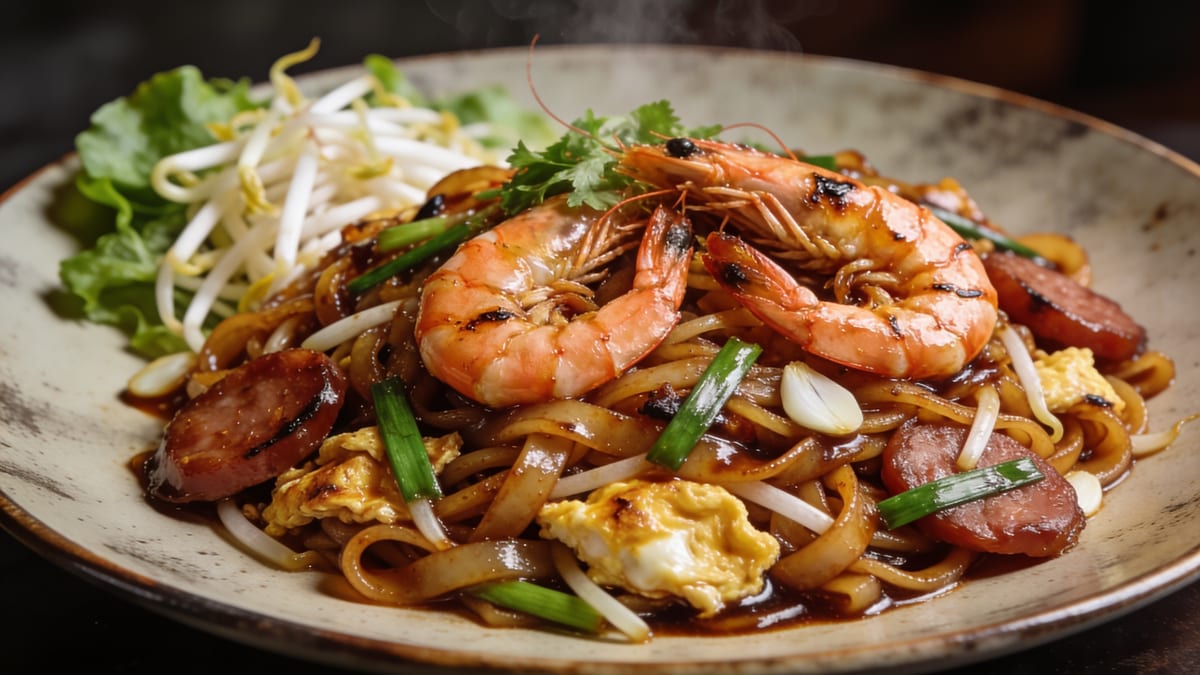
Mix the sauce (dark soy, light soy, oyster sauce, a little sugar). Get a wok smoking hot. Fry garlic, chili paste and sliced Chinese sausage, add fresh flat rice noodles and the sauce, char them, push aside and scramble an egg, add prawns, then bean sprouts and garlic chives. Toss hard, fast, and serve at once — cook one or two plates at a time, never more.
- Cook one or two portions at a time. Overload the wok and you steam the noodles instead of charring them — no wok hei.
- Use fresh wide flat rice noodles (kway teow) at room temperature; cold fridge noodles clump and break.
- Dark soy is for colour and a faint sweetness, not salt — the savoury comes from light soy and oyster sauce. Balance, don't drown.
Equipment
- Carbon-steel wok
- High-output burner (or work in small batches)
- Wok spatula (chan)
Ingredients
Sauce
- 20 ml light soy sauce
- 15 ml dark soy sauce, for colour
- 15 ml oyster sauce
- 5 g sugar
- pinch of white pepper
Stir-fry
- 400 g fresh flat rice noodles (kway teow), loosened, at room temperature
- 30 ml lard or neutral oil
- 3 garlic cloves, minced
- 1 tbsp chili paste (sambal), or to taste
- 1 Chinese sausage (lap cheong), thinly sliced on the bias
- 8 prawns, peeled and deveined
- 2 eggs
- 150 g bean sprouts
- a handful of garlic chives (kucai), cut in 4 cm lengths
- cockles, blanched (optional, traditional)
Method
- STEP01
Stir the light soy, dark soy, oyster sauce, sugar, and white pepper together in a small bowl. Have everything else prepped and within arm's reach — this cooks in minutes and there is no time to chop mid-fry.
- STEP02
Set the wok over the highest heat until it just begins to smoke. Add the lard and swirl. This is the single most important step: a screaming wok is what gives char kway teow its smoky wok hei.
- STEP03
Add the garlic, chili paste, and sliced Chinese sausage. Stir-fry 20–30 seconds until fragrant and the sausage releases its fat — don't let the garlic burn.
- STEP04
Add the room-temperature flat noodles and pour the sauce around the edge. Toss and press the noodles against the hot wok, letting them sit a few seconds between tosses to catch char. 1–2 minutes.
- STEP05
Push the noodles to one side. Crack the eggs into the space, let them set for 10 seconds, then break the yolks and fold through. Add the prawns (and cockles, if using) and toss until the prawns turn pink.
- STEP06
Add the bean sprouts and garlic chives. Toss just 20–30 seconds — they should stay crunchy. Taste, then tip straight onto a plate and serve immediately while smoky.
Make ahead
Mix the sauce and prep all the components (slice sausage, peel prawns, cut chives) hours ahead. The actual frying is 5 minutes and must be done à la minute, one or two plates at a time.
Storage
Char kway teow is a cook-and-eat-now dish — the noodles soften and the wok hei fades within minutes, so leftovers are a shadow of fresh. If you must, refrigerate up to 1 day and blast-reheat in a hot wok, never the microwave.
Variations
Penang style
Lean on cockles (see hum) and a touch more chili paste; keep it lighter on dark soy for the classic Penang char.
Vegetarian
Skip the prawns, sausage, and cockles; use mushroom 'oyster' sauce, add pressed tofu and extra chives, and lean on a smoky chili paste.
Extra wok hei at home
Without a jet burner, fry one single portion at a time in a rip-hot carbon-steel wok — crowding is what kills the char on a home stove.
Serve with
Nutrition per serving
Nutrition values are estimates based on the metric measurements. Adjust as needed.
Frequently asked
What is char kway teow?
Char kway teow ('stir-fried flat noodles' in Hokkien) is a beloved Malaysian and Singaporean hawker dish: wide flat rice noodles seared over very high heat with prawns, cockles, Chinese sausage, egg, bean sprouts, and garlic chives in a dark-sweet soy sauce. Its signature is wok hei — the smoky aroma a blazing wok imparts.
What is wok hei and how do I get it at home?
Wok hei ('breath of the wok') is the smoky, slightly charred flavour from food searing on a screaming-hot wok. At home, the trick is heat and not crowding: use a carbon-steel wok over your highest burner, cook only one or two portions at a time, and let the noodles sit briefly against the metal between tosses so they catch colour.
Can I use dried rice noodles?
Fresh wide flat rice noodles (kway teow) are traditional and best — soft, slippery, and quick to char. If you can only get dried, soak them until just pliable (not mushy) and drain well; they'll be a little less tender but still good. Always bring them to room temperature so they don't clump.
Why did my noodles turn mushy and pale?
Almost always too much liquid, too low heat, or too much in the wok. Overcrowding steams the noodles instead of searing them. Cook small batches over the highest heat, add the sauce sparingly around the edge, and let the noodles char before tossing.
Is it very spicy?
Traditionally it's mild — the chili paste is for fragrance and a gentle warmth, not heat. As written it's family-friendly; add more sambal at the table if you like it hotter. The defining flavours are smoky, savoury, and faintly sweet rather than fiery.
Cooked this? Rate it.
Real ratings from real cooks. We only show a score once enough of you have weighed in — no fabricated stars.