Curry Laksa — Coconut Noodle Soup
A bowl of Malaysian comfort: springy noodles in a fragrant coconut-curry broth built on a hand-pounded spice paste, topped with prawns, chicken, puffed tofu, bean sprouts, egg, and a spoon of sambal. Rich, spicy, and deeply aromatic.
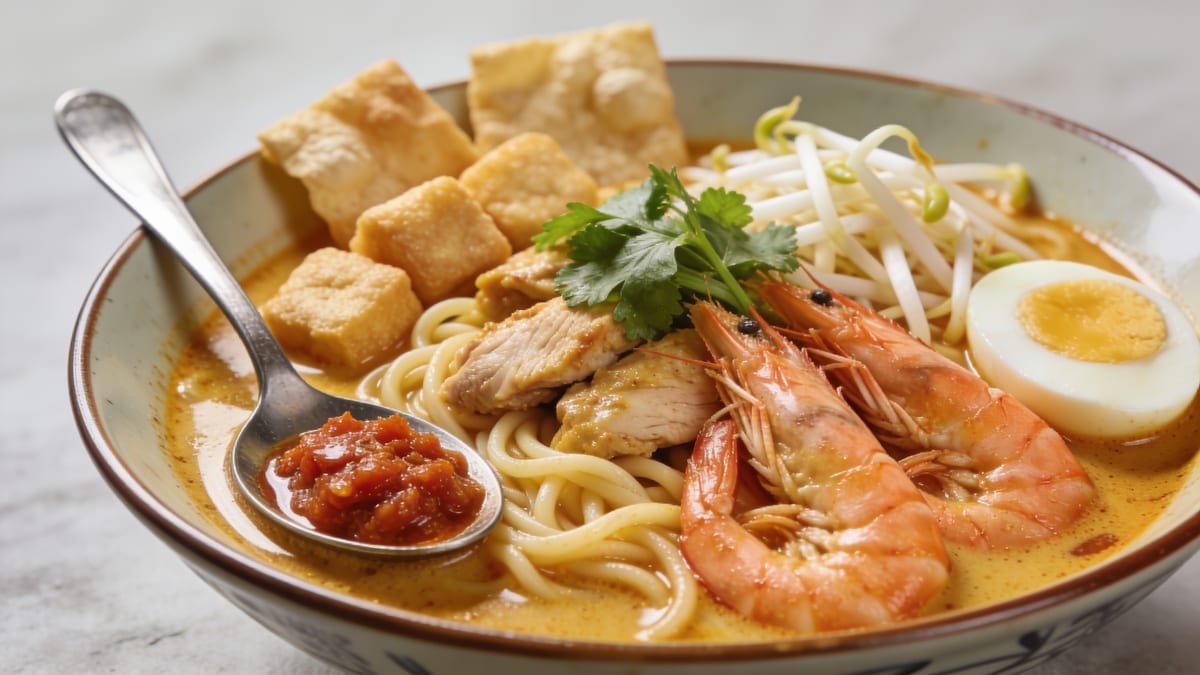
Blend a laksa paste from dried chilies, shallots, garlic, lemongrass, galangal, turmeric, candlenuts, belacan, and dried shrimp. Fry the paste in oil until fragrant and split, then simmer with stock and coconut milk. Poach chicken and prawns in the broth. Pile blanched rice vermicelli and yellow noodles into bowls with bean sprouts, tofu puffs, fish cake, and egg, ladle over the hot broth, and finish with laksa leaf, lime, and sambal.
- Fry the spice paste patiently until the oil splits out — this 'pecah minyak' stage is where the broth's depth comes from.
- Add coconut milk near the end and keep it at a bare simmer; a hard boil makes it split and dulls the aroma.
- Have everything prepped before you build the bowls — laksa comes together fast once the broth is ready.
Equipment
- Blender or food processor (for the paste)
- Large pot
- Wok or deep pan
- Sieve / noodle basket
Ingredients
Laksa paste
- 10 dried red chilies, soaked, fewer for milder
- 6 shallots
- 4 garlic cloves
- 2 lemongrass stalks, white part, sliced
- thumb of galangal, sliced
- thumb of fresh turmeric (or 1 tsp ground)
- 4 candlenuts (or macadamias)
- 1 tbsp belacan (shrimp paste), toasted
- 2 tbsp dried shrimp, soaked
Broth
- 60 ml neutral oil
- 1 L chicken stock
- 400 ml coconut milk
- 2 chicken thighs, boneless
- 12 prawns, peeled (shells reserved for stock)
- 10 g sugar
- salt and fish sauce, to taste
To assemble
- 200 g rice vermicelli, soaked
- 200 g fresh yellow egg noodles, blanched
- 150 g bean sprouts, blanched
- 8 tofu puffs (taupok), halved
- fish cake, sliced
- 2 eggs, boiled and halved
- laksa leaf (daun kesum), lime wedges, sambal
Method
- STEP01
Blend all the laksa paste ingredients into a smooth paste with a splash of water, scraping down as needed.
- STEP02
Heat the oil in a large pot over medium heat. Fry the paste, stirring constantly, 12–15 minutes until it darkens, smells deeply fragrant, and the oil splits out around the edges. Don't rush this step.
- STEP03
Pour in the stock, add the chicken thighs, and simmer 12 minutes until cooked. Lift out the chicken, shred it, and set aside. Add the prawns to the broth and cook 2 minutes until just pink; remove.
- STEP04
Lower the heat. Stir in the coconut milk and sugar and bring to a bare simmer (do not boil hard). Season with salt and fish sauce. Drop in the tofu puffs to soak up the broth for a few minutes.
- STEP05
Divide rice vermicelli and yellow noodles among bowls. Top with bean sprouts, shredded chicken, prawns, fish cake, and egg. Ladle over the hot broth and tofu puffs. Finish with torn laksa leaf, a lime wedge, and a spoon of sambal.
Make ahead
The spice paste and the broth are the make-ahead heroes: make the paste days ahead (it freezes well), and the broth deepens overnight — make it through the stock stage, then add coconut milk and the seafood fresh when you serve.
Storage
Keep the broth separate from the noodles and toppings — broth lasts 3 days refrigerated and freezes 2 months (add coconut milk on reheating for the freshest aroma). Blanch noodles and bean sprouts fresh when serving; assembled laksa goes soft quickly.
Variations
Asam laksa
The Penang tamarind version: a sour fish broth (mackerel, tamarind, torch ginger) instead of coconut curry, over thick rice noodles. A completely different, equally beloved laksa.
Vegetarian
Skip the belacan, dried shrimp, prawns, and chicken; build the paste on extra candlenut and miso, use vegetable stock, and load up on tofu puffs and vegetables.
Laksa lemak (Nyonya)
Richer and creamier with more coconut milk and laksa leaf — the Peranakan style common in Singapore and Malacca.
Serve with
Nutrition per serving
Nutrition values are estimates based on the metric measurements. Adjust as needed.
Frequently asked
What is laksa?
Laksa is a spicy Southeast Asian noodle soup with many regional forms. The most widely known is curry laksa (laksa lemak/curry mee) — noodles in a rich coconut-curry broth. Penang's asam laksa is a sour, tamarind-and-fish version with no coconut. This recipe is the creamy coconut-curry style.
What's the difference between curry laksa and asam laksa?
Curry laksa has a creamy, coconut-milk curry broth with prawns, chicken, and tofu puffs. Asam laksa (from Penang) is a tart, refreshing fish broth soured with tamarind and brightened with torch ginger and mint, with no coconut at all. Both are 'laksa' but taste completely different.
Can I use store-bought laksa paste?
Yes — a good jarred laksa paste is a real shortcut. Still fry it in oil until fragrant and split before adding liquid, and taste for balance; you may want extra lemongrass, lime, or sambal to freshen it. Homemade paste is more vivid, but a quality jar makes a very good weeknight bowl.
What noodles should I use?
The classic curry laksa mix is rice vermicelli (bee hoon) plus fresh yellow egg noodles (Hokkien mee), often combined in one bowl. You can use either alone; thick round rice noodles (laksa noodles) are also traditional. Blanch them fresh and add the hot broth at the last moment.
Why did my coconut broth split or turn greasy?
Coconut milk splits when boiled hard. Add it near the end and keep the broth at a bare simmer, stirring gently. A little oil rising to the top from the fried paste is normal and desirable (that flavored oil is part of laksa), but a rolling boil curdles the coconut and dulls the aroma — keep the heat low once the coconut milk is in.
Cooked this? Rate it.
Real ratings from real cooks. We only show a score once enough of you have weighed in — no fabricated stars.