Nasi Lemak — Malaysian Coconut Rice with Sambal
Malaysia's national breakfast: rice steamed in coconut milk and pandan until fragrant and rich, crowned with a dark, sweet-hot sambal, crisp fried anchovies and peanuts, cucumber, and a boiled egg. Built to be eaten with your hands off a banana leaf.
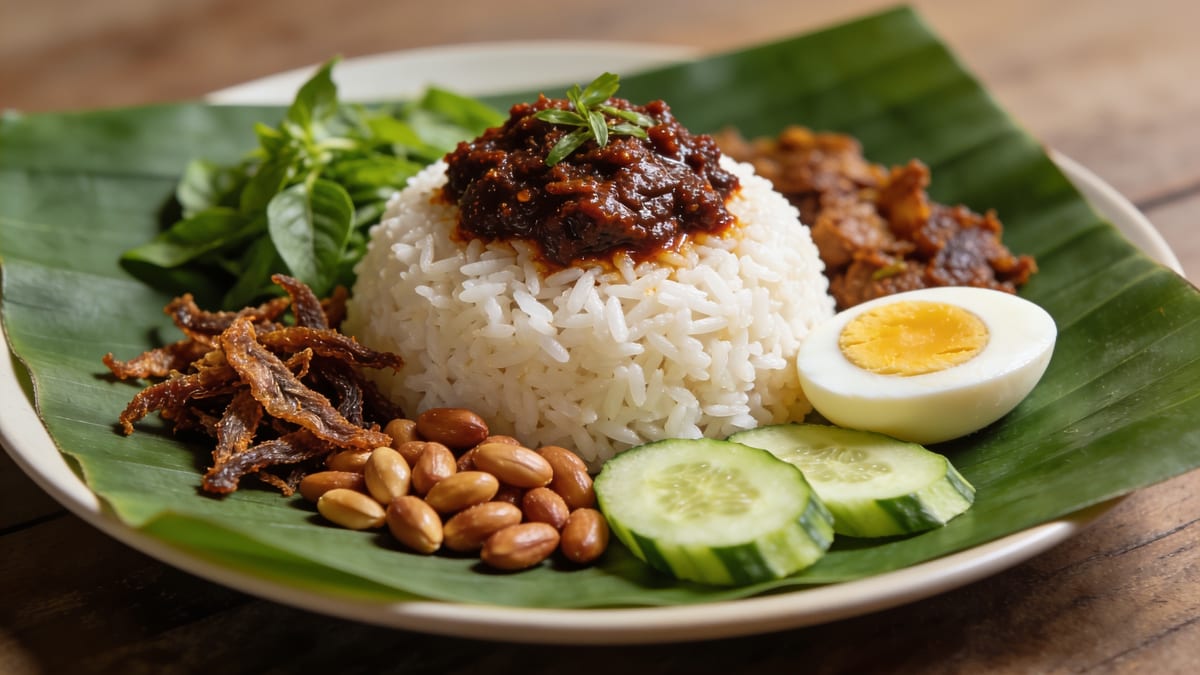
Steam jasmine rice with coconut milk, a knotted pandan leaf, ginger and salt until fluffy and rich. Fry ikan bilis and raw peanuts until crisp. Make the sambal: blend dried chilies, shallots, garlic and belacan, then fry it low and slow with tamarind and palm sugar until dark, split, and jammy. Plate the warm rice with sambal, anchovies, peanuts, cucumber, and a halved boiled egg.
- Coconut milk goes in WITH the rice, not poured over after — every grain should cook rich. Keep the heat gentle so the bottom doesn't catch.
- The sambal is the whole dish: fry it low and slow until the oil splits out and it turns dark and jammy. Rushing leaves it raw and harsh.
- A knotted pandan (screwpine) leaf steamed into the rice is the signature aroma — there is no real substitute.
Equipment
- Rice cooker or heavy lidded pot
- Blender or stone mortar (for the sambal)
- Wok or deep frying pan
- Fine sieve / spider
Ingredients
Coconut rice
- 400 g jasmine rice, rinsed until the water runs clear
- 300 ml coconut milk
- 200 ml water
- 2 pandan leaves, knotted (or 1 tied in a bundle)
- thumb of ginger, sliced
- 5 g fine salt
Sambal
- 12 dried red chilies, soaked and drained, fewer for milder
- 6 shallots, peeled
- 3 garlic cloves
- 1 tsp belacan (shrimp paste), toasted
- 60 ml neutral oil
- 1 large onion, halved and sliced
- 15 ml tamarind paste, loosened with 3 tbsp water
- 25 g palm sugar (gula melaka), or brown sugar
- salt, to taste
Fried anchovies & peanuts
- 60 g ikan bilis (dried anchovies), rinsed and dried well
- 80 g raw skinless peanuts
- oil, for frying
To serve
- 4 eggs, boiled and halved
- 1 cucumber, sliced
- banana leaf, optional, to line
Method
- STEP01
Combine the rinsed rice, coconut milk, water, knotted pandan, ginger, and salt in a rice cooker or heavy pot. Cook as usual (about 12–15 minutes on the stove, lid on, lowest heat once it boils). When done, fluff gently with a fork and let it sit, covered, 10 minutes — it should be rich and just-sticky, not wet.
- STEP02
Fry the peanuts in a little oil over medium heat until golden, about 4 minutes; lift out. In the same oil, fry the dried, rinsed ikan bilis until crisp and golden, 2–3 minutes. Drain both on paper. They crisp further as they cool.
- STEP03
Blend the soaked chilies, shallots, garlic, and toasted belacan into a coarse paste with a splash of water.
- STEP04
Heat the ¼ cup oil in a wok over medium-low. Fry the sliced onion until soft, then add the chili paste. Fry, stirring often, 15–20 minutes until it darkens, smells sweet, and the oil splits out at the edges. Stir in tamarind and palm sugar; cook 5 more minutes until thick and jammy. Season with salt.
- STEP05
Mound the warm coconut rice (on a banana leaf if you have one). Spoon a generous heap of sambal alongside. Add fried anchovies, peanuts, cucumber slices, and half a boiled egg per plate. Serve warm.
Make ahead
The sambal is the make-ahead hero — it deepens for days, so make it well in advance. Fry the anchovies and peanuts a day ahead and keep airtight. Cook the rice fresh the morning you serve.
Storage
Best fresh, but components keep separately: coconut rice 1 day refrigerated (steam to revive), sambal 1 week refrigerated or 2 months frozen, fried anchovies and peanuts a few days in an airtight jar. Assemble just before eating.
Variations
Nasi lemak ayam goreng
Serve with Malaysian fried chicken (ayam goreng berempah) for the most popular hawker-stall version.
Vegetarian
Skip the anchovies and belacan; build the sambal on toasted dark miso and add fried tempeh or tofu for protein.
Sambal sotong
Stir blanched squid rings into the finished sambal for a richer topping.
Serve with
Nutrition per serving
Nutrition values are estimates based on the metric measurements. Adjust as needed.
Frequently asked
What is nasi lemak?
Nasi lemak is Malaysia's national dish — rice cooked in coconut milk and pandan, served with a sweet-spicy sambal, crisp fried anchovies (ikan bilis) and peanuts, cucumber, and boiled egg. 'Nasi lemak' means 'rich/fatty rice,' from the coconut milk. It's eaten any time of day but is the classic breakfast, traditionally wrapped in banana leaf.
Can I use canned coconut milk?
Yes — full-fat canned coconut milk is exactly right. Use it with water as the recipe describes so the rice is rich but still cooks through fluffy rather than greasy. Shake or stir the can well first so the cream and liquid are combined.
No pandan leaf — what can I do?
Pandan is the signature aroma and worth seeking out frozen at an Asian grocer. If you truly can't find it, the rice is still good without it; a tiny drop of pandan extract is a distant second. Don't substitute vanilla or other leaves — they take it somewhere else entirely.
Why is my sambal harsh and raw-tasting?
It wasn't fried long enough. Sambal needs a patient 15–20 minutes over medium-low heat until it darkens and the oil splits out — that's when the raw chili and shallot edge mellows into deep, sweet heat. If it tastes sharp, keep cooking; if it catches, lower the heat and add a splash of oil.
What is belacan and can I leave it out?
Belacan is Malaysian fermented shrimp paste — toasted briefly, it gives the sambal its savory backbone. It's pungent raw but transforms when cooked. You can leave it out for a vegetarian sambal, but the flavor will be noticeably less deep; a little dark miso helps fill the gap.
Cooked this? Rate it.
Real ratings from real cooks. We only show a score once enough of you have weighed in — no fabricated stars.