Linguine with Clam Sauce
A briny, garlicky white clam sauce that comes together in the time it takes the linguine to boil, using pantry-friendly canned clams plus bottled clam juice for real depth. The trick is finishing the pasta in the simmering sauce so the starch pulls everything into a glossy coating, then adding the clams off the heat at the very end so they stay tender instead of turning rubbery. It tastes like a coastal trattoria dinner from a weeknight pantry.
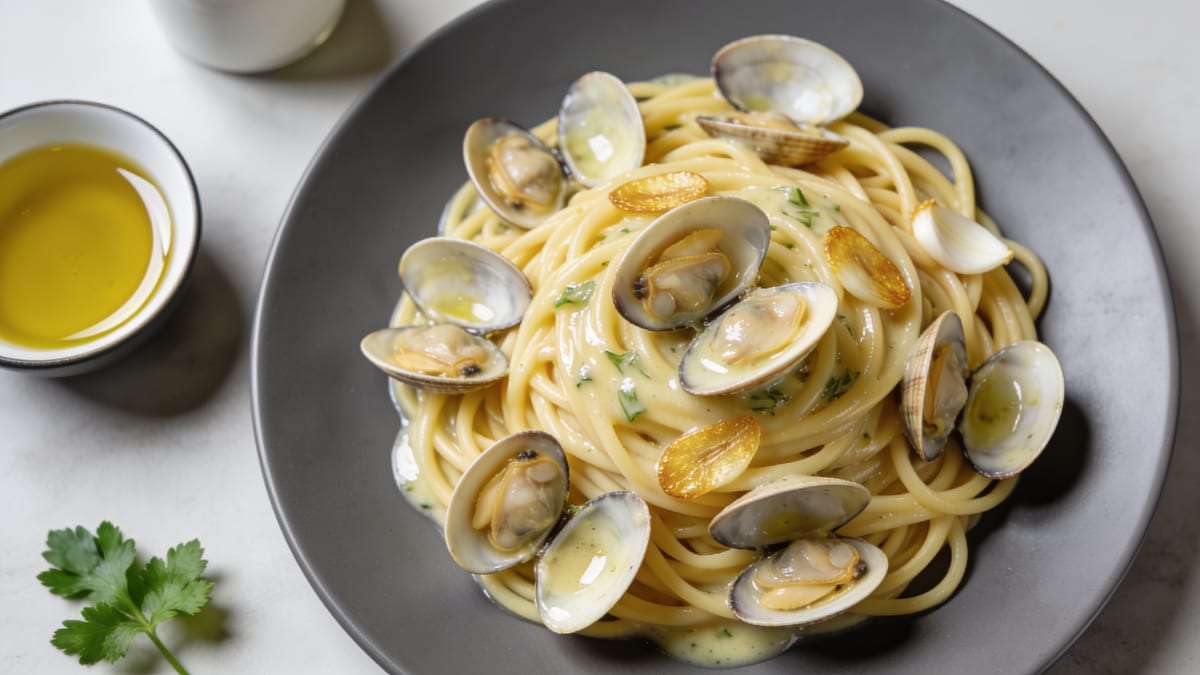
Boil 450 g (1 lb) linguine in well-salted water and pull it 2 minutes shy of al dente. Meanwhile, warm 60 ml olive oil and 2 tbsp butter in a large skillet, gently cook 6 sliced garlic cloves with a pinch of red pepper flakes until pale gold, then add 120 ml dry white wine and reduce by half. Pour in the drained liquid from 3 cans of chopped clams plus 240 ml bottled clam juice and simmer 4-5 minutes to concentrate. Transfer the underdone linguine straight into the skillet with a splash of pasta water and toss over medium heat until the sauce turns glossy and clings. Off the heat, stir in the clams, 2 tbsp lemon juice, and a handful of chopped parsley; season with black pepper and serve immediately.
- Add the canned clams off the heat at the very end — they are already cooked, and even one minute of simmering makes them chewy.
- Undercook the linguine by 2 minutes and finish it in the sauce; the released starch is what makes a thin clam broth cling like a proper sauce.
- Taste before salting — clam juice and canned clams are naturally salty, so the sauce usually needs pepper and lemon, not salt.
Equipment
- Large pasta pot (5-6 qt)
- Large skillet or sauté pan (12-inch)
- Tongs or a spider strainer
- Fine-mesh strainer (for draining clams)
- Chef's knife and cutting board
- Liquid measuring cup
Ingredients
Pasta
- 450 g linguine
- 15 g fine sea salt, for the pasta water
Clam sauce
- 550 g chopped clams in juice (6.5 oz / 184 g cans), drained, liquid reserved
- 240 ml bottled clam juice
- 60 ml extra-virgin olive oil
- 28 g unsalted butter
- garlic cloves, thinly sliced, sliced, not minced, so it can't burn as easily
- 0.5 g red pepper flakes, or to taste
- 120 ml dry white wine, Pinot Grigio or Sauvignon Blanc; see FAQs for a swap
- 30 ml fresh lemon juice, about 1/2 lemon
- 1 g freshly ground black pepper
To finish
- 15 g flat-leaf parsley, chopped
- 2 g lemon zest, optional, for brightness
- 15 ml extra-virgin olive oil, for drizzling, optional
Method
- STEP01
Bring about 4 liters (4 quarts) of water to a rolling boil in a large pot and add the salt. While it heats, drain the canned clams through a fine-mesh strainer set over a measuring cup, reserving every drop of the liquid. Slice the garlic, chop the parsley, and juice the lemon so everything is within reach — the sauce moves fast once it starts.
- STEP02
In a 12-inch skillet over medium-low heat, warm the olive oil and butter until the butter foams. Add the sliced garlic and red pepper flakes and cook, stirring often, until the garlic is fragrant and just pale gold at the edges, about 3 minutes. Do not let it brown — browned garlic turns the whole sauce bitter.
- STEP03
Raise the heat to medium-high and pour in the white wine. Let it bubble hard until reduced by about half, 2 to 3 minutes, scraping up anything on the bottom of the pan. This cooks off the raw alcohol and leaves behind acidity that balances the rich clam broth.
- STEP04
Add the reserved liquid from the canned clams and the bottled clam juice. Simmer briskly until slightly reduced and concentrated, 4 to 5 minutes. Taste it — it should be intensely briny, since the pasta will dilute it. Add black pepper but hold off on salt for now.
- STEP05
While the broth reduces, drop the linguine into the boiling water and cook it 2 minutes less than the package's al dente time, stirring in the first minute so it doesn't clump. Before draining, scoop out and reserve about 240 ml (1 cup) of the starchy cooking water.
- STEP06
Using tongs, transfer the dripping-wet linguine straight into the skillet with the simmering broth, adding a splash of the reserved pasta water. Toss and simmer over medium heat until the pasta finishes cooking and the liquid tightens into a glossy sauce that coats each strand, 2 to 3 minutes. Add more pasta water a splash at a time if the pan looks dry.
- STEP07
Remove the skillet from the heat. Stir in the drained clams, lemon juice, parsley, and lemon zest if using, tossing for about a minute so the clams warm through in the residual heat without toughening. Taste and adjust with salt only if needed. Divide among warm bowls, drizzle with olive oil, and serve immediately — this sauce waits for no one.
Make ahead
Up to a day ahead, slice the garlic, chop the parsley, juice the lemon, and combine the drained clam liquid with the bottled clam juice; keep the drained clams covered in the fridge. You can even cook the sauce base through the broth-reduction step, refrigerate it, and bring it back to a simmer before boiling the pasta. Cook the linguine and finish the dish only when you are ready to eat — the final toss takes under 5 minutes.
Storage
Refrigerate leftovers in an airtight container for up to 2 days. Reheat gently in a skillet over medium-low heat with a splash of water or clam juice to loosen the sauce, stopping as soon as it is warmed through so the clams do not overcook. Freezing is not recommended — the clams turn rubbery and the emulsified sauce breaks when thawed.
Variations
Fresh clam linguine (alle vongole)
Swap the canned clams for 1.4 kg (3 lb) scrubbed littleneck or Manila clams and skip the bottled clam juice. After reducing the wine, add the clams, cover, and steam 5 to 8 minutes until they open, discarding any that stay shut. Pull the meat from half the shells if you like, then finish the pasta in the shell liquor exactly as written.
Red clam sauce
After the wine reduces, stir in 400 g (one 14.5 oz can) of crushed tomatoes and 1/2 tsp dried oregano along with the clam liquids, and simmer about 10 minutes before finishing the pasta in it. The result is a brighter, Neapolitan-style sauce that stands up well to extra red pepper flakes.
Gluten-free and dairy-free
Use a sturdy gluten-free linguine or spaghetti (corn-rice blends hold up best to tossing in the pan) and replace the butter with an extra 2 tbsp of olive oil. Gluten-free pasta releases less starch, so reduce the broth a minute or two longer before adding the noodles so the sauce still clings.
Serve with
Nutrition per serving
Nutrition values are estimates based on the metric measurements. Adjust as needed.
Frequently asked
Can I make linguine with clam sauce with fresh clams instead of canned?
Absolutely — use about 1.4 kg (3 lb) of littleneck or Manila clams. Scrub them well, steam them in the pan right after the wine reduces, and use the liquor they release in place of the bottled clam juice. Canned clams make this a true pantry dinner, but fresh clams give you a more dramatic, restaurant-style plate; the pasta and sauce technique stays the same either way.
Why did my clams turn rubbery, and how do I prevent it?
Canned clams are fully cooked, so any real simmering tightens their proteins into little erasers. The fix is built into this recipe: reduce the broth and finish the pasta first, then stir the clams in off the heat during the final minute. They only need to warm through. The same logic applies to reheating leftovers — low heat, short time.
What can I use instead of white wine?
Replace the wine with an equal amount of extra bottled clam juice or low-sodium chicken broth plus an extra teaspoon of lemon juice added at the end. The wine mainly contributes acidity, so the lemon covers that role. Avoid cooking wine from the supermarket shelf — it is heavily salted and will push an already briny sauce over the edge.
How do I keep the sauce from being watery?
Two things make linguine with clam sauce cling instead of pooling: reducing the clam broth until it tastes concentrated before the pasta goes in, and finishing undercooked linguine directly in the skillet. The starch the pasta sheds during those last 2 to 3 minutes emulsifies with the oil and butter into a light, glossy coating. If it still looks thin, keep tossing over medium heat another minute; if it tightens too much, loosen it with reserved pasta water.
Should I add Parmesan to clam sauce?
Tradition says no — Italian cooks generally keep cheese away from shellfish pasta so the clams' delicate brininess stays front and center, and this sauce genuinely does not need it. That said, it is your dinner; a light dusting will not ruin anything. If you want more richness without cheese, swirl in an extra knob of butter off the heat instead.
Cooked this? Rate it.
Real ratings from real cooks. We only show a score once enough of you have weighed in — no fabricated stars.