Peach Pie
A classic double-crust peach pie: juicy summer peaches sliced thick and folded with brown sugar, cinnamon, and a touch of nutmeg, all sealed inside a flaky all-butter pastry. Draining the macerated peaches and thickening with cornstarch keeps every slice sliceable instead of soupy, while a hot-start bake on a preheated sheet pan crisps the bottom crust right through. The result is bronzed, bubbling, and tastes like August in a pie plate.
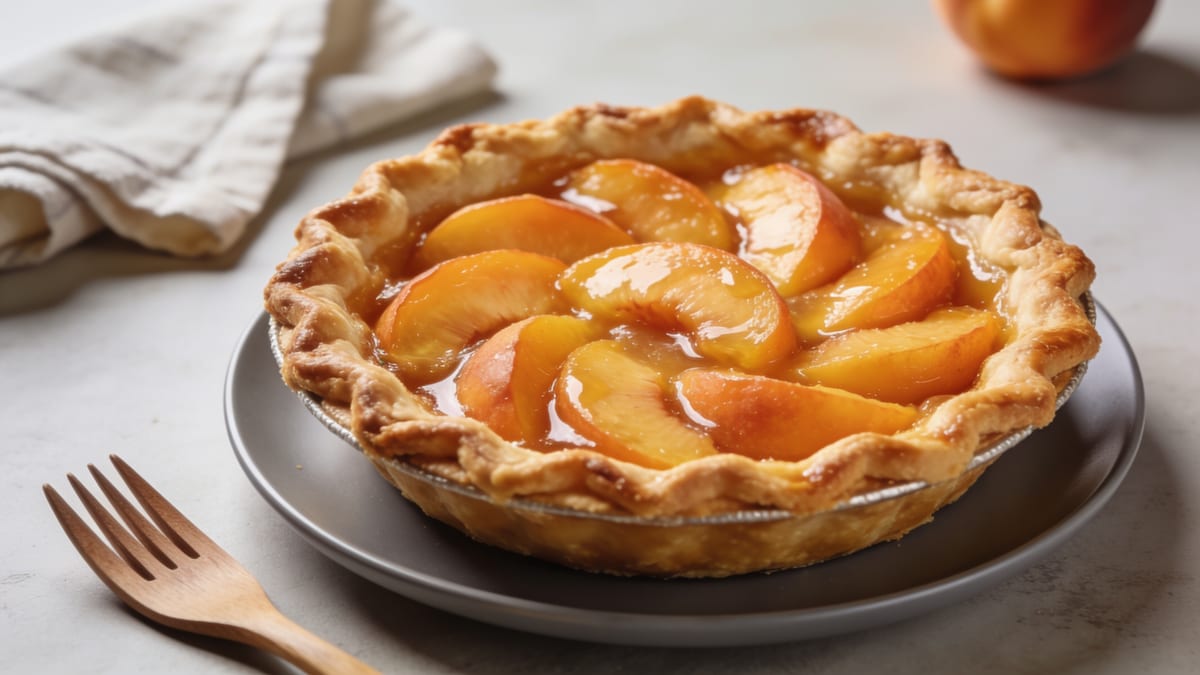
Make an all-butter dough (315 g flour, 225 g cold cubed butter, 2 tbsp sugar, 1 tsp salt, 6-8 tbsp ice water), divide in two, and chill 1 hour. Blanch, peel, and slice 1.1 kg ripe peaches; toss with both sugars and lemon juice, macerate 15 minutes, then drain off all but 2 tablespoons of juice before tossing with cornstarch, cinnamon, nutmeg, salt, and vanilla. Roll the bottom crust into a 9-inch pie plate, mound in the filling, dot with butter, cap with the top crust, crimp, cut vents, and chill 10 minutes. Brush with egg wash, sprinkle with coarse sugar, and bake on a preheated sheet pan at 220 C (425 F) for 20 minutes, then at 190 C (375 F) for 38-42 minutes, until the juices bubble thickly through the vents. Cool at least 3 hours so the filling sets before slicing.
- Drain the macerated peach juice before adding cornstarch — excess liquid is the number one cause of runny pie.
- Bake on a sheet pan preheated on the lowest rack; the direct bottom heat crisps the underside of the crust.
- Do not slice until the pie is fully cool; the cornstarch only finishes setting as it cools, and you must see thick bubbling through the vents before pulling it from the oven.
Equipment
- 9-inch pie plate
- Rolling pin
- Large mixing bowls
- Pastry cutter or food processor
- Paring knife
- Rimmed baking sheet
- Pastry brush
Ingredients
All-Butter Crust
- 315 g all-purpose flour, plus more for rolling
- 25 g granulated sugar
- 6 g fine sea salt
- 225 g cold unsalted butter, cut into 1 cm cubes, keep in the fridge until the moment you use it
- 90-120 ml ice water, added a spoonful at a time
Peach Filling
- 1.1 kg ripe yellow peaches, firm-ripe and fragrant; freestone are easiest to slice
- 100 g granulated sugar
- 50 g light brown sugar, packed
- 15 ml fresh lemon juice
- 30 g cornstarch
- 1.3 g ground cinnamon
- 0.3 g ground nutmeg, freshly grated if possible
- 1.5 g fine sea salt
- 5 ml vanilla extract
- 15 g unsalted butter, cut into small bits, for dotting the filling
Finish
- large egg, for the egg wash
- 15 ml water, whisked with the egg
- 12 g coarse or turbinado sugar, for sprinkling
Method
- STEP01
Whisk the flour, sugar, and salt in a large bowl. Add the cold butter cubes and cut them in with a pastry cutter (or pulse in a food processor) until the largest pieces are pea-sized with plenty of smaller flakes. Sprinkle in ice water one tablespoon at a time, tossing with a fork, until the dough just holds together when squeezed — it should look shaggy, not wet. Divide into two discs, one slightly larger for the bottom, and wrap each tightly.
- STEP02
Refrigerate both discs for at least 1 hour (or up to 2 days). Cold, rested dough rolls without tearing and bakes up flaky instead of tough. About 10 minutes before rolling, set the discs on the counter so they are pliable but still cold.
- STEP03
Bring a pot of water to a boil and set up a bowl of ice water. Score a shallow X on the bottom of each peach, blanch for 30-45 seconds, then transfer to the ice water; the skins will slip right off. Halve, pit, and cut into 1 cm (1/2-inch) slices. Toss the slices with the granulated sugar, brown sugar, and lemon juice in a large bowl and let them sit for 15 minutes to release their juice. Drain the peaches in a colander set over a bowl, returning only 2 tablespoons of the collected juice to the fruit. Toss the drained peaches with the cornstarch, cinnamon, nutmeg, salt, and vanilla until no dry white streaks remain.
- STEP04
Set a rimmed baking sheet on the lowest oven rack and heat the oven to 220 C (425 F). On a floured surface, roll the larger disc into a 30 cm (12-inch) round and fit it into a 9-inch pie plate, letting the edges hang over. Mound in the peach filling, scraping in the thickened juices, and dot the top with the butter bits. Roll the second disc into a 28 cm (11-inch) round and lay it over the fruit. Trim the overhang to about 1.5 cm, fold the top edge under the bottom edge, and crimp to seal.
- STEP05
Cut five 5 cm (2-inch) slits in the top crust so steam can escape and you can see the juices later. Freeze the assembled pie for 10 minutes to firm the butter, then brush the top with the egg beaten with water and sprinkle evenly with coarse sugar.
- STEP06
Set the pie on the preheated baking sheet and bake at 220 C (425 F) for 20 minutes, until the crust is set and starting to color. Reduce the oven to 190 C (375 F) and bake 38-42 minutes more, rotating once, until the crust is deep golden and the juices bubble thickly through the vents. That visible, syrupy bubbling means the cornstarch has fully activated — if the juices look thin, keep baking. Tent the edges with foil if they brown too fast.
- STEP07
Transfer the pie to a wire rack and cool for at least 3 hours. The filling finishes thickening as it cools; cutting a warm pie releases the juices you worked to contain. Serve at room temperature or rewarm individual slices briefly.
Make ahead
The dough can be made up to 2 days ahead and refrigerated, or frozen for 3 months (thaw overnight in the fridge). You can also assemble the entire unbaked pie and freeze it solid, then bake straight from frozen at the same temperatures, adding 15-20 minutes to the second stage. Peaches are best sliced the day you bake, as they brown and weep with time.
Storage
Keep loosely covered at room temperature for up to 2 days, or refrigerate for up to 4 days once cut. Refresh slices in a 180 C (350 F) oven for 10 minutes to re-crisp the crust. The baked pie also freezes well: wrap whole or in slices and freeze up to 3 months, then thaw overnight and reheat at 160 C (325 F) until warmed through.
Variations
Bourbon-brown sugar peach pie
Swap all the granulated sugar in the filling for brown sugar and add 1 tablespoon (15 ml) bourbon with the vanilla. The molasses and oak notes deepen the caramel flavor; the alcohol bakes off, leaving only aroma.
Peach-raspberry lattice
Replace 225 g (1 1/2 cups) of the peaches with fresh raspberries and increase the cornstarch to 35 g (4 1/2 tsp more). Weave the top crust into a lattice so the jewel-toned filling shows and extra steam escapes from the juicier fruit.
Gluten-free and dairy-free swap
Use a cup-for-cup gluten-free flour blend with xanthan gum in the crust and substitute cold refined coconut oil or a firm plant butter for the dairy butter, working quickly since both soften faster. Brush with plant milk instead of egg wash for a fully plant-based pie; the filling is naturally gluten- and dairy-free apart from the butter dots, which you can simply omit.
Serve with
Nutrition per serving
Nutrition values are estimates based on the metric measurements. Adjust as needed.
Frequently asked
Can I use frozen or canned peaches in this peach pie recipe?
Yes. For frozen, thaw 1.1 kg (2 1/2 lb) sliced peaches completely, drain well, and add an extra 8 g (1 tbsp) cornstarch since they release more liquid. For canned, choose peaches packed in juice (not syrup), drain thoroughly, cut the granulated sugar in half, and skip the maceration step. Fresh, firm-ripe peaches still give the best texture, but this peach pie recipe works year-round with either substitute.
Why did my peach pie turn out runny?
Three usual causes: the peach juice was not drained after macerating, the pie came out before the juices bubbled thickly through the vents (cornstarch must reach a full boil to thicken), or the pie was sliced while warm. Fix all three — drain, bake until you see slow, glossy bubbling, and cool at least 3 hours — and slices will hold their shape.
Do I have to peel the peaches?
No, but peels turn chewy and can separate from the flesh into papery ribbons as the pie bakes, so most bakers prefer peeling. The blanching method takes about 5 minutes for a whole batch: 30-45 seconds in boiling water, straight into ice water, and the skins slip off with your fingers. If your peaches are very firm, a serrated vegetable peeler works too.
What are the best peaches for peach pie?
Yellow freestone peaches that are fragrant and give just slightly when pressed. Freestone flesh releases cleanly from the pit, which makes slicing far easier than with clingstones. Avoid rock-hard peaches (they stay bland and crunchy) and very soft ones (they collapse into jam). If your fruit tastes tart, keep the sugar as written; if it is candy-sweet, you can trim the granulated sugar by 2 tablespoons.
Can I make this peach pie recipe ahead for a party?
The smartest schedule is to bake it the morning of the day you serve it, since the pie needs 3 hours to cool anyway and the crust is best within 24 hours. For further ahead, assemble and freeze the unbaked pie, then bake from frozen the day you need it, adding 15-20 minutes to the lower-temperature stage. Avoid refrigerating an unbaked assembled pie overnight — the filling weeps and soaks the bottom crust.
Cooked this? Rate it.
Real ratings from real cooks. We only show a score once enough of you have weighed in — no fabricated stars.