Beignets Maison
Ces beignets maison sont de la classique variété levée à la levure : moelleux et aériens à l'intérieur, avec une fine coque délicatement croustillante et un glaçage sucré à la vanille qui prend en une pellicule craquante d'une finesse extrême. Une pâte légèrement enrichie et une double levée leur donnent ce moelleux fondant caractéristique, tandis qu'une friture à 350 °F constants les garde légers plutôt que lourds ou gras.
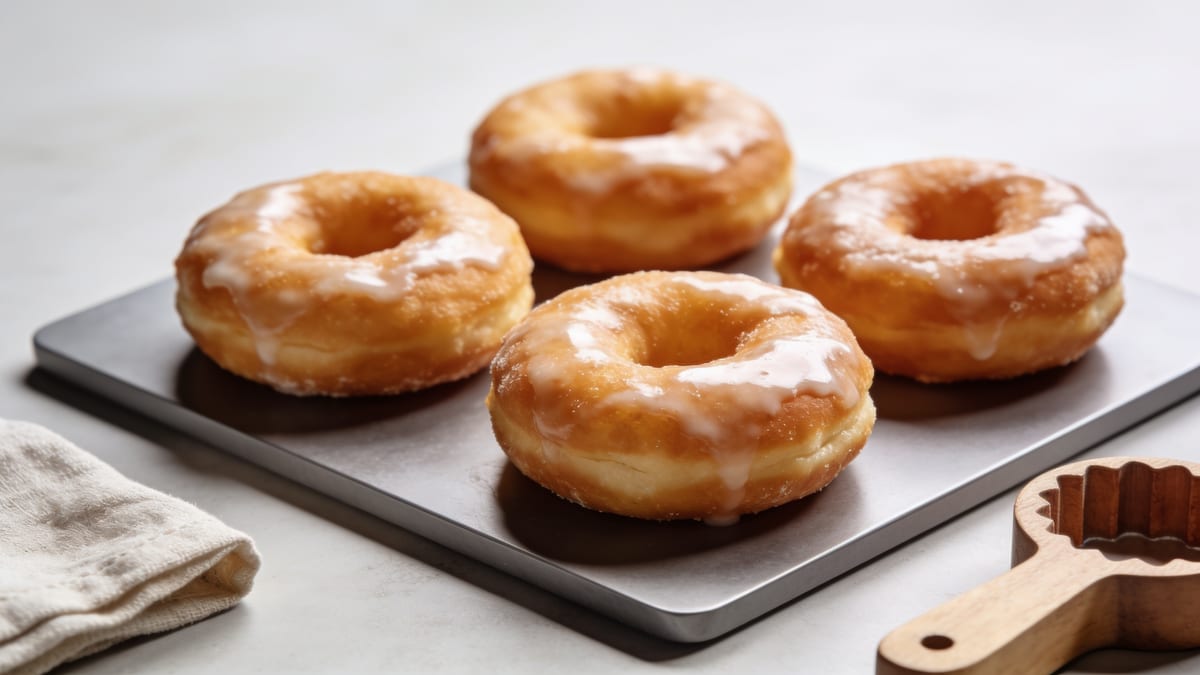
Chauffez 1 tasse de lait à 110 °F, incorporez-y une cuillerée du sucre et 2 ¼ c. à café de levure, et laissez mousser 10 minutes ; incorporez le reste du sucre, 2 œufs, le beurre ramolli, la vanille, le sel et environ 4 tasses de farine, puis pétrissez 8 minutes jusqu'à ce que la pâte soit lisse et juste légèrement collante. Couvrez et laissez lever jusqu'au doublement, environ 1 heure, puis abaissez à 1/2 pouce d'épaisseur sur un plan fariné et détaillez avec un emporte-pièce de 3 pouces plus un centre de 1 pouce ; laissez pousser les ronds 45 minutes jusqu'à ce qu'ils soient gonflés. Faites-les frire dans une huile à 350 °F environ 1 minute par face jusqu'à ce qu'ils soient bien dorés, égouttez sur une grille, puis trempez les beignets encore chauds dans un glaçage de sucre glace, de lait et de vanille et laissez prendre 10 minutes avant de déguster.
- Maintenez l'huile à 175 °C/350 °F constants : trop froide, les beignets absorbent la graisse ; trop chaude, ils dorent avant que le cœur ne cuise.
- Cessez d'ajouter de la farine tant que la pâte est encore souple et légèrement collante ; une pâte ferme et trop farinée frit dense au lieu de moelleuse.
- Glacez les beignets encore chauds pour que l'enrobage fonde dessus et prenne en une fine pellicule brillante et craquante.
Equipment
- Robot pâtissier avec crochet à pâte (ou un grand saladier)
- Rouleau à pâtisserie
- Emporte-pièce à beignet de 3 pouces (ou deux emporte-pièces ronds)
- Faitout épais ou cocotte
- Thermomètre à friture ou à sucre
- Grille de refroidissement
- Écumoire araignée ou cuillère à trous
Ingrédients
Pâte
- 240 ml lait entier, chauffé à environ 43 °C/110 °F
- 7 g levure sèche active, 1 sachet standard
- 50 g sucre semoule
- 500 g farine tout usage, plus un peu pour fariner
- 6 g sel fin
- gros œufs, à température ambiante
- 57 g beurre doux, ramolli
- 5 ml extrait de vanille
Pour la friture
- 1.5 L huile neutre, de canola, végétale ou d'arachide, pour la friture
Glaçage à la vanille
- 240 g sucre glace, tamisé
- 60 ml lait entier, plus au besoin pour détendre
- 5 ml extrait de vanille
- sel fin
Préparation
- ÉTAPE01
Chauffez le lait à environ 43 °C/110 °F, tiède au toucher mais pas chaud. Incorporez 1 cuillère à café du sucre et la levure, puis laissez reposer jusqu'à ce que ce soit mousseux et parfumé, environ 10 minutes. Si ça ne mousse pas, la levure est morte ; recommencez avec un sachet neuf.
- ÉTAPE02
Ajoutez le reste du sucre, les œufs, le beurre ramolli, la vanille, le sel et la majeure partie de la farine au mélange de levure. Mélangez au crochet à pâte (ou à la main) jusqu'à ce que la pâte se rassemble, puis pétrissez 8 minutes, en ajoutant la farine une cuillère à soupe à la fois, uniquement jusqu'à ce que la pâte soit lisse, élastique et juste légèrement collante. Évitez de trop fariner.
- ÉTAPE03
Façonnez la pâte en boule, placez-la dans un saladier légèrement huilé et couvrez de film alimentaire ou d'un linge humide. Laissez-la lever dans un endroit chaud jusqu'à ce qu'elle double de volume, environ 1 heure.
- ÉTAPE04
Renversez la pâte sur un plan fariné et abaissez-la délicatement à 1,5 cm/1/2 pouce d'épaisseur. Détaillez des ronds avec un emporte-pièce de 7,5 cm/3 pouces, puis évidez les centres avec un emporte-pièce de 2,5 cm/1 pouce. Réabaissez les chutes une seule fois. Disposez les beignets et les trous sur du papier sulfurisé fariné.
- ÉTAPE05
Couvrez les beignets détaillés sans serrer et laissez-les pousser jusqu'à ce qu'ils soient visiblement gonflés et légers, environ 45 minutes. Ils doivent trembloter légèrement et revenir lentement en place quand on les presse doucement.
- ÉTAPE06
Versez l'huile dans un faitout épais sur une hauteur d'environ 5 cm/2 pouces et chauffez à 175 °C/350 °F, en vérifiant avec un thermomètre. Disposez à proximité une grille posée sur un plateau pour l'égouttage.
- ÉTAPE07
Glissez quelques beignets dans l'huile sans surcharger. Faites frire environ 1 minute par face jusqu'à ce qu'ils soient bien dorés, en les retournant une fois. Les trous cuisent plus vite, en 30 à 45 secondes. Retirez-les à l'écumoire araignée et égouttez sur la grille. Laissez l'huile revenir à 350 °F entre les fournées.
- ÉTAPE08
Fouettez le sucre glace, le lait, la vanille et une pincée de sel jusqu'à obtenir un mélange lisse et nappant, à peu près de la consistance d'un miel liquide. Ajoutez un trait de lait de plus pour le détendre ou du sucre glace pour l'épaissir.
- ÉTAPE09
Pendant que les beignets sont encore chauds, trempez-en le dessus (ou immergez-les complètement) dans le glaçage, en laissant l'excédent s'égoutter. Remettez-les sur la grille et laissez le glaçage prendre environ 10 minutes. Dégustez-les le jour même pour la meilleure texture.
Make ahead
Préparez la pâte jusqu'à la première levée, puis couvrez-la et réfrigérez-la jusqu'à 24 heures ; la pâte froide est plus facile à abaisser et la levée lente approfondit la saveur. Ramenez-la à température ambiante avant de la détailler et de la faire pousser. Vous pouvez aussi frire les beignets nature, les congeler, puis les décongeler et les glacer le jour où vous les servez.
Storage
Conservez les beignets refroidis dans un contenant hermétique à température ambiante jusqu'à 2 jours ; rafraîchissez-les au micro-ondes 5 à 10 secondes pour raviver la mie moelleuse. Ne les réfrigérez pas, cela les dessèche. Les beignets non glacés peuvent se congeler jusqu'à 1 mois, puis se décongeler et se glacer.
Variations
Beignets sucre-cannelle
Faites l'impasse totale sur le glaçage. Pendant que les beignets sont encore chauds, roulez chacun dans un bol de 150 g/3/4 tasse de sucre semoule mélangé à 1 cuillère à soupe de cannelle moulue jusqu'à ce qu'ils soient entièrement enrobés.
Glaçage au chocolat
Remplacez le glaçage à la vanille par un glaçage au chocolat : fouettez 180 g/1 ½ tasse de sucre glace, 25 g/1/4 tasse de cacao en poudre, 45 ml/3 c. à soupe de lait, 15 g/1 c. à soupe de beurre fondu et 1/2 c. à café de vanille jusqu'à ce que ce soit brillant et nappant.
Beignets sans produits laitiers
Utilisez un lait végétal non sucré comme de l'avoine ou du soja à la place du lait, et un bloc de beurre végane dans la pâte et le glaçage. La mie reste moelleuse et légère ; gardez simplement la température de friture stable à 350 °F.
Serve with
Nutrition per serving
Nutrition values are estimates based on the metric measurements. Adjust as needed.
Questions fréquentes
Pourquoi mes beignets sont-ils gras ?
Des beignets gras signifient presque toujours que l'huile était trop froide. En dessous de 175 °C/350 °F, la pâte baigne dans la graisse et l'absorbe au lieu de former rapidement une croûte scellée. Utilisez un thermomètre, faites frire par petites fournées et laissez l'huile remonter en température entre chaque tournée.
Puis-je cuire ces beignets au four plutôt que de les frire ?
C'est possible, mais la texture change : les beignets cuits au four ressemblent davantage à un petit pain moelleux qu'à la version frite à coque croustillante. Disposez les beignets levés sur une plaque tapissée et enfournez à 190 °C/375 °F pendant 9 à 11 minutes, puis badigeonnez-les de beurre fondu avant de les glacer.
Quelle est la meilleure huile pour frire les beignets ?
Une huile neutre à point de fumée élevé fonctionne le mieux : huile de canola, végétale, de tournesol ou d'arachide. Elles n'ajoutent pas de faux goûts et restent stables à la température de friture, si bien que vos beignets dorent uniformément et cuisent à cœur.
Comment conserver les beignets restants ?
Les beignets sont à leur apogée le jour où ils sont frits. Gardez les restes dans un contenant hermétique à température ambiante jusqu'à 2 jours, et réchauffez-les au micro-ondes quelques secondes pour les attendrir. Évitez le réfrigérateur, qui les dessèche vite.
Puis-je préparer la pâte à l'avance ?
Oui. Après la première levée, couvrez la pâte et réfrigérez-la toute une nuit. Laissez-la revenir à température ambiante, puis abaissez, détaillez et faites pousser comme d'habitude ; la pâte froide est plus facile à travailler et la levée lente et froide donne aux beignets une saveur plus profonde.
Cooked this? Rate it.
Real ratings from real cooks. We only show a score once enough of you have weighed in — no fabricated stars.