Pain Frit Navajo
Le pain frit navajo est un pain plat frit, doré et moelleux, à la croûte croustillante et cloquée et à la mie tendre, légèrement moelleuse. Une simple pâte de farine, de levure chimique, de sel et d'eau tiède gonfle spectaculairement à l'instant où elle touche l'huile chaude, donnant ces bulles caractéristiques et un intérieur léger. Laisser reposer la pâte détend le gluten pour que les disques s'étirent finement sans se rétracter, ce qui est le secret d'un gonflement régulier et bien haut.
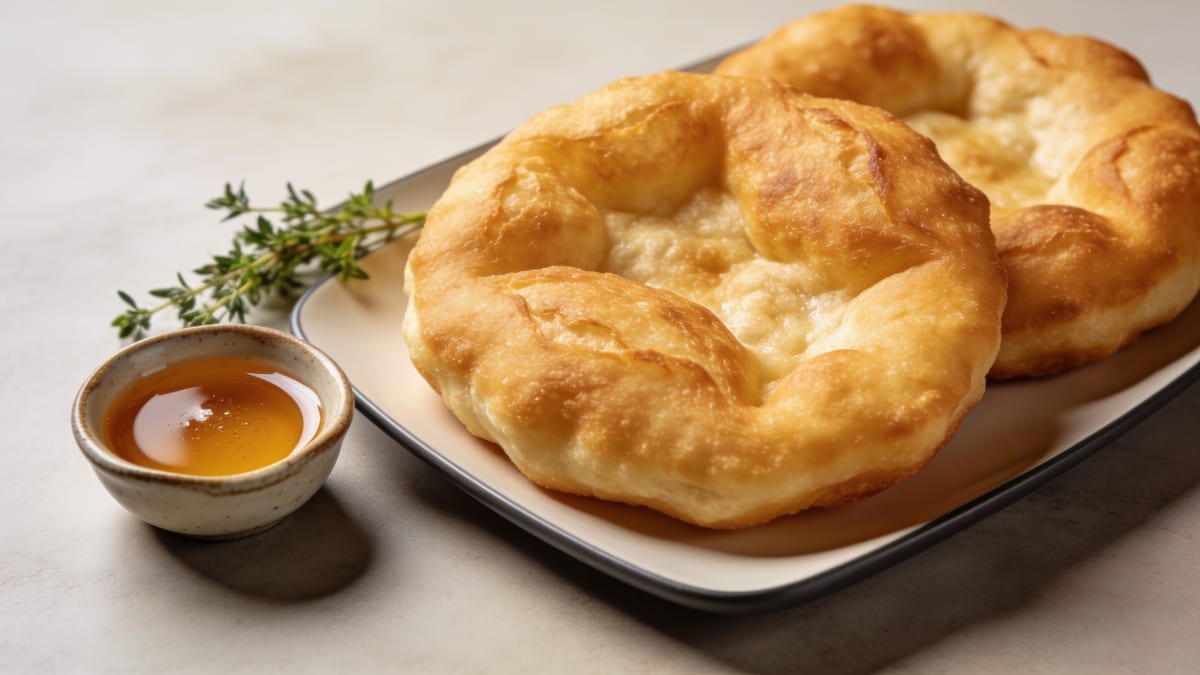
Fouettez 4 cups de farine avec 1 cuillère à soupe de levure chimique et 1 cuillère à café de sel, incorporez environ 1 1/4 cups d'eau tiède jusqu'à obtenir une pâte grossière, puis pétrissez juste jusqu'à ce qu'elle soit lisse et laissez-la reposer couverte 30 minutes. Chauffez 1 inch d'huile neutre à 350°F/175°C dans une poêle épaisse ou une cocotte. Divisez la pâte en 6 morceaux, aplatissez et étirez chacun en un disque fin de 7 inch avec un petit trou percé au centre, et faites frire un à un 1 à 2 minutes par face, en retournant une fois, jusqu'à ce que le pain soit bien doré et gonflé. Égouttez sur une grille et servez tiède avec du miel ou des garnitures salées.
- Maintenez l'huile à 350°F/175°C : trop froide, le pain absorbe le gras ; trop chaude, il dore avant de gonfler.
- Laissez reposer la pâte au moins 30 minutes pour que le gluten se détende et que les disques s'étirent finement sans se rétracter.
- Percez un petit trou au centre de chaque disque pour qu'il cuise uniformément et gonfle au lieu de se boursoufler au milieu.
Equipment
- Grand saladier
- Poêle profonde et épaisse ou cocotte
- Thermomètre à friture ou à lecture instantanée
- Pince ou écumoire
- Grille ou assiette tapissée de papier absorbant
Ingrédients
Pâte
- 500 g farine tout usage, prélevée à la cuillère et arasée, plus un peu pour le façonnage
- 12 g levure chimique
- 6 g sel fin
- 300 ml eau tiède, environ 110°F/43°C, plus si nécessaire
Pour la friture
- 1 L huile neutre, comme le colza ou une huile végétale, de quoi obtenir environ 1 inch / 2,5 cm de profondeur
Pour servir (facultatif)
- miel, pour une finition sucrée
- sucre glace, pour saupoudrer
Préparation
- ÉTAPE01
Dans un grand saladier, fouettez ensemble la farine, la levure chimique et le sel jusqu'à ce que le mélange soit homogène. Bien répartir la levure maintenant garantit que le pain frit gonflera uniformément par la suite.
- ÉTAPE02
Versez l'eau tiède et mélangez à la fourchette ou à la main jusqu'à obtenir une pâte grossière et légèrement collante, en ajoutant une cuillère à soupe d'eau de plus s'il reste des parties sèches. Renversez-la sur le plan de travail et pétrissez seulement 5 ou 6 fois, juste jusqu'à ce qu'elle forme une boule souple et lisse. Trop la travailler développe trop de gluten et donne un pain dur.
- ÉTAPE03
Couvrez le saladier d'un torchon humide et laissez la pâte reposer à température ambiante pendant 30 minutes. Cela détend le gluten pour que les disques s'étirent finement et gonflent uniformément au lieu de se rétracter.
- ÉTAPE04
Versez assez d'huile neutre dans une poêle épaisse ou une cocotte pour atteindre environ 1 inch (2,5 cm) de profondeur. Chauffez à feu moyen jusqu'à ce que le thermomètre indique 350°F/175°C. Placez une grille ou une assiette tapissée de papier absorbant à proximité pour l'égouttage.
- ÉTAPE05
Divisez la pâte en 6 morceaux égaux et gardez-les couverts. Sur un plan de travail légèrement fariné, aplatissez et étirez doucement un morceau en un disque fin d'environ 7 inch (18 cm) de diamètre, un peu plus mince au centre, puis percez un petit trou au milieu avec le doigt.
- ÉTAPE06
Déposez le disque dans l'huile chaude en l'éloignant de vous ; il doit grésiller et commencer à gonfler en quelques secondes. Faites frire 1 à 2 minutes jusqu'à ce que le dessous soit bien doré, puis retournez à la pince et faites frire la seconde face 1 à 2 minutes de plus. Ajustez le feu pour maintenir 350°F/175°C entre chaque pain.
- ÉTAPE07
Sortez le pain frit en laissant l'excédent d'huile s'égoutter dans la poêle, et posez-le sur la grille. Répétez avec les disques restants. Servez tiède, arrosé de miel et saupoudré de sucre glace, ou garni d'accompagnements salés.
Make ahead
Mélangez et pétrissez la pâte jusqu'à un jour à l'avance, emballez-la bien et réfrigérez-la ; laissez-la revenir à température ambiante environ 30 minutes avant de la façonner. Vous pouvez aussi aplatir les disques jusqu'à une heure avant la friture, en les gardant sous un torchon humide pour qu'ils ne sèchent pas. Pour un résultat des plus croustillants et gonflés, faites frire juste avant de servir.
Storage
Le pain frit est meilleur consommé tiède dans l'heure qui suit la friture. Laissez refroidir complètement les restes, puis conservez-les dans un contenant hermétique à température ambiante jusqu'à 2 jours, ou au réfrigérateur jusqu'à 4 jours. Réchauffez dans un four à 350°F/175°C pendant 5 à 6 minutes pour re-croustiller la croûte ; évitez le micro-ondes, qui les rend mous et caoutchouteux.
Variations
Taco navajo
Transformez le pain frit en base généreuse : garnissez chaque disque tiède de bœuf haché assaisonné ou de haricots pinto, de fromage râpé, de laitue ciselée, de tomate en dés, d'oignon et d'une cuillerée de salsa ou de chile vert. Servez ouvert et mangez à la fourchette.
Miel et sucre à la cannelle
Pour une version dessert, saupoudrez le pain chaud d'un mélange de cannelle et de sucre, ou arrosez-le généreusement de miel avec une pluie de sucre glace. La surface chaude et croustillante retient le sucre à merveille.
Pain frit sans gluten
Remplacez la farine tout usage par un mélange à pâtisserie sans gluten 1:1 contenant de la gomme de xanthane. La pâte sera plus molle et plus collante, alors manipulez-la avec les mains huilées et attendez-vous à un gonflement un peu plus dense, mais vous obtiendrez tout de même un pain frit croustillant et doré.
Serve with
Nutrition per serving
Nutrition values are estimates based on the metric measurements. Adjust as needed.
Questions fréquentes
Pourquoi mon pain frit est-il gras ou dur ?
Un pain frit gras signifie presque toujours que l'huile était trop froide, si bien que la pâte l'absorbe au lieu de se sceller et de gonfler ; maintenez l'huile stable à 350°F/175°C. La dureté vient d'un pétrissage excessif, qui développe trop de gluten : mélangez donc la pâte juste jusqu'à ce qu'elle soit lisse et accordez-lui un repos complet de 30 minutes.
Puis-je préparer du pain frit sans thermomètre ?
Oui. Jetez une petite pincée de pâte dans l'huile ; elle doit grésiller aussitôt et remonter à la surface en quelques secondes sans dorer instantanément. Si elle coule et bouillonne à peine, l'huile est trop froide ; si elle fonce en quelques secondes, l'huile est trop chaude.
Quelle est la meilleure huile pour la friture ?
Une huile neutre à point de fumée élevé, comme le colza, une huile végétale ou l'huile de tournesol, garde une saveur nette et permet au pain de croustiller. Pour une saveur traditionnelle, le saindoux ou le suif de bœuf sont des choix classiques, même s'ils rendent le pain frit non végane.
Le pain frit navajo est-il le même que l'Indian fry bread ou les sopaipillas ?
Le pain frit navajo et l'Indian fry bread désignent le même style de pâte levée frite jusqu'à ce qu'elle gonfle, avec des recettes qui varient selon les familles et les nations. Les sopaipillas sont une pâte frite apparentée, mais généralement plus petites, souvent gonflées en un coussin creux et plutôt sucrées, tandis que le pain frit est un grand disque plat et robuste, destiné à recevoir des garnitures.
Puis-je préparer la pâte à l'avance ?
Absolument. La pâte se conserve bien, emballée, au réfrigérateur jusqu'à un jour ; laissez-la simplement revenir à température ambiante avant de la façonner pour qu'elle s'étire facilement. Faites frire le pain à la dernière minute avant de servir, car le pain frit perd de son croustillant en attendant.
Cooked this? Rate it.
Real ratings from real cooks. We only show a score once enough of you have weighed in — no fabricated stars.