Pains à Hamburger Maison
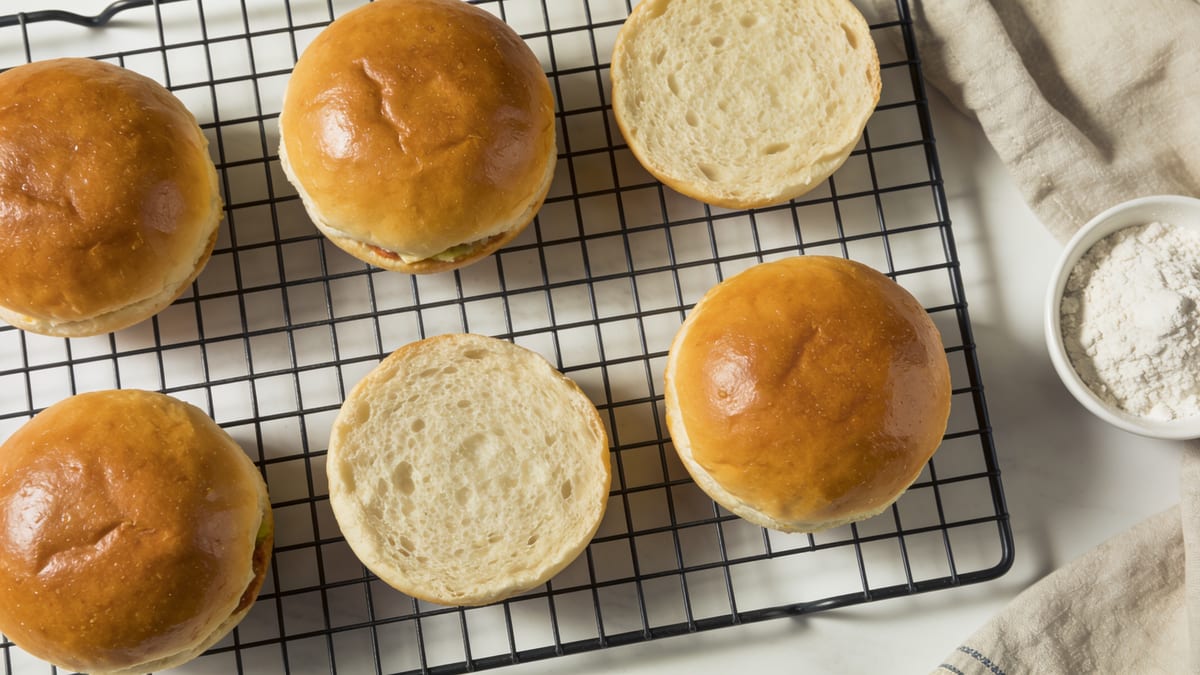
Ces pains à hamburger maison cuisent hauts et dorés, avec une mie moelleuse et aérienne et un goût légèrement sucré et beurré qui tient un steak juteux sans se transformer en bouillie. Une pâte enrichie au lait, au beurre et à un œuf entier leur donne une texture tendre, presque briochée, tandis qu'une double levée bâtit la structure qui les garde moelleux plusieurs jours. Une dorure brillante à l'œuf et une pluie de graines de sésame les finissent comme ceux d'une vraie boulangerie.
Réactivez 7 g de levure sèche active avec une pincée du sucre dans 240 ml de lait tiède et 60 ml d'eau tiède jusqu'à ce que le mélange mousse, puis incorporez 500 g de farine de gruau (bread flour), le reste du sucre, 8 g de sel, 57 g de beurre ramolli et 1 œuf ; pétrissez 8-10 minutes jusqu'à obtenir une pâte lisse et élastique, laissez lever jusqu'à ce qu'elle double (environ 1 heure), divisez en 8 pâtons d'environ 95 g chacun, roulez-les en boules serrées et aplatissez-les légèrement, puis laissez pousser 45 minutes sur une plaque tapissée de papier cuisson ; badigeonnez de dorure, parsemez de graines de sésame et enfournez à 190C/375F pendant 15-17 minutes jusqu'à ce qu'ils soient bien dorés et à 88-90C/190F à cœur, puis laissez refroidir complètement avant de les couper.
- Pesez votre farine : un excès de farine est la première cause de pains denses et secs ; avec 500 g, la pâte doit être légèrement collante au pétrissage, pas rigide.
- Ne précipitez pas la seconde pousse : avant la cuisson, les pains façonnés doivent paraître gonflés et trembloter quand on les pousse légèrement, sinon ils ressortiront plats.
- Sortez-les à 88-90C/190F à cœur et laissez-les refroidir complètement sur une grille pour que la mie se fixe avant de les couper.
Equipment
- Robot pâtissier avec crochet à pâte
- Grand saladier
- Balance de cuisine
- Plaque de cuisson
- Papier cuisson
- Pinceau de cuisine
- Corne ou coupe-pâte
Ingrédients
Pâte
- 240 ml lait entier, tiède, tiède, environ 43C/110F
- 60 ml eau tiède, tiède
- 7 g levure sèche active, 1 sachet standard
- 50 g sucre en poudre
- 500 g farine de gruau (bread flour), prélevée à la cuillère et arasée ; la farine tout usage convient aussi
- 8 g sel fin
- 57 g beurre doux, ramolli, à température ambiante
- gros œuf, à température ambiante
Dorure et garniture
- gros œuf, pour la dorure
- 15 ml eau, pour la dorure
- 15 g graines de sésame, facultatif
Préparation
- ÉTAPE01
Chauffez le lait et l'eau à environ 43C/110F — tièdes au toucher mais sans brûler. Incorporez la levure et une cuillère à café du sucre, puis laissez reposer jusqu'à ce que le mélange mousse et sente bon, environ 5 minutes. S'il ne fait pas de bulles, la levure est morte ou le liquide était trop chaud ; recommencez avec de la levure fraîche.
- ÉTAPE02
Dans un robot pâtissier muni du crochet à pâte, réunissez le mélange de levure réactivée, le reste du sucre, la farine de gruau, le sel, le beurre ramolli et l'œuf. Mélangez à basse vitesse jusqu'à obtenir une pâte grossière, puis pétrissez à vitesse moyenne-basse 8-10 minutes jusqu'à ce qu'elle soit lisse, élastique et légèrement collante. Elle doit se détacher des parois mais adhérer un peu au fond du bol.
- ÉTAPE03
Façonnez la pâte en boule, déposez-la dans un saladier légèrement huilé et couvrez d'un linge humide ou de film alimentaire. Laissez lever dans un endroit chaud jusqu'à ce qu'elle double de volume, environ 1 heure. Appuyez doucement du doigt : l'empreinte doit se résorber lentement.
- ÉTAPE04
Renversez la pâte sur un plan de travail légèrement fariné et dégazez-la délicatement. Divisez en 8 pâtons égaux, environ 95 g chacun pour une cuisson uniforme. Emprisonnez chaque pâton sous la paume et roulez-le contre le plan de travail en une boule serrée et lisse, puis aplatissez-le en un disque de 9 cm/3.5 inch. Disposez-les sur une plaque tapissée de papier cuisson, en les espaçant de 5 cm/2 inches.
- ÉTAPE05
Couvrez sans serrer les pains façonnés et laissez pousser jusqu'à ce qu'ils soient gonflés et presque doublés, 40-45 minutes. Pendant ce temps, placez une grille au centre du four et préchauffez à 190C/375F.
- ÉTAPE06
Fouettez l'œuf restant avec 1 tablespoon d'eau. Badigeonnez une couche fine et régulière sur chaque pain pour ce fini brillant de boulangerie, puis parsemez de graines de sésame si vous en utilisez. Badigeonnez délicatement pour ne pas dégonfler les pains levés.
- ÉTAPE07
Enfournez pour 15-17 minutes, en tournant la plaque à mi-cuisson, jusqu'à ce que le dessus soit bien doré et que la température à cœur atteigne 88-90C/190F. S'ils colorent trop vite, couvrez-les sans serrer d'une feuille d'aluminium pour les dernières minutes.
- ÉTAPE08
Transférez les pains sur une grille et laissez-les refroidir complètement, au moins 20 minutes, avant de les couper : les trancher tièdes tasse la mie. Fendez-les au couteau-scie et faites griller les faces coupées pour le meilleur burger.
Make ahead
La pâte peut être préparée la veille et laissée pousser à froid toute la nuit au réfrigérateur pour la première levée ; façonnez et faites la seconde pousse le lendemain, en prolongeant un peu le temps de pousse puisque la pâte part froide. Les pains cuits se congèlent aussi à merveille : vous pouvez donc préparer une fournée des semaines avant un barbecue.
Storage
Conservez les pains refroidis dans un sac ou un contenant hermétique à température ambiante jusqu'à 3 jours ; faites griller les faces coupées ou réchauffez brièvement au four pour raviver le moelleux. Évitez le réfrigérateur, qui rassit le pain plus vite. Pour une conservation plus longue, congelez jusqu'à 3 mois.
Variations
Pains à hamburger complets
Remplacez jusqu'à la moitié de la farine de gruau (250 g) par de la farine complète et ajoutez 1-2 tablespoons de lait en plus, car la farine complète boit davantage de liquide. Les pains ressortent plus parfumés et un brin plus denses — toujours moelleux, avec une mâche plus rustique.
Sans produits laitiers et végétalien
Utilisez une boisson d'avoine ou de soja non sucrée à la place du lait animal, un beurre végétal en bloc à la place du beurre, et supprimez l'œuf de la pâte (ajoutez 2 tablespoons de boisson végétale supplémentaires). Badigeonnez le dessus de boisson végétale ou d'un peu de sirop d'érable au lieu de la dorure à l'œuf pour la brillance.
Pains à hamburger à la pomme de terre
Remplacez 60 g de farine par 90 g de purée de pommes de terre nature refroidie et retenez un peu de l'eau. Cet amidon supplémentaire donne des pains exceptionnellement moelleux et humides, qui restent frais un jour de plus.
Serve with
Nutrition per serving
Nutrition values are estimates based on the metric measurements. Adjust as needed.
Questions fréquentes
Peut-on faire des pains à hamburger maison sans robot pâtissier ?
Tout à fait. Mélangez la pâte à la cuillère en bois jusqu'à ce qu'elle se rassemble, puis pétrissez-la à la main sur un plan de travail légèrement fariné pendant 12-15 minutes, jusqu'à ce qu'elle soit lisse et élastique. C'est physique, mais les pains à hamburger maison ressortent tout aussi moelleux — comme la pâte est enrichie, farinez légèrement pour gérer le collant plutôt que d'ajouter beaucoup de farine.
Pourquoi mes pains à hamburger maison sont-ils denses ?
Les deux coupables habituels sont un excès de farine et une pousse insuffisante. Pesez votre farine si possible, et laissez les deux levées aller à leur terme : avant d'enfourner, les pains façonnés doivent paraître visiblement gonflés et se résorber lentement au toucher. Une levure faible ou périmée donnera aussi des pains plats et lourds.
Quelle est la meilleure farine pour les pains à hamburger ?
La farine de gruau est idéale car sa teneur plus élevée en protéines bâtit la structure d'un pain haut, moelleux et à la mâche agréable qui tient tête aux garnitures juteuses. La farine tout usage convient aussi et donne une mie un peu plus tendre, façon gâteau — pétrissez simplement jusqu'à ce que la pâte soit lisse et élastique.
Peut-on congeler les pains cuits ?
Oui. Laissez-les refroidir complètement, puis congelez-les entiers dans un sac zip jusqu'à 3 mois. Décongelez à température ambiante et rafraîchissez-les au four à 150C/300F pendant 5 minutes, ou coupez-les avant congélation pour pouvoir griller les moitiés directement à la sortie du congélateur.
Combien de temps à l'avance peut-on préparer la pâte ?
Vous pouvez ralentir la première levée au réfrigérateur toute la nuit, jusqu'à 24 heures. Façonnez la pâte froide, puis laissez pousser les pains à température ambiante, ce qui peut prendre un peu plus de temps. Cette fermentation à froid approfondit même la saveur des pains finis.
Cooked this? Rate it.
Real ratings from real cooks. We only show a score once enough of you have weighed in — no fabricated stars.