Musubi au Spam
Spam musubi is Hawaii's ultimate grab-and-go snack: a warm block of sticky short-grain rice topped with a slice of teriyaki-glazed Spam and belted with a strip of nori. Pan-frying the Spam until the edges caramelize, then glazing it in a quick soy-mirin sauce, gives salty-sweet savory bites with a slightly crisp edge against the soft rice. Pressing everything in a mold while the rice is still warm is the trick that makes each piece hold together neatly enough to wrap and take anywhere.
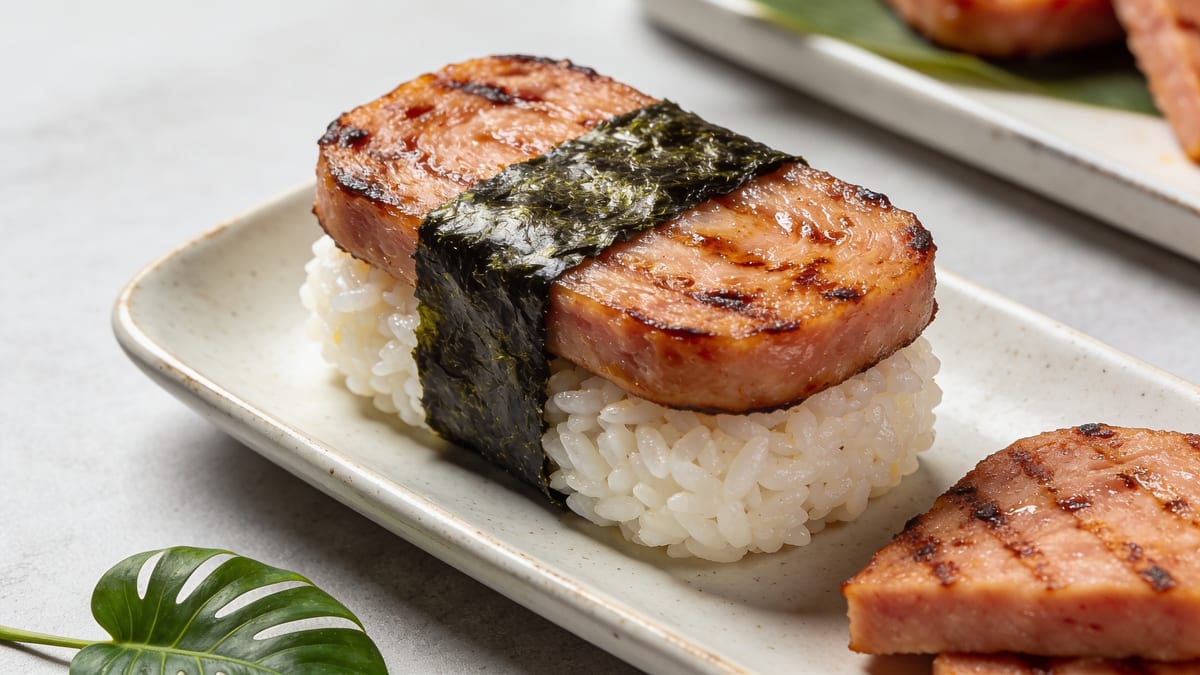
Rinse 2 cups short-grain rice until the water runs clear and cook it (rice cooker, or 600 ml water in a covered pot simmered 18 minutes and rested 10). While it steams, whisk 1/4 cup soy sauce, 2 tbsp mirin, 2 tbsp brown sugar and an optional 1 tbsp oyster sauce, then slice one can of Spam into 8 slabs and pan-fry them in a little oil over medium-high until browned on both sides; pour in the glaze and let it bubble and coat the slices. Cut 4 nori sheets in half, set a musubi mold (or a cleaned, both-ends-removed Spam can) on a strip, pack in a 2 cm layer of warm rice, press firmly, lay a glazed Spam slice on top, lift the mold away, and fold the nori up and over, sealing the end with a dab of water. Serve warm or at room temperature.
- Press the rice while it's still warm and pack it firmly—cold, loose rice won't hold its shape or wrap cleanly.
- Let the glaze reduce until it's syrupy and clings to the Spam; a watery sauce makes the nori soggy.
- No mold? Wash an empty Spam can, cut out both ends, and use it as a press.
Equipment
- Musubi mold (or a cleaned Spam can)
- Rice cooker or heavy lidded pot
- Nonstick skillet
- Sharp knife
- Small bowl for the glaze
- Rice paddle or spoon
Ingrédients
For the rice
- 370 g short-grain white rice (sushi rice), rinsed until the water runs nearly clear
- 600 ml water, for cooking the rice
For the Spam & teriyaki glaze
- 340 g Spam (classic or less-sodium)
- 60 ml low-sodium soy sauce
- 30 ml mirin
- 25 g brown sugar, packed
- 15 ml oyster sauce, optional, adds depth
- 15 ml neutral oil, for frying
For assembly
- roasted nori (seaweed) sheets, each cut in half crosswise
- 12 g furikake, optional, for sprinkling
Préparation
- ÉTAPE01
Rinse the rice in a bowl of cold water, swirling and draining several times until the water runs nearly clear. Cook in a rice cooker, or combine with the 600 ml water in a heavy pot, bring to a boil, cover, reduce the heat to low, and simmer 18 minutes. Keep it covered the whole time.
- ÉTAPE02
In a small bowl, whisk together the soy sauce, mirin, brown sugar, and oyster sauce (if using) until the sugar dissolves.
- ÉTAPE03
Open the can and slide out the block. Slice it lengthwise into 8 even slabs, each about 8 mm (1/3 inch) thick.
- ÉTAPE04
Heat the oil in a nonstick skillet over medium-high. Fry the Spam slices until golden and lightly crisp, 2-3 minutes per side. Pour in the glaze and let it bubble, turning the slices to coat, until the sauce is syrupy and clings, about 2 minutes. Remove from the heat.
- ÉTAPE05
Let the cooked rice rest, covered, 10 minutes, then fluff with a paddle. Cut each nori sheet in half to make 8 strips. Lay a strip shiny-side down on a board and center a musubi mold (or a cleaned, open-ended Spam can) on top.
- ÉTAPE06
Wet the mold to keep the rice from sticking. Spoon in about 3/4 cup warm rice, sprinkle with furikake if using, and press down firmly and evenly with the plunger or wet fingers into a 2 cm (3/4 inch) layer.
- ÉTAPE07
Lay a glazed Spam slice on the rice, press once more, then lift the mold straight up. Fold one end of the nori up and over the top, then the other, sealing the seam with a dab of water. Repeat with the rest. Serve warm, or wrap each in plastic for later.
Make ahead
You can cook the rice and glaze the Spam a few hours ahead. Keep the rice warm and covered (or in the rice cooker on the warm setting) so it stays pressable, and assemble within a few hours of serving. Once wrapped in plastic, musubi travel well at cool room temperature for a picnic or lunchbox.
Storage
Best eaten the same day at cool room temperature. To keep it longer, wrap each musubi tightly in plastic wrap and refrigerate up to 2 days; the rice hardens when cold, so let it return to room temperature or microwave 20-30 seconds before eating. Freezing isn't recommended—the rice turns dry and crumbly.
Variations
Furikake & egg musubi
Add a layer of furikake between two thinner rice layers, or slip a folded slice of tamagoyaki or a thin fried egg between the Spam and rice for a heartier bite.
Spicy musubi
Whisk 1-2 tsp sriracha or a spoonful of gochujang into the glaze, or spread a thin line of spicy mayo on the rice before adding the Spam.
Meat-free musubi (dietary swap)
Swap the Spam for 8 mm slabs of pressed extra-firm tofu or plant-based luncheon meat, fried and glazed the same way; use a vegetarian oyster-style sauce to keep it meat-free.
Serve with
Nutrition per serving
Nutrition values are estimates based on the metric measurements. Adjust as needed.
Questions fréquentes
What rice should I use for a spam musubi recipe?
Use Japanese short-grain white rice (often sold as sushi rice). It's sticky enough to press into a firm block that holds its shape. Unlike sushi, the rice for spam musubi is usually left plain rather than seasoned with vinegar, though a sprinkle of furikake is popular.
Do I need a musubi mold?
No. The classic hack is to wash the empty Spam can, cut out both ends with a can opener, and use it as a press. A small rectangular plastic musubi mold just makes the job faster and gives cleaner edges.
How do I store spam musubi and keep it from getting hard?
It's best the day it's made, at room temperature. If you refrigerate it, wrap each piece tightly in plastic; the rice firms up when cold, so let it come back to room temperature or microwave it for 20-30 seconds before eating.
Is spam musubi served hot or cold?
Most often at room temperature, which is what makes this spam musubi recipe such a good packable snack or lunch. It's also great warm, straight after assembly, when the Spam is still glossy from the glaze.
How can I make it lower in sodium?
Start with less-sodium Spam and low-sodium soy sauce, and rinse the Spam slices briefly before frying if you like. Balancing the glaze with a little extra mirin or a splash of water also softens the saltiness.
Cooked this? Rate it.
Real ratings from real cooks. We only show a score once enough of you have weighed in — no fabricated stars.