Acar Jahe Jepang (Gari)
Gari is the pale-pink pickled ginger served alongside sushi — paper-thin ginger slices steeped in a sweet-tart rice vinegar brine until they turn crisp-tender and refreshing. Salting the slices first draws out moisture so they stay snappy, and a quick blanch tames the raw burn while leaving plenty of clean heat. Made with young ginger it blushes pink on its own; with mature ginger you get the same bright flavor in a golden hue.
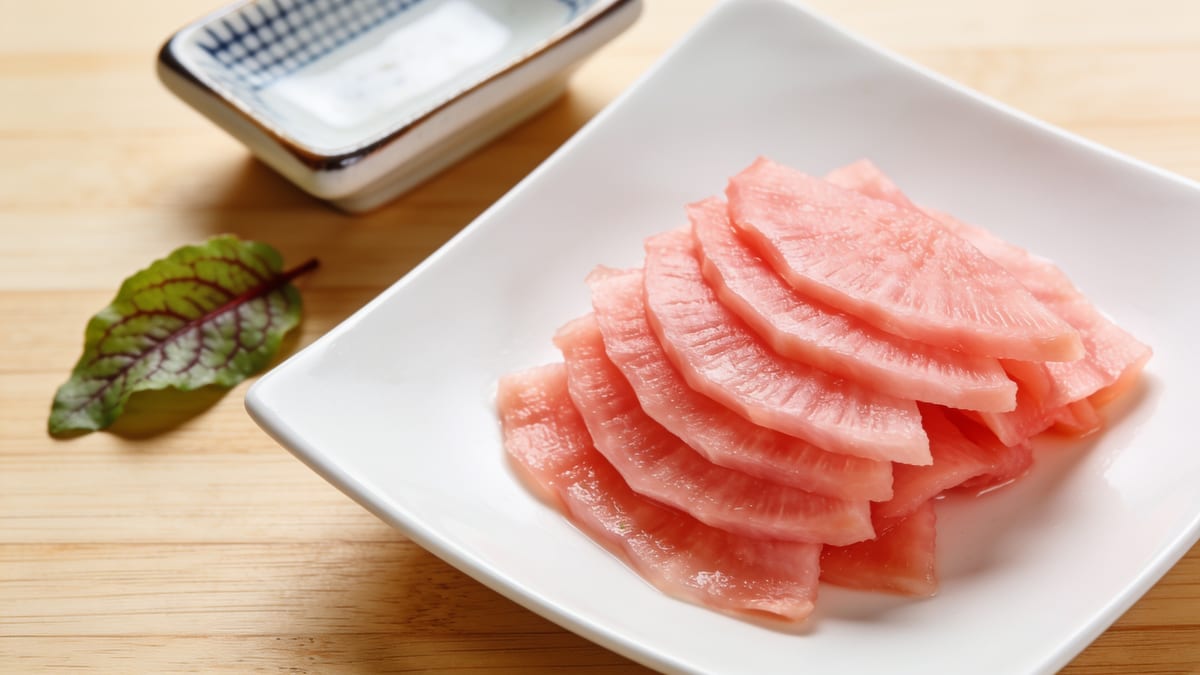
Scrape the skin off 250 g (9 oz) of the freshest ginger you can find, shave it into paper-thin sheets along the grain with a mandoline, toss the slices with 1 teaspoon of salt, and let them sit 30 minutes to weep moisture. Blanch the slices in boiling water — about 1 minute for young ginger, up to 3 for mature — then drain and gently squeeze them dry. Meanwhile, warm 240 ml (1 cup) unseasoned rice vinegar with 100 g (1/2 cup) sugar, 60 ml (1/4 cup) water, and 1/2 teaspoon salt just until dissolved. Pack the ginger into a clean heatproof jar, pour the hot brine over to submerge, cool 15 minutes, and refrigerate. It is pleasant after a few hours and truly tastes like gari after 48 hours.
- Slice along the grain, as thin as you can see light through — thick slices stay fibrous and harsh no matter how long they pickle.
- Adjust the blanch to the ginger: young ginger needs only about 1 minute, while mature ginger benefits from 2 to 3 minutes to mellow its bite.
- Use unseasoned rice vinegar and pour the brine over while hot; the heat helps the flavor penetrate and keeps the slices crisp-tender.
Equipment
- Mandoline or sharp vegetable peeler
- Small saucepan
- Fine-mesh sieve or colander
- Mixing bowl
- 500 ml (1 pint) heatproof glass jar with lid
- Spoon (for scraping the ginger skin)
Bahan
Ginger
- 250 g fresh young ginger (shin shoga), or the firmest, smoothest mature ginger you can find
- 5 g fine sea salt, for salting the slices
Pickling brine
- 240 ml unseasoned rice vinegar, check the label — 'seasoned' rice vinegar already contains sugar and salt
- 100 g granulated sugar
- 60 ml water, softens the acidity slightly
- 3 g fine sea salt
Cara membuat
- LANGKAH01
Scrape the thin skin off the ginger with the edge of a spoon — it follows the knobs and hollows better than a peeler and wastes less flesh. Break the ginger into its natural lobes so each piece is easy to handle, and trim away any dark or fibrous spots.
- LANGKAH02
Using a mandoline or a sharp vegetable peeler, shave the ginger into the thinnest possible sheets, slicing along the grain (lengthwise down each lobe). Slices should be nearly translucent; anything thick will stay woody. A knife works only if it is very sharp and you take your time.
- LANGKAH03
Toss the slices with 1 teaspoon of fine sea salt in a bowl and let them sit for 30 minutes. The salt pulls out excess moisture and some harshness, seasons the ginger through, and helps the slices keep a gentle snap in the jar. While you wait, wash the jar and lid in hot soapy water and let them air-dry.
- LANGKAH04
Bring a small saucepan of water to a boil. Add the salted slices and blanch: about 1 minute for young ginger, or 2 to 3 minutes for mature ginger, which is noticeably hotter. Drain in a fine-mesh sieve and, once cool enough to touch, press gently or squeeze small handfuls to remove excess water. Do not rinse — the light seasoning should stay.
- LANGKAH05
In the same saucepan, combine the rice vinegar, sugar, water, and 1/2 teaspoon salt. Warm over medium heat, stirring, just until the sugar dissolves and the brine steams — about 3 minutes. There is no need to boil it hard; you just want it hot and fully dissolved.
- LANGKAH06
Pack the squeezed ginger loosely into the clean jar. Pour the hot brine over the top so every slice is submerged, pressing the ginger down with clean chopsticks or a spoon to release trapped air bubbles. Young ginger will begin to blush pink within an hour or two as the pink pigment in the stems reacts with the vinegar.
- LANGKAH07
Let the open jar cool on the counter for about 15 minutes, then seal and refrigerate. The gari is enjoyable after 3 to 4 hours, genuinely good at 48 hours, and at its rounded, mellow best after about a week, once the sweet, sour, and gingery notes have fused.
Make ahead
This is a make-ahead recipe by design: the flavor is thin and sharp on day one, balanced at 48 hours, and best after about a week in the refrigerator. Make a jar whenever you spot fresh young ginger (early summer in most markets) and it will comfortably carry you through months of sushi nights.
Storage
Keep the gari refrigerated in its sealed jar with the slices fully submerged in brine. It holds excellent quality for about 2 months and remains safe and tasty for up to 6 months if you always fish it out with clean, dry chopsticks or a fork rather than fingers. If the brine ever turns cloudy or smells off, discard the batch.
Variations
Naturally pink gari
If you can only find mature ginger, which stays golden, drop a single thin slice of raw red beet into the jar with the hot brine and remove it after a day. You get the classic rosy hue from a whole ingredient rather than dye. If your young ginger has pink-tinged stem ends, leave them on — they carry the pigment that turns the whole jar blush.
Lower-sugar gari
Cut the sugar to 50 g (1/4 cup) for a bracing, more savory pickle, or swap in an equal volume of erythritol or a monk fruit blend for a sugar-free version that stays vegan. The pickle will taste sharper and is best after a full week of mellowing.
Kombu-yuzu gari
Slip a 5 cm (2 in) piece of kombu and a strip or two of yuzu (or lemon) zest into the jar before pouring the brine. The kombu adds a quiet savory depth and the citrus perfume makes this version outstanding next to grilled fish.
Serve with
Nutrition per serving
Nutrition values are estimates based on the metric measurements. Adjust as needed.
Pertanyaan umum
Why isn't my pickled ginger pink like the kind at sushi restaurants?
Color depends on the ginger. Young ginger has pink-tipped stems whose natural anthocyanin pigment turns rosy when it meets the acidic brine, so homemade pickled ginger made from it blushes on its own. Mature supermarket ginger lacks that pigment and stays golden — the flavor is still correct. Much commercial gari is simply dyed; at home, a thin slice of beet in the jar for a day gives the same effect naturally.
Can I make gari with regular mature ginger from the supermarket?
Yes. Choose the heaviest, smoothest, firmest knobs you can find, slice extra thin, and extend the blanch to 2 or 3 minutes — mature ginger is hotter and more fibrous than young ginger, and the longer blanch softens both qualities. Expect a slightly spicier, chewier pickle with the same sweet-tart character.
What's the difference between seasoned and unseasoned rice vinegar here?
Unseasoned rice vinegar is just vinegar; seasoned rice vinegar already contains added sugar and salt. This recipe builds the seasoning itself, so if seasoned vinegar is all you have, omit the added salt, cut the sugar roughly in half, and adjust to taste once dissolved. Avoid substituting harsh distilled white vinegar — rice vinegar's mildness is what makes pickled ginger gentle rather than aggressive.
How long does homemade pickled ginger need before I can eat it, and how long does it keep?
You can eat it after 3 to 4 hours in the refrigerator, but the flavor genuinely comes together at the 48-hour mark and keeps improving for about a week. Stored sealed, refrigerated, and submerged in brine, it keeps well for 2 months and remains good for up to 6 if you always use clean utensils to serve it.
Why blanch the ginger before pickling — can I skip it?
The brief blanch pulls out the harsh, throat-catching edge of raw ginger and slightly softens the slices so the brine penetrates evenly. Skip it and the pickle will be noticeably fiery and take much longer to mellow. If you love intense heat and are using very tender young ginger, you can shorten the blanch to 30 seconds, but some blanch is worth keeping.
Cooked this? Rate it.
Real ratings from real cooks. We only show a score once enough of you have weighed in — no fabricated stars.