Marinasi dan Saus Teriyaki
A double-duty Japanese teriyaki built from one pot: soy sauce, mirin, sake, and brown sugar simmered with fresh ginger and garlic, then split in two. Half stays thin and salty-sweet for soaking into chicken, salmon, or tofu; the other half gets a quick cornstarch slurry and turns into a glossy, spoon-coating glaze. Simmering first dissolves the sugar, mellows the raw garlic, and cooks off the alcohol's sharp edge, so both halves taste balanced rather than boozy or harsh.
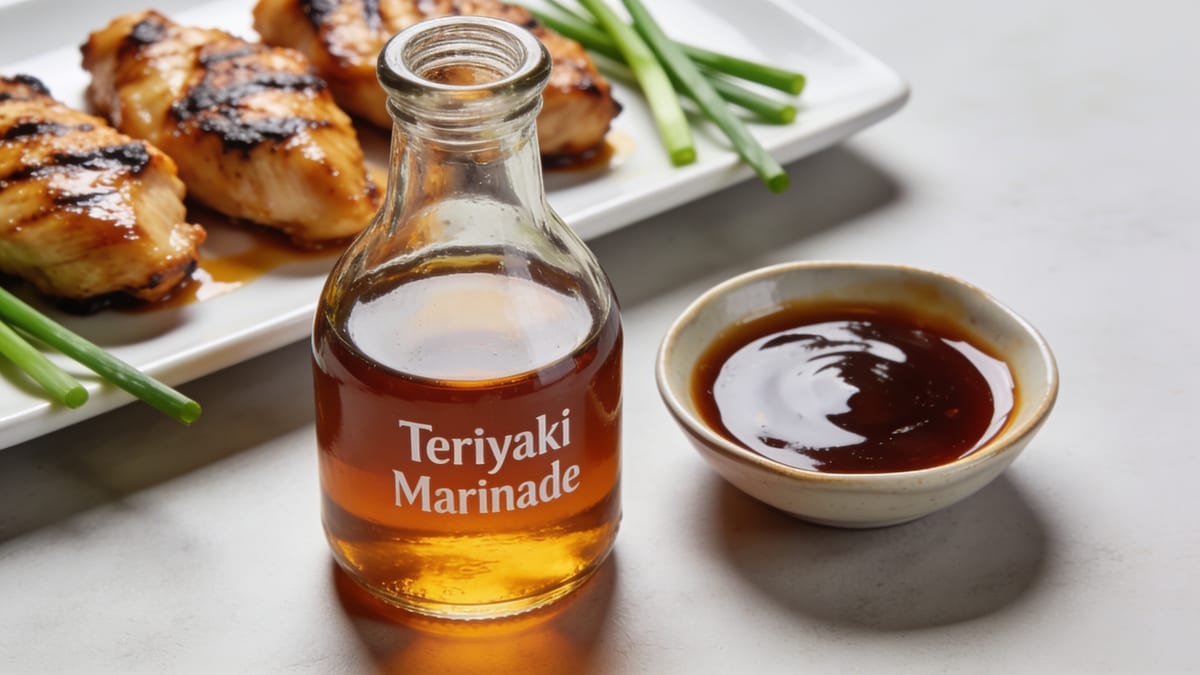
Whisk 120 ml (1/2 cup) soy sauce, 120 ml (1/2 cup) water, 60 ml (1/4 cup) each mirin and sake, and 55 g (1/4 cup packed) brown sugar in a small saucepan, then grate in 18 g (1 tbsp) fresh ginger and 3 garlic cloves. Bring to a gentle simmer over medium heat, stirring until the sugar dissolves, and simmer 5 minutes to mellow the garlic and cook off the alcohol. Pour half into a jar — that thinner half is your teriyaki marinade. Whisk a slurry of 1 tbsp cornstarch and 2 tbsp cold water into the pan and cook 1-2 minutes until the remaining half is glossy and coats a spoon; that is your sauce. Cool both before using, and keep them in separate jars in the fridge.
- Split the batch BEFORE thickening: the thin half soaks into raw protein, while the cornstarch-thickened half is for glazing and drizzling — thickened sauce sits on meat instead of seasoning it.
- Simmer gently, never boil hard — the sugar scorches quickly and turns the sauce bitter and murky instead of glossy.
- Never reuse marinade that touched raw meat; brush on the reserved thickened sauce during the last 2-3 minutes of cooking so the sugars caramelize without burning.
Equipment
- Small saucepan (1-2 quart)
- Whisk
- Microplane or fine grater
- Measuring cups and spoons
- Fine-mesh strainer
- Two glass jars with lids
Bahan
Marinade base
- 120 ml soy sauce, regular (koikuchi) style; low-sodium works if you prefer it milder
- 120 ml water
- 60 ml mirin, hon mirin has the best flavor, but aji-mirin is fine
- 60 ml sake, inexpensive drinking or cooking sake; dry sherry is a workable stand-in
- 55 g light brown sugar
- 18 g fresh ginger, peeled and finely grated, from about a 5 cm (2-inch) piece
- garlic cloves, finely grated or minced
For thickening the sauce half
- 8 g cornstarch
- 30 ml cold water, for the slurry; must be cold or the cornstarch will clump
Cara membuat
- LANGKAH01
Add the soy sauce, water, mirin, sake, and brown sugar to a small saucepan and whisk to start dissolving the sugar. Grate the ginger and garlic directly into the pan on a Microplane so none of the juice is lost.
- LANGKAH02
Set the pan over medium heat and bring it just to a simmer, whisking until no sugar grit remains on the bottom. Lower the heat so it barely bubbles and simmer for 5 minutes. This mellows the raw bite of the garlic and ginger and cooks off the sharpness of the sake — do not let it boil hard or the sugar will scorch.
- LANGKAH03
Pour half of the mixture — about 180 ml (3/4 cup) — into a jar. This thin, unthickened half is the teriyaki marinade; its salt and sugar need to stay loose and liquid so they can penetrate raw chicken, beef, salmon, or tofu. Let it cool completely before it touches any raw protein.
- LANGKAH04
Stir the cornstarch into the cold water until smooth, then whisk the slurry into the liquid still in the pan. Cook over medium heat, whisking constantly, for 1-2 minutes until the sauce turns glossy, thickens enough to coat the back of a spoon, and loses any chalky cornstarch taste.
- LANGKAH05
For a silky, restaurant-style glaze, pour the thickened sauce through a fine-mesh strainer to catch the ginger and garlic solids (skip this if you like the texture). Let both jars cool to room temperature, about 10 minutes for these small volumes. The sauce will thicken a little more as it cools.
- LANGKAH06
Marinate boneless chicken for 30 minutes to 4 hours, beef for 1 to 8 hours, firm tofu up to overnight, and fish or shrimp no more than 30 minutes — the salt starts to cure delicate seafood after that. Use the thickened sauce for brushing onto nearly cooked food, glazing rice bowls, or dipping.
- LANGKAH07
Cap both jars and refrigerate. Give the thickened sauce a stir before using; if it has set up too firmly, loosen it with a teaspoon of warm water or rewarm it briefly in a small pan.
Make ahead
This is a true make-ahead staple: the whole batch can be made up to 2 weeks in advance and refrigerated. If you know you'll want the glaze at its glossiest, keep the entire batch unthickened and whisk in the cornstarch slurry over heat just before serving — it takes 2 minutes from the fridge.
Storage
Refrigerate both jars. The unthickened marinade keeps about 2 weeks; the cornstarch-thickened sauce keeps about 1 week and may weep slightly — just whisk it back together. Both freeze well for up to 3 months (the thawed sauce may need a quick rewhisk over low heat to smooth out). Discard any marinade that has been in contact with raw meat or fish.
Variations
Gluten-free tamari teriyaki
Swap the soy sauce for an equal amount of gluten-free tamari and check that your mirin is labeled gluten-free (most are, but some budget brands add malt). Cornstarch is already gluten-free, so nothing else changes and the flavor is nearly identical — slightly deeper and less sharp.
Pineapple teriyaki
Replace the water with 120 ml (1/2 cup) unsweetened pineapple juice and cut the brown sugar to 2 tbsp (28 g). The juice adds fruity acidity, and its natural enzymes give the marinade half a mild tenderizing effect on chicken and pork.
Spicy sesame-ginger
Off the heat, stir 1 tsp toasted sesame oil and 1-2 tsp sriracha (or 1 tsp gochugaru) into the finished batch, and double the ginger. Note this adds Sesame to the allergen list. Excellent on grilled beef skewers and stir-fried noodles.
Serve with
Nutrition per serving
Nutrition values are estimates based on the metric measurements. Adjust as needed.
Pertanyaan umum
What's the difference between a teriyaki marinade and teriyaki sauce?
They share the same base, but the job is different. A teriyaki marinade stays thin and unthickened so its salt and sugar can migrate into raw protein and season it from within. Teriyaki sauce is the same liquid thickened with a cornstarch slurry so it clings to cooked food as a glossy glaze. That's why this recipe splits the batch before adding the cornstarch — a thickened sauce mostly sits on the surface of raw meat instead of penetrating it.
How long should I marinate chicken, beef, or fish?
Boneless chicken does well in 30 minutes to 4 hours, and beef can go 1 to 8 hours. Keep fish and shrimp to 30 minutes or less — the soy sauce is salty enough to start curing delicate seafood, turning the texture firm and slightly ham-like. Firm tofu is the exception: it benefits from a full overnight soak because it absorbs flavor slowly.
Can I reuse the teriyaki marinade after raw meat has been in it?
Not as-is. Once a teriyaki marinade has touched raw meat, poultry, or fish, it carries their bacteria and should be discarded. If you want that flavor on the finished dish, either reserve a portion before marinating or boil the used marinade hard for a full 3 minutes before brushing it on. The simpler route is this recipe's built-in answer: use the separate thickened sauce for glazing and serving.
I don't have sake or mirin — what can I substitute?
For sake, use dry sherry or a dry white wine in the same amount. For mirin, use 60 ml (1/4 cup) of sake or sherry plus 2 tsp sugar. For a fully alcohol-free version, replace both with 120 ml (1/2 cup) unsweetened apple or white grape juice plus 1 tbsp rice vinegar; the simmer step matters even more here to concentrate the flavor. The result is slightly less complex but still unmistakably teriyaki.
Why did my sauce come out too salty or too thick?
Too salty usually means it boiled too hard and over-reduced — the water evaporates and concentrates the soy sauce, so keep it at a bare simmer and dilute an over-reduced batch with a splash of water. Too thick usually means the cornstarch kept cooking after it hit full thickness, or the sauce chilled in the fridge; whisk in warm water a teaspoon at a time until it flows like warm honey.
Cooked this? Rate it.
Real ratings from real cooks. We only show a score once enough of you have weighed in — no fabricated stars.