Risoni al parmigiano e aglio
This Parmesan garlic orzo is a one-pan Italian side that cooks risotto-style: the little rice-shaped pasta is toasted in butter until nutty, then simmered in garlicky broth so each grain stays tender and separate in a glossy, creamy sauce. Finished off the heat with a generous handful of Parmesan and an optional splash of cream, it lands somewhere between a pilaf and a risotto — rich, savory, and ready in about half an hour.
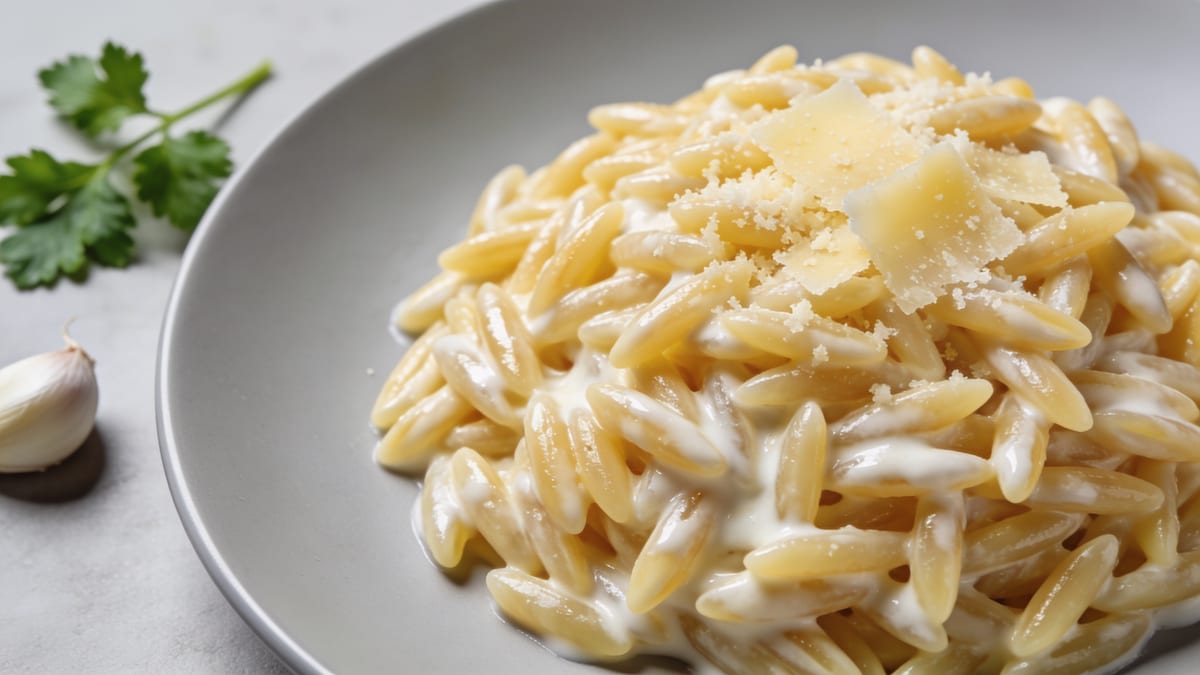
Toast 1½ cups (300 g) dry orzo in 2 tbsp butter plus 1 tbsp olive oil over medium heat until lightly golden and nutty, about 2-3 minutes, then stir in 4 minced garlic cloves for 30-60 seconds until fragrant. Pour in 3 cups (720 ml) hot vegetable broth, bring to a gentle simmer, cover, and cook 10-12 minutes, stirring two or three times so it doesn't stick, until the orzo is al dente and most of the liquid has thickened into a loose, creamy sauce. Off the heat, stir in ¾ cup (75 g) finely grated Parmesan and an optional splash of cream, season with salt, pepper, and a squeeze of lemon, and let it rest 2 minutes to thicken before serving.
- Toast the dry orzo until golden before adding any liquid — it deepens the flavor and keeps the grains separate instead of gummy.
- Add the Parmesan off the heat and stir hard; direct heat makes the cheese clump and turn stringy.
- Stop cooking while there's still a little loose liquid — orzo keeps drinking as it rests, and you want it creamy, not stiff.
Equipment
- Large saucepan or deep skillet with lid
- Small saucepan (for the broth)
- Wooden spoon
- Box grater or microplane
- Measuring cups and spoons
- Chef's knife and cutting board
Ingredienti
For the orzo
- 300 g Orzo pasta, dry
- 30 g Unsalted butter
- 15 ml Olive oil
- Garlic, minced
- 720 ml Vegetable broth, hot, preferably low-sodium
To finish
- 75 g Parmesan cheese, finely grated
- 60 ml Heavy cream, optional, for extra creaminess
- 8 g Fresh parsley, chopped
- Lemon, juice only, optional
- Fine sea salt
- Black pepper, freshly ground
Preparazione
- PASSO01
In a small saucepan or the microwave, warm the vegetable broth until it's steaming, then keep it hot nearby. Adding hot liquid to the toasted orzo keeps the cooking moving and helps the grains stay separate.
- PASSO02
Melt the butter with the olive oil in a large saucepan or deep skillet over medium heat. Add the dry orzo and stir almost constantly for 2-3 minutes, until the grains turn light golden and smell toasty and nutty.
- PASSO03
Add the minced garlic and stir for 30-60 seconds, just until fragrant. Keep it moving so it doesn't brown or turn bitter.
- PASSO04
Pour in the hot broth and add a pinch of salt. Bring to a gentle simmer, then cover and cook for 10-12 minutes, stirring two or three times so nothing sticks, until the orzo is al dente and most of the liquid has thickened into a loose, creamy sauce.
- PASSO05
Take the pan off the heat. Stir in the grated Parmesan and the cream, if using, working quickly until the cheese melts into a glossy sauce. Taste and season with salt and plenty of black pepper.
- PASSO06
Let the orzo sit for 2 minutes to thicken to a spoonable, creamy consistency. Stir through the chopped parsley and a squeeze of lemon, loosen with a splash of hot broth if it stiffens, and serve right away.
Make ahead
You can toast the orzo and mince the garlic up to a day ahead; keep them separate and covered. For the best texture, cook the orzo just before serving, since it thickens and stiffens as it sits. If you need to cook it in advance, stop it slightly underdone and reheat with a little extra warm broth to bring back the creamy sauce.
Storage
Store cooled orzo in an airtight container in the fridge for up to 4 days. It firms up as it chills, so loosen it with a splash of broth, milk, or water and reheat gently in a skillet or the microwave over low heat, stirring until it turns creamy again. Freezing isn't recommended, as the texture goes grainy once thawed.
Variations
Creamy spinach Parmesan orzo
Stir in two large handfuls of baby spinach during the last 2 minutes of simmering, letting it wilt into the orzo, and add a small pinch of grated nutmeg with the Parmesan for a rounder, greener side.
Gluten-free version
Swap in a rice-based gluten-free orzo, or use short-grain rice cooked risotto-style. Add the broth in two or three stages since gluten-free pasta and rice absorb liquid differently, and keep everything else the same.
Lemon and pea
Fold in ½ cup (75 g) thawed peas and the finely grated zest of the lemon along with the juice for a brighter, spring-forward version that pairs especially well with fish.
Serve with
Nutrition per serving
Nutrition values are estimates based on the metric measurements. Adjust as needed.
Domande frequenti
What exactly is orzo, and can I use another pasta?
Orzo is a small, rice-shaped pasta made from durum wheat — in Italy it's usually sold as risoni. Its shape is what makes it perfect for creamy, risotto-style orzo recipes like this one, because the little grains release starch as they simmer. If you can't find it, ditalini or broken spaghetti will work, though the texture will be slightly different.
Do I have to boil and drain the orzo first?
No. This is a one-pan method: the orzo cooks directly in the broth and absorbs it, so all that starch and flavor stays in the pan instead of going down the drain. It's faster and gives you the signature creamy finish without a separate pot of boiling water.
How do I keep the Parmesan from turning stringy?
Take the pan off the heat before you add the cheese, and use freshly grated Parmesan rather than the pre-shredded kind, which is coated to prevent caking. Stir it in vigorously so it melts into the residual heat and emulsifies into a smooth sauce instead of clumping.
Can I make this vegan or dairy-free?
Yes — swap the butter for olive oil or vegan butter, use a good melting vegan Parmesan or 2-3 tablespoons of nutritional yeast, and replace the cream with a splash of unsweetened oat or cashew cream. You'll lose a little of the salty sharpness, so taste and adjust the seasoning at the end.
What can I add to turn this side into a meal?
Some of the most popular orzo recipes bulk it up into a main by folding in cooked chicken, shrimp, or white beans, plus a green vegetable like spinach, peas, or roasted broccoli. Add them in the last couple of minutes so everything warms through without overcooking the pasta.
Cooked this? Rate it.
Real ratings from real cooks. We only show a score once enough of you have weighed in — no fabricated stars.