フライドスカッシュ(カボチャのカリカリ揚げ)
Tender rounds of yellow summer squash in a seasoned cornmeal crust, shallow-fried until golden and audibly crisp — a Southern American side that turns a garden glut into something people fight over. Salting the slices first pulls out excess water so the coating clings and crisps instead of steaming and sliding off. A quick buttermilk-egg dip plus a cornmeal-flour dredge gives you crackly edges outside and almost-creamy squash inside.
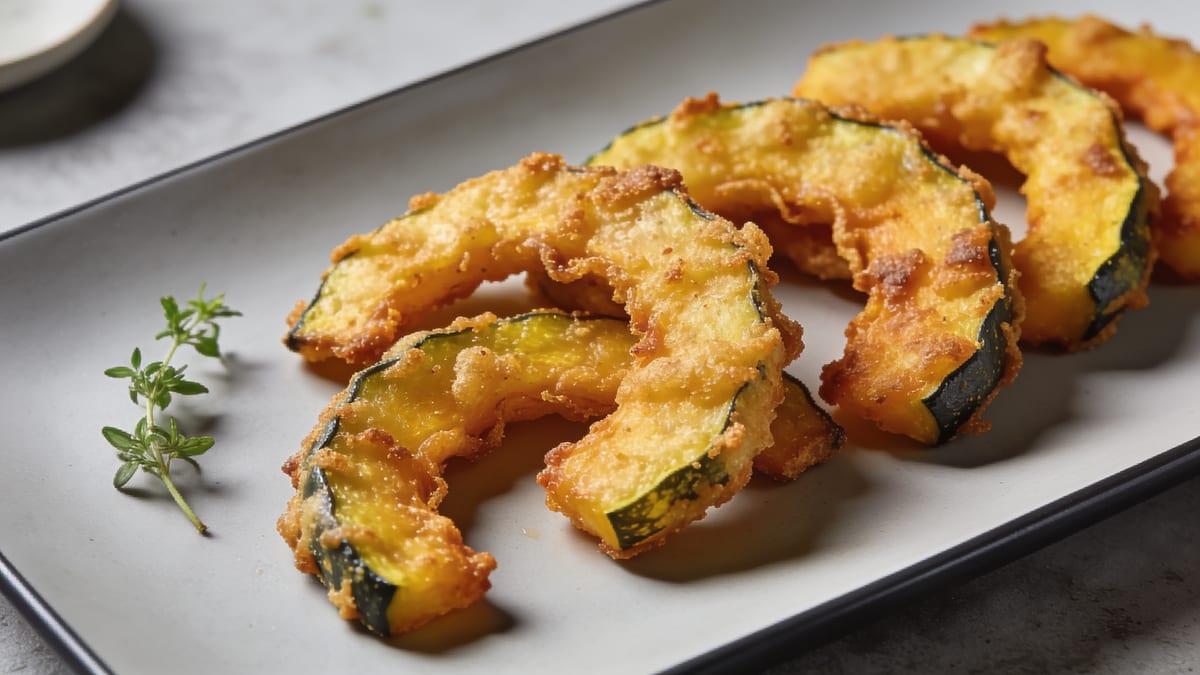
Slice 680 g (1 1/2 lb) yellow summer squash into 6 mm (1/4-inch) rounds, toss with 1/2 tsp salt, and let them sit in a colander 10 minutes; pat thoroughly dry. Whisk 1 egg with 120 ml (1/2 cup) buttermilk in one shallow bowl; in another, stir together 110 g (3/4 cup) fine cornmeal, 60 g (1/2 cup) flour, 1 tsp salt, 1/2 tsp black pepper, 1/2 tsp garlic powder, 1 tsp paprika, and a pinch of cayenne. Heat 1 cm (about 1/2 inch) of neutral oil in a cast-iron skillet to 175°C (350°F). Dip each round in the buttermilk mixture, press into the dredge, and fry in a single layer 2 to 3 minutes per side until deep golden. Drain on a wire rack, sprinkle with salt while hot, and serve immediately.
- Salt and blot the squash first — removing surface moisture is the single biggest defense against a soggy, slipping crust.
- Keep the oil at 165–175°C (330–350°F); if it drops too low the squash drinks oil, and if it spikes the cornmeal burns before the squash softens.
- Drain on a wire rack, never on a plate or paper-towel pile — trapped steam un-crisps the bottom layer in minutes.
Equipment
- 10- to 12-inch cast-iron or heavy-bottomed skillet
- Cutting board and chef's knife
- Colander
- Two shallow bowls or pie plates
- Wire rack set over a rimmed baking sheet
- Slotted spatula or tongs
- Instant-read or clip-on fry thermometer
材料
Squash
- 680 g yellow summer squash (straightneck or crookneck), sliced into 6 mm / 1/4-inch rounds
- 3 g fine sea salt, for drawing out moisture
Buttermilk wash
- large egg
- 120 ml buttermilk, or whole milk in a pinch
Dredge and frying
- 110 g fine yellow cornmeal
- 60 g all-purpose flour
- 6 g fine sea salt
- 1 g freshly ground black pepper
- 1.5 g garlic powder
- 2 g paprika, sweet or smoked
- 0.5 g cayenne pepper, optional
- 360 ml neutral oil (vegetable or canola), enough for 1 cm / 1/2 inch depth in the skillet
作り方
- ステップ01
Trim the ends off the squash and slice into even 6 mm (1/4-inch) rounds — thinner turns to mush, thicker stays raw in the middle. Toss the rounds in a colander with 1/2 tsp salt and let them sit over the sink for 10 minutes so beads of moisture form on the surface.
- ステップ02
While the squash rests, whisk the egg and buttermilk together in one shallow bowl until smooth. In a second shallow bowl, stir together the cornmeal, flour, 1 tsp salt, black pepper, garlic powder, paprika, and cayenne. Set a wire rack over a rimmed baking sheet next to the stove for draining.
- ステップ03
Spread the squash on a clean kitchen towel or paper towels and pat both sides completely dry — this step decides whether the crust sticks. Pour 1 cm (about 1/2 inch) of oil into the skillet and heat over medium until it reads 175°C (350°F), or until a pinch of dredge sizzles instantly without smoking.
- ステップ04
Working with a handful at a time, dip the squash in the buttermilk mixture, let excess drip off, then press both sides firmly into the cornmeal dredge so the coating adheres. Set the coated rounds on a plate in a single layer; don't stack them or the coating will sweat off.
- ステップ05
Lay rounds into the hot oil in a single layer without crowding — about a third of the squash per batch. Fry 2 to 3 minutes until the underside is deep golden brown, flip once with a slotted spatula, and fry 2 minutes more on the second side.
- ステップ06
Transfer the fried rounds to the wire rack and sprinkle immediately with a small pinch of salt while they're glistening. Let the oil come back to temperature between batches, then dredge and fry the remaining squash the same way, skimming out any stray crumbs so they don't burn.
- ステップ07
Pile the fried squash onto a platter and serve within 15 minutes, while the crust is at its crackliest, with ranch, comeback sauce, or just a squeeze of lemon and extra black pepper.
Make ahead
You can slice and salt the squash and mix the dry dredge up to a day ahead; store the blotted-dry rounds between paper towels in the fridge and the dredge covered at room temperature. Don't dredge until just before frying — the coating turns gummy if it sits on the wet squash. If serving a crowd, hold finished batches uncovered on a wire rack in a 95°C (200°F) oven for up to 30 minutes.
Storage
Fried squash is best the day it's made, but leftovers keep in an airtight container in the refrigerator for up to 3 days. Re-crisp in a 220°C (425°F) oven or air fryer for 5 to 7 minutes in a single layer; the microwave will make the crust rubbery. Freezing is not recommended — thawed squash releases water and the coating sloughs off.
Variations
Gluten-free
Swap the all-purpose flour for white rice flour and use certified gluten-free cornmeal. Rice flour actually fries up extra crisp, so this version gives up nothing in texture.
Extra-crispy double dredge
After the first coating, dip the rounds back into the buttermilk and dredge a second time. The crust fries up thicker and craggier — worth it when the squash is headed for a sauce-heavy plate.
Beer-battered pub style
Skip the dredge bowls and whisk 120 g (1 cup) flour, 1 tsp salt, and 180 ml (3/4 cup) cold lager into a thin batter. Dip the dried rounds and fry at 185°C (365°F) for a puffy, tempura-like shell instead of a cornmeal crunch.
Serve with
Nutrition per serving
Nutrition values are estimates based on the metric measurements. Adjust as needed.
よくある質問
Why does the breading fall off my fried squash?
Almost always moisture. Summer squash is over 90 percent water, so if you skip the salt-and-blot step, the surface stays wet, the buttermilk slides around, and the crust detaches in the oil. Salt the rounds, wait 10 minutes, pat them truly dry, and press — don't just roll — the dredge onto both sides. Also flip only once; excessive turning knocks coating loose before it sets.
What kind of squash is best for fried squash?
Small to medium yellow straightneck or crookneck squash, ideally under 20 cm (8 inches) long. Younger squash have thin skins, tiny seeds, and denser flesh, so the rounds hold together in the skillet. Big overgrown squash are watery and seedy — if that's what you have, halve them, scoop the seed core, and slice into half-moons instead.
Can I use zucchini instead of yellow squash?
Yes — zucchini and yellow squash are interchangeable here since they cook at the same rate. Follow the recipe exactly as written, including the salting step, which matters even more for zucchini because it tends to hold slightly more water. A mix of green and yellow rounds also looks great on a platter.
Can I make fried squash in an air fryer?
You can, with adjusted expectations. Dredge as directed, spray both sides generously with oil, and air-fry in a single layer at 200°C (400°F) for 9 to 11 minutes, flipping halfway. The crust will be crunchy but drier and paler than skillet-fried, because cornmeal needs direct contact with hot oil to fully toast. A generous oil spritz on any floury patches helps.
Why cornmeal instead of just flour or breadcrumbs?
Cornmeal is the traditional Southern choice for a reason: its coarse granules stay crunchy against a wet vegetable far longer than flour alone, and it toasts to a nutty, sweet-corn flavor that flatters squash. The small amount of flour in the dredge acts as glue, binding the cornmeal to the buttermilk layer. Breadcrumbs work but give a softer, more delicate crust that fades faster.
Cooked this? Rate it.
Real ratings from real cooks. We only show a score once enough of you have weighed in — no fabricated stars.