에구시 수프
Egusi soup is a rich, savory Nigerian classic built on ground melon seeds that swell in red palm oil into soft, golden curds cradling assorted meat, stockfish, and smoky dried fish. The finish is deep and nutty with a gentle scotch bonnet heat, ribboned with tender pumpkin leaves. Frying the seasoned egusi paste in bloomed palm oil before adding stock is what gives the soup its signature caked texture instead of a thin, grainy gravy.
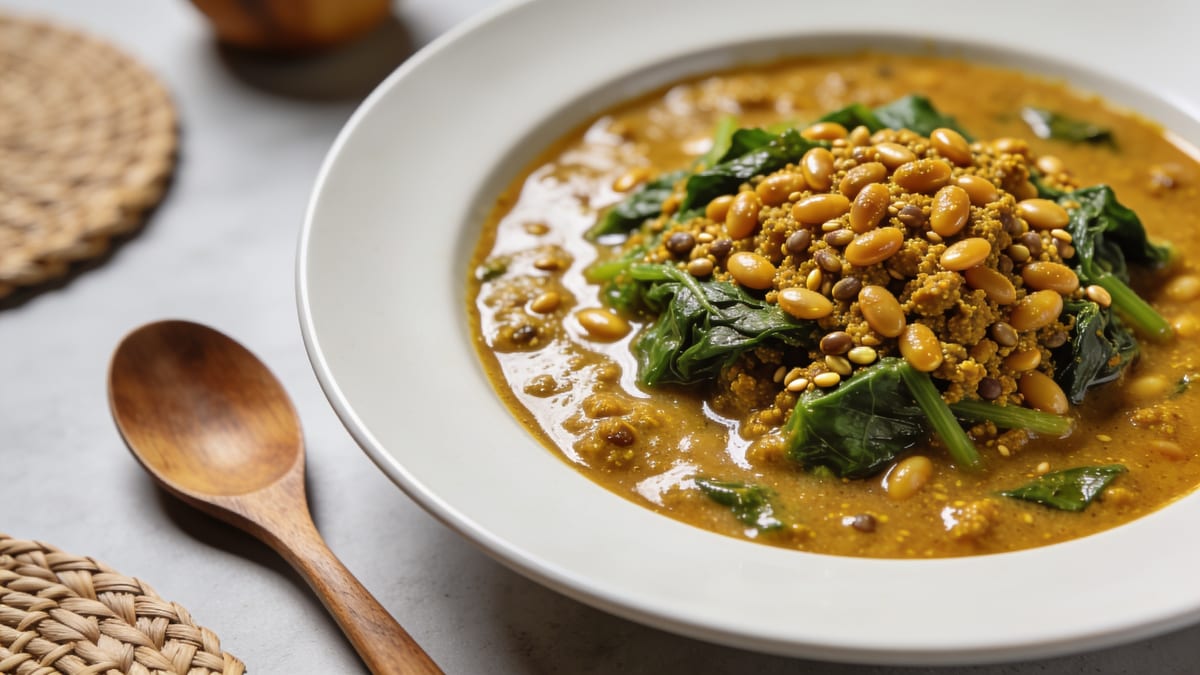
Season and boil beef, goat, and soaked stockfish with onion and seasoning cubes until tender, reserving the stock; mix ground egusi with a little water into a stiff paste. Heat red palm oil in a wide pot, soften chopped onion, blended scotch bonnet, ground crayfish, and locust beans, then add the egusi paste and fry it undisturbed for 12 to 15 minutes so it cakes and drinks the oil. Pour in the reserved stock a ladle at a time to loosen it to a thick, spoonable consistency, add the cooked meats and dried fish, simmer 15 minutes to marry the flavors, then fold in shredded pumpkin leaves and cook just 5 minutes so they stay green. Taste, adjust salt and heat, and serve hot with a swallow.
- Fry the egusi paste in bloomed palm oil and leave it alone so it cakes into soft curds rather than dissolving into a grainy sauce
- Add hot stock gradually, not all at once, so you control the thickness and the oil rises clear on top
- Add the leafy greens last and cook only briefly to keep them bright and prevent a muddy, overcooked flavor
Equipment
- Large heavy-bottomed pot
- Wooden spoon
- Blender or spice grinder
- Sharp knife
- Mixing bowl
- Cutting board
재료
Meat & stock
- 500 g Beef chuck or stewing beef, cut into 4 cm chunks
- 300 g Goat meat, bone-in, optional
- 80 g Stockfish (dried cod), soaked 1 hour until pliable
- 120 g Smoked dried fish, deboned and rinsed
- Seasoning cubes, such as Maggi or Knorr
- Salt
- 1 litre Water, for boiling the meat
Egusi base
- 300 g Ground egusi (melon seeds), finely milled
- 180 ml Red palm oil
- Onion, finely chopped
- Scotch bonnet peppers, blended; adjust for heat
- 30 g Ground crayfish
- 15 g Fermented locust beans (iru/dawadawa), optional, for depth
- Ground cayenne pepper, optional, for extra heat
Greens & finishing
- 200 g Fluted pumpkin leaves (ugu), washed and shredded; spinach works too
- 120 ml Warm stock or water, to adjust thickness
조리법
- 단계01
Put the beef, goat meat, and soaked stockfish in a large pot with the chopped onion trimmings, 2 seasoning cubes, and a good pinch of salt. Add just enough water to cover, bring to a boil, then simmer until the meat is fork-tender and you have a flavorful stock. Lift out the meat and fish and reserve the stock separately.
- 단계02
While the meat cooks, tip the ground egusi into a bowl and stir in enough cool water (about 120 ml) to form a thick, moldable paste that holds its shape on a spoon. Do not make it runny; a stiff paste is what caks properly in the oil later.
- 단계03
Wipe out or use a fresh wide pot. Heat the red palm oil over medium heat until it shimmers but is not smoking, then add the finely chopped onion, blended scotch bonnet, ground crayfish, and locust beans. Fry until the onion softens and the mixture is fragrant.
- 단계04
Drop spoonfuls of the egusi paste into the oil, spreading them out. Let it fry mostly undisturbed, stirring only occasionally, so it sets into soft curds and drinks up the palm oil. It will look grainy at first, then cake and darken slightly as it cooks through.
- 단계05
Add the reserved stock one ladle at a time, stirring between additions, until the soup is thick but spoonable. Return the boiled meat and stockfish, add the remaining seasoning cube and the cayenne if using, and simmer so the egusi finishes cooking and the oil rises clear on top.
- 단계06
Fold in the smoked dried fish and let it warm through and release its smokiness into the soup. Taste and correct the salt and heat now, before the greens go in, adding a splash of warm stock if it has thickened too much.
- 단계07
Stir in the shredded pumpkin leaves and cook just until wilted and glossy, keeping them bright green. Turn off the heat and serve hot with pounded yam, eba, or fufu.
Make ahead
The meat and stock can be boiled a day ahead and refrigerated separately, which actually deepens the flavor. You can also fry the egusi base and build the soup up to the point before adding greens, then refrigerate; reheat and stir in fresh pumpkin leaves just before serving so they stay vibrant.
Storage
Cool completely, then refrigerate in an airtight container for up to 4 days. Reheat gently on the stovetop with a splash of water or stock, as the soup thickens when chilled. It also freezes well for up to 3 months; thaw overnight in the fridge before reheating.
Variations
Egusi with bitterleaf
Swap the pumpkin leaves for washed, pre-squeezed bitterleaf (onugbu). Rinse it well to tame the bitterness, then add it a few minutes earlier than you would ugu so its firmer leaves soften into the soup.
Vegan egusi
Skip the meat, stockfish, and dried fish. Build the base with a robust mushroom or vegetable stock, brown some torn oyster mushrooms and smoked tofu for savoriness, and lean on extra locust beans and a little smoked paprika in place of the crayfish for that deep, smoky note.
Efo elegusi (Yoruba style)
Make it greens-forward by doubling the leafy vegetables and adding chopped fresh tomatoes and extra pepper to the base. The result is a brighter, vegetable-heavy egusi that eats well with white rice as much as with swallow.
Serve with
Nutrition per serving
Nutrition values are estimates based on the metric measurements. Adjust as needed.
자주 묻는 질문
What is egusi actually made of?
Egusi refers to the fat, protein-rich seeds of certain melons and gourds, which are hulled, dried, and ground into a pale meal. That ground egusi is the backbone of the soup, thickening it and giving it its characteristic nutty, slightly savory flavor as it cooks in palm oil.
Why did my egusi soup turn out grainy instead of caked?
Graininess usually means the egusi was stirred too much or thinned too early. Mix it into a stiff paste, drop it into bloomed palm oil, and let it fry mostly undisturbed so it sets into soft curds before you add any stock. Adding hot liquid too soon washes the seeds apart.
Can I make egusi soup without meat and fish?
Yes. A vegan egusi soup works beautifully if you build a strong vegetable or mushroom stock and add browned mushrooms and smoked tofu for body. Extra fermented locust beans and a touch of smoked paprika replace the umami that stockfish and crayfish normally bring.
Which greens are best for egusi soup?
Traditional choices are fluted pumpkin leaves (ugu) or washed bitterleaf. If those are hard to find, mature spinach or kale make a good substitute. Add whichever green at the very end and cook only briefly so it stays bright and does not turn the soup muddy.
How do I store and reheat leftovers?
Refrigerate cooled egusi soup for up to 4 days or freeze for up to 3 months. It thickens as it sits, so reheat it gently on the stove with a splash of water or stock, stirring until it loosens back to a spoonable consistency.
Cooked this? Rate it.
Real ratings from real cooks. We only show a score once enough of you have weighed in — no fabricated stars.