Molho Alfredo
O Alfredo romano original não é um molho de creme de leite: é uma emulsão de nada além de manteiga, Parmigiano-Reggiano e água amidosa do cozimento da massa, batida contra o fettuccine quente até ficar brilhante e envolver cada fio. Bem feito, é mais sedoso e mais saboroso do que qualquer versão com creme — e fica pronto no tempo que a massa leva para cozinhar.
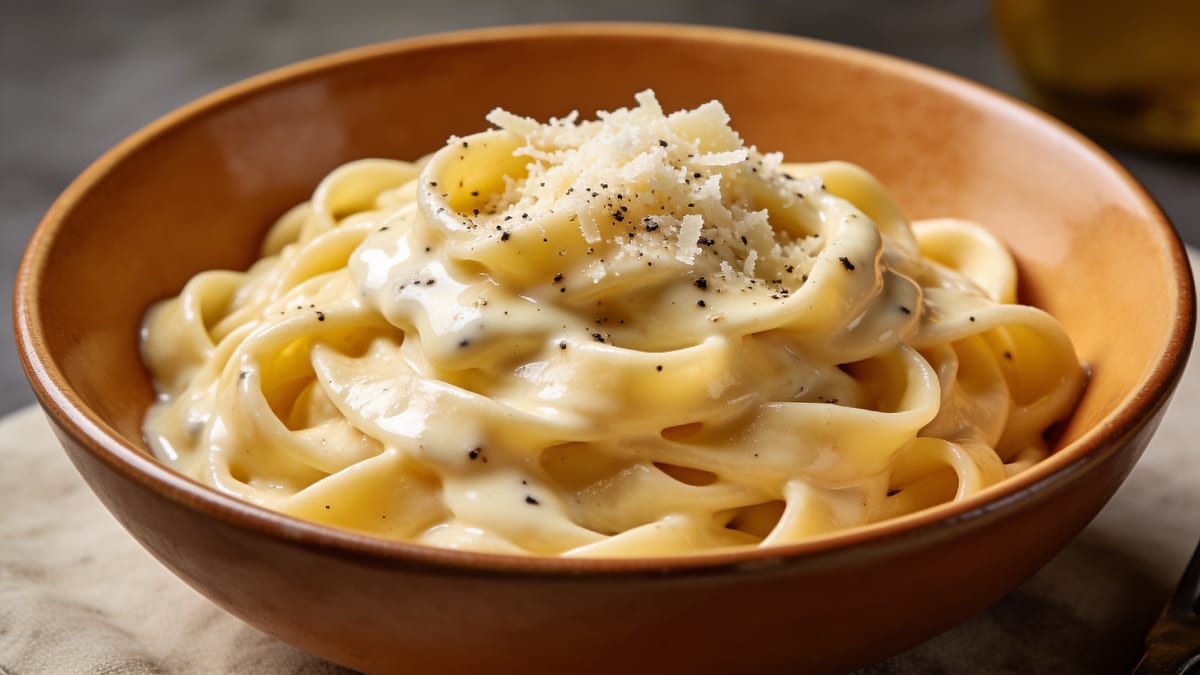
O verdadeiro molho Alfredo é uma emulsão de manteiga e Parmigiano, não um molho de creme de leite. Cozinhe o fettuccine em água bem salgada até um pouco antes do al dente, então misture fora do fogo com cubos de manteiga gelada e uma chuva de Parmigiano-Reggiano ralado bem fino, acrescentando a água amidosa da massa aos poucos enquanto mexe e gira vigorosamente. O amido, a gordura e o queijo emulsionam num molho brilhante e envolvente em menos de dois minutos. Mantenha a massa em movimento e a temperatura abaixo de fervura, para o queijo derreter liso em vez de empelotar.
- Sem creme de leite, sem farinha: manteiga + Parmigiano-Reggiano + água amidosa da massa é o molho inteiro.
- Trabalhe fora do fogo direto — quente demais, e o queijo talha em fios borrachudos.
- Rale o queijo bem fininho e adicione em duas levas para derreter por igual.
Equipment
- Panela grande para a massa
- Frigideira larga ou frigideira funda (sauté)
- Ralador Microplane ou ralador fino
- Fouet ou colher de pau
- Pinça de cozinha
- Concha
Ingredientes
Para o molho
- 115 g Manteiga sem sal, cortada em cubinhos e mantida gelada, Manteiga estilo europeu, com alto teor de gordura (82%+), dá uma emulsão mais rica
- 100 g Parmigiano-Reggiano ralado bem fino no Microplane, Use o queijo DOP verdadeiro; queijo ralado de pacote contém antiaglomerantes que não emulsionam
- 240 ml Água amidosa do cozimento da massa, reservada, Você vai usar mais ou menos a metade; reserve mais do que acha que precisa
- Pimenta-do-reino moída na hora, Opcional, mas clássica no estilo romano
- Sal marinho fino, para a água da massa, A água deve ter gosto de uma sopa bem temperada
Para servir
- 450 g fresh Fettuccine fresco, ou 12 oz de massa seca, O fettuccine fresco de ovos é o tradicional e libera mais amido
Modo de preparo
- ETAPA01
Rale o Parmigiano-Reggiano no Microplane até ficar fofo e fino — lascas grossas derretem de forma desigual e empelotam. Corte a manteiga gelada em cubos de cerca de 1 cm (½ polegada) e deixe na geladeira até a hora exata de usar. A manteiga gelada emulsiona mais gradualmente e resulta num molho mais estável do que a manteiga derretida.
- ETAPA02
Leve 4 quarts (cerca de 4 L) de água a uma fervura vigorosa e salgue com generosidade — 1 a 1,5 colher de sopa de sal marinho fino —, até a água ter gosto de caldo temperado. Use um pouco menos de água do que o habitual, para ela ficar bem amidosa. Adicione o fettuccine e cozinhe até um pouco antes do al dente: 2 a 3 minutos para massa fresca, ou cerca de 2 minutos a menos que o tempo da embalagem para a seca.
- ETAPA03
Pouco antes de escorrer, mergulhe uma caneca medidora resistente ao calor na panela e reserve pelo menos 1 xícara (240 ml) da água de cozimento turva e amidosa. Ela é o seu emulsificante — sem ela, o molho talha. Escorra a massa, mas não a enxágue.
- ETAPA04
Tire a frigideira do fogo (ou trabalhe na própria panela da massa, vazia e ainda morna). Adicione a massa quente escorrida, os cubos de manteiga gelada e cerca de ¼ de xícara (60 ml) da água da massa. Misture e gire vigorosamente com a pinça por 30–45 segundos, até a manteiga derreter e envolver cada fio numa película solta e brilhante. Manter fora do fogo direto é a jogada-chave — qualquer coisa perto de fervura vai talhar o queijo na próxima etapa.
- ETAPA05
Polvilhe metade do Parmigiano ralado mexendo sem parar, depois acrescente mais 2–3 colheres de sopa da água da massa. Adicione o restante do queijo do mesmo jeito. Misture e gire com força — são a fricção e o amido que unem a gordura e o queijo num molho homogêneo. Trabalhe rápido, para a massa continuar quente o bastante para derreter o queijo, mas não tanto a ponto de talhá-lo.
- ETAPA06
Adicione água da massa uma colher de sopa por vez, misturando entre cada adição, até o molho ficar cremoso e se agarrar à massa numa camada lisa e acetinada. Ele deve parecer solto e sedoso, não grosso e pastoso — vai firmar conforme esfria. Se em algum momento parecer talhado ou oleoso, um pouco de água quente da massa e mais movimento vigoroso costumam recuperá-lo.
- ETAPA07
Acrescente algumas voltas generosas de pimenta-do-reino, prove e ajuste o sal apenas se necessário (o queijo já é salgado). Sirva na hora, em pratos fundos aquecidos — o Alfredo não espera por ninguém e endurece rápido ao esfriar. Finalize cada porção com um pouco mais de Parmigiano ralado.
Make ahead
Este não é um molho de preparar com antecedência no sentido tradicional — não há molho para adiantar, já que ele se forma no contato com a massa quente. O que dá para deixar pronto: ralar o Parmigiano (guarde em pote fechado na geladeira por até 2 dias), cortar a manteiga em cubos e devolvê-la à geladeira, e deixar a água salgada quase fervendo. Com tudo posicionado, o prato inteiro fica pronto em cerca de 5 minutos depois que a massa entra na água.
Storage
O Alfredo foi feito para ser comido assim que fica pronto — a emulsão é frágil e endurece ao esfriar. Se precisar guardar sobras, refrigere em recipiente hermético por até 2 dias. Reaqueça com delicadeza numa frigideira em fogo baixo, com um pouco de leite ou de água fresca de cozimento de massa, mexendo sem parar para reemulsionar; nunca use o micro-ondas em potência alta, ou o molho talha e fica gorduroso.
Variations
Alfredo cremoso à americana
Para o molho mais rico e espesso que a maioria dos clientes americanos espera, derreta a manteiga na frigideira, adicione 1 xícara (240 ml) de creme de leite fresco, deixe ferver de leve por 3–4 minutos para reduzir um pouco e então misture o Parmigiano fora do fogo com um fouet. Mais tolerante e estável, embora mais distante do original romano. Um dente de alho ralado aquecido na manteiga é uma adição popular (nada tradicional).
Fettuccine Alfredo com frango
Tempere peito ou sobrecoxa de frango, sele até cozinhar por completo (74°C / 165°F internos), deixe descansar, fatie e envolva na massa pronta. Adicione bem no final, para o molho não esfriar nem talhar enquanto você espera.
Puxado para o cacio e pepe
Aposte ainda mais no estilo romano: toste 1–2 colheres de chá de pimenta-do-reino quebrada na frigideira seca antes de tudo, troque parte do Parmigiano por Pecorino Romano curado e não use creme algum. Mais marcante e apimentado, com a mesma técnica de emulsão de manteiga e queijo.
Serve with
Nutrition per serving
Nutrition values are estimates based on the metric measurements. Adjust as needed.
Perguntas frequentes
Por que o molho Alfredo autêntico não leva creme de leite?
O prato romano original, o fettuccine al burro, foi criado por Alfredo di Lelio em 1908 usando apenas manteiga, Parmigiano-Reggiano e água amidosa da massa. A versão com creme e farinha é uma adaptação americana que se desenvolveu em meados do século 20. Esta receita de molho Alfredo segue o método original, em que a sedosidade vem de emulsionar gordura e queijo com amido, e não do creme de leite.
Por que meu molho Alfredo ficou empelotado ou oleoso?
Dois culpados habituais: calor e qualidade do queijo. Se a massa ou a panela estiverem quentes demais quando o queijo entra, as proteínas talham em grumos borrachudos e a gordura se separa em óleo. Trabalhe fora do fogo direto e use Parmigiano-Reggiano ralado na hora — queijo ralado de pacote tem amidos antiaglomerantes e celulose que impedem uma emulsão lisa. Se talhar, adicione um pouco de água quente da massa e misture com força para recuperar.
Qual é o melhor queijo para o molho Alfredo?
O Alfredo autêntico usa Parmigiano-Reggiano DOP, maturado por pelo menos 24 meses para o melhor sabor e derretimento. Rale bem fininho no Microplane, para dissolver rápido. Evite potes de queijo pré-ralado e o "parmesão" comum, que muitas vezes contêm aditivos que impedem o molho de emulsionar liso. Uma parte de Pecorino Romano curado pode entrar no lugar, para um toque mais marcante e salgado.
Como evito que o molho Alfredo fique grosso demais?
Reserve mais água amidosa da massa do que acha que vai precisar e adicione uma colher de sopa por vez no final, misturando entre as adições, até o molho ficar solto e brilhante. Lembre que ele firma ao esfriar, então finalize um pouco mais fluido do que quer no prato e sirva imediatamente, em pratos aquecidos.
Posso fazer o molho Alfredo com antecedência?
Na prática, não — a emulsão é feita à la minute sobre a massa quente e endurece em minutos. Você pode adiantar os componentes (ralar o queijo, cortar a manteiga em cubos, deixar a água quase fervendo), mas monte no último segundo. Sobras duram 2 dias na geladeira; reaqueça com delicadeza, com um pouco de leite ou de água de massa, mexendo para reemulsionar.
Cooked this? Rate it.
Real ratings from real cooks. We only show a score once enough of you have weighed in — no fabricated stars.