Biscuits com molho de linguiça (Biscuits and Gravy)
Tall, flaky buttermilk biscuits split open and smothered in a peppery, cream-thickened pork sausage gravy. This is the classic Southern breakfast done right: cold butter for lift, rendered sausage fat for the roux, and enough black pepper to make it sing.
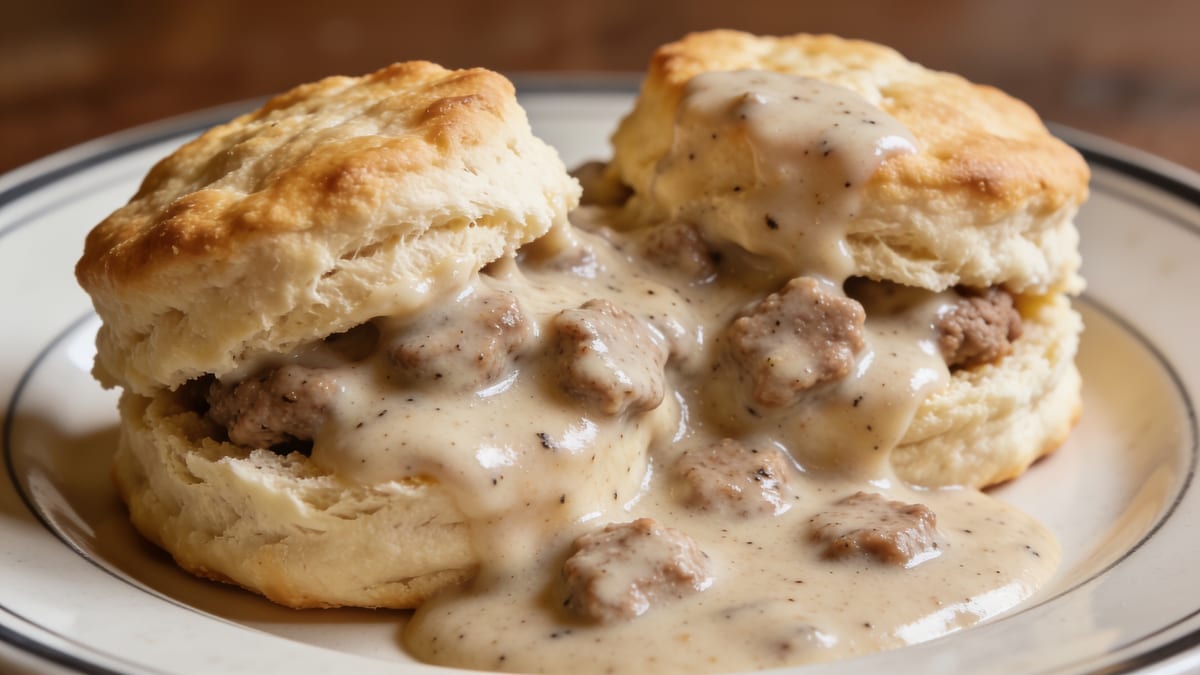
Make flaky buttermilk biscuits by cutting cold butter into flour, folding the dough for layers, and baking hot at 450F (230C) until golden. While they bake, brown 1 lb (450 g) breakfast sausage, sprinkle flour over the rendered fat to build a roux, then whisk in milk and simmer until the gravy coats a spoon. Season aggressively with black pepper, split the warm biscuits, and smother.
- Keep the butter and buttermilk cold, cold, cold for the tallest, flakiest biscuits.
- Don't rush the roux: cook the flour in the sausage fat 1 to 2 minutes before adding milk, or the gravy tastes pasty.
- The gravy thickens as it cools, so pull it off the heat while it still looks slightly loose.
Equipment
- Baking sheet
- Box grater or pastry cutter
- Large heavy skillet (cast iron ideal)
- Whisk
- Bench scraper or knife
- 2.5-inch (6.5 cm) biscuit cutter
Ingredientes
Buttermilk biscuits
- 300 g all-purpose flour, spooned and leveled, plus more for dusting
- 14 g baking powder
- 2 g baking soda
- 6 g fine sea salt
- 6 g granulated sugar, optional, for browning
- 115 g unsalted butter, very cold, grated or cubed
- 240 ml cold buttermilk, well shaken, plus 1 tbsp for brushing
Sausage gravy
- 450 g bulk pork breakfast sausage, such as Jimmy Dean or Bob Evans; sage-forward preferred
- 35 g all-purpose flour
- 700 ml whole milk, warmed, plus more to loosen
- 3 g freshly ground black pepper, coarse; more to taste
- fine sea salt, to taste, depends on sausage
- pinch of cayenne or crushed red pepper, optional
Modo de preparo
- ETAPA01
Position a rack in the upper third and heat the oven to 450F (230C). Line a baking sheet with parchment. In a large bowl, whisk together the flour, baking powder, baking soda, salt, and sugar until evenly combined.
- ETAPA02
Grate the frozen-cold butter into the flour on the large holes of a box grater (or cut in cubes with a pastry cutter). Toss with your fingers until the butter is coated and the mixture looks like coarse crumbs with pea-size flecks. Work fast so the butter stays cold; visible bits of butter are what create flaky layers.
- ETAPA03
Make a well, pour in the cold buttermilk, and stir with a fork just until a shaggy dough forms; do not overmix. Turn out onto a lightly floured surface, pat into a 3/4-inch (2 cm) rectangle, then fold in thirds like a letter. Repeat the pat-and-fold twice more. These folds build the layers that make the biscuits pull apart.
- ETAPA04
Pat the dough to a 3/4-inch (2 cm) thickness. Cut straight down with a floured 2.5-inch (6.5 cm) cutter without twisting (twisting seals the edges and stunts the rise). Place biscuits touching on the sheet, brush tops with buttermilk, and bake until tall and deep golden, 14 to 16 minutes.
- ETAPA05
While the biscuits bake, set a large heavy skillet over medium-high heat. Add the sausage and break it into bite-size crumbles with a wooden spoon. Cook until browned with crisp edges and no pink remains, 6 to 8 minutes. Do not drain; you need that rendered fat for the roux.
- ETAPA06
Reduce heat to medium. Sprinkle the flour evenly over the sausage and stir constantly, coating everything, for 1 to 2 minutes until the raw flour smell is gone and the mixture looks like wet sand. This cooks out the pasty taste before any liquid goes in.
- ETAPA07
Pour in the warm milk in a slow stream, whisking or stirring constantly to prevent lumps. Bring to a gentle simmer and cook, stirring often, until the gravy thickens enough to coat the back of a spoon, 5 to 8 minutes. It should still look slightly loose, as it will keep thickening off the heat.
- ETAPA08
Kill the heat and stir in the black pepper and cayenne if using. Taste and add salt only if needed (the sausage carries a lot). If the gravy is too thick, loosen with a splash of warm milk. Split the warm biscuits, set two halves cut-side up on each plate, and ladle the sausage gravy generously over the top.
Make ahead
You can cut the biscuits, freeze them raw on a tray, then bake from frozen (add 2 to 3 minutes). Whisk the dry biscuit ingredients and grate the butter the night before, keeping both cold. The gravy is best fresh but can be made a day ahead and reheated with extra milk; season the pepper right before serving so it stays lively.
Storage
Store biscuits and gravy separately. Cooled gravy keeps in an airtight container in the fridge for up to 3 days; reheat gently over low heat with a splash of milk, whisking to smooth it back out (it thickens to a paste cold). Biscuits keep 2 days at room temperature in a bag, or freeze up to 1 month. Gravy also freezes for up to 2 months, though the texture loosens slightly on thawing.
Variations
Sawmill gravy with a kick
Add 1/2 tsp crushed red pepper and a dash of hot sauce with the black pepper, and swap half the sausage for a spicy hot variety. A splash of the sausage grease's fond deglazed with a little coffee deepens the color and flavor.
Cheddar-chive drop biscuits
Skip the folding and cutting: fold 3/4 cup (85 g) grated sharp cheddar and 2 tbsp chopped chives into the dough, then drop 8 mounds onto the sheet. Faster, rustic, and excellent under the gravy.
Vegetarian mushroom gravy
Replace the pork with 12 oz (340 g) finely chopped cremini mushrooms sauteed in 3 tbsp butter until deeply browned. Build the roux in the butter and mushroom fond, then proceed with milk. Season with sage, thyme, and extra black pepper.
Serve with
Nutrition per serving
Nutrition values are estimates based on the metric measurements. Adjust as needed.
Perguntas frequentes
Why is my sausage gravy pasty or gluey?
The most common cause is not cooking the flour long enough. After sprinkling flour over the browned sausage, stir it constantly for a full 1 to 2 minutes so the roux loses its raw taste before you add milk. Adding cold milk too fast can also cause lumps, so pour it in slowly while whisking. Good biscuits and gravy should be silky and pourable, never gummy.
Can I make biscuits and gravy ahead of time?
Yes. Bake the biscuits and make the gravy separately, then refrigerate. The gravy thickens to a paste when cold, so reheat it gently over low heat with a splash of milk, whisking until smooth. Warm the biscuits in a 300F (150C) oven for a few minutes so they crisp back up before you smother them.
What kind of sausage is best for sausage gravy?
Bulk pork breakfast sausage is traditional, and a sage-forward blend gives the most classic flavor. Brands like Jimmy Dean or Bob Evans work well, and their Sage or Hot varieties are great. You need the rendered fat from the sausage to build the roux, so don't reach for lean turkey sausage unless you add a couple tablespoons of butter.
Why won't my biscuits rise tall and flaky?
Three usual culprits: warm butter, overworked dough, or twisting the cutter. Keep the butter and buttermilk cold so the butter stays solid until it hits the hot oven and creates steam. Handle the dough as little as possible, and press the cutter straight down without twisting, which seals the edges and blocks the rise. The letter folds also create distinct flaky layers.
Can I use milk instead of buttermilk in the biscuits?
Buttermilk gives the best tang and tender crumb, plus it reacts with the baking soda for extra lift. In a pinch, make a substitute by stirring 1 tbsp lemon juice or white vinegar into 1 cup (240 ml) milk and letting it sit 5 minutes. Regular milk alone will work but the biscuits will be slightly denser and less tangy.
Cooked this? Rate it.
Real ratings from real cooks. We only show a score once enough of you have weighed in — no fabricated stars.