Schnitzel de porco
A pounded-thin pork cutlet in a shatteringly crisp, golden crumb that puffs and ripples away from the meat. The trick is dry crumbs, hot fat, and the gentle pan-swirl that makes the coating souffle.
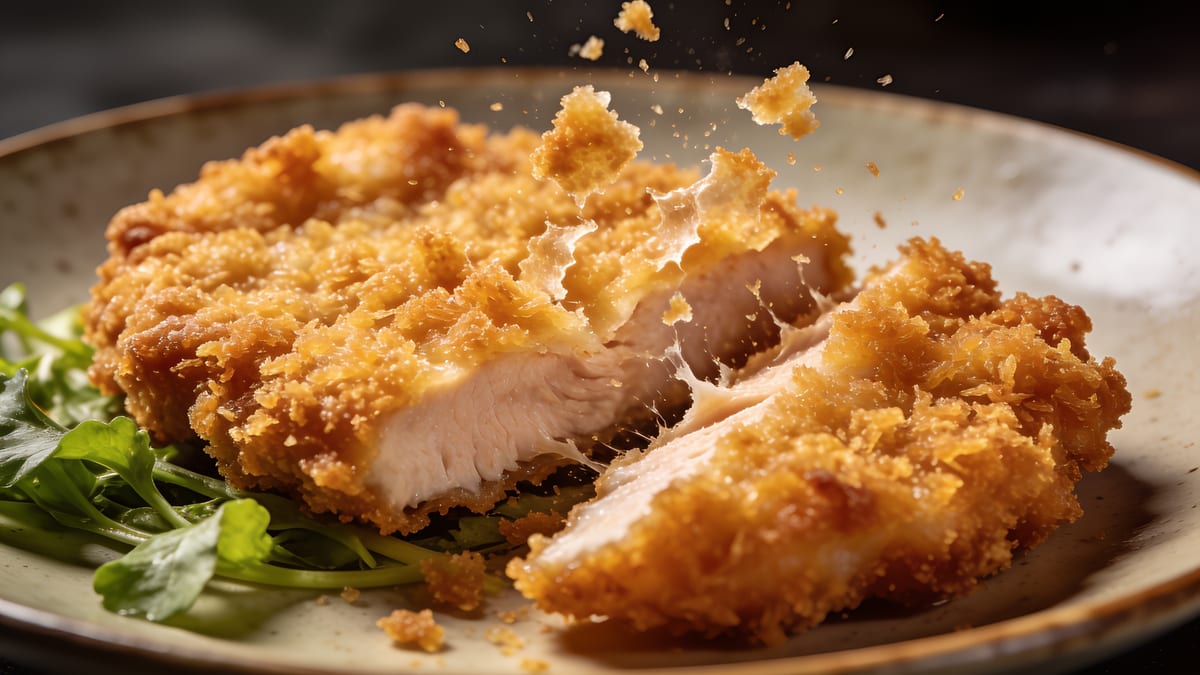
Pound pork cutlets to 5 mm. Dredge in seasoned flour, then beaten egg, then dry breadcrumbs — pressing lightly. Fry in 1 cm of hot fat, swirling the pan so the crumb puffs and 'souffles', 2–3 minutes per side until deep gold. Drain, salt, serve with lemon.
- Pound the meat properly thin (5 mm) so it cooks in the time the crust takes to brown.
- Don't press the crumbs on hard — a loose coating is what lets it puff away from the meat.
- Enough fat and enough heat: the schnitzel should swim and sizzle, not stew. Swirl the pan constantly.
Equipment
- Meat mallet or heavy pan
- 3 wide shallow bowls (for breading)
- Large frying pan
- Wire rack
Ingredientes
Cutlets
- 4 boneless pork loin cutlets (about 600 g total)
- 5 g fine salt
- 2 g white pepper
Breading & frying
- 80 g plain flour
- 2 large eggs
- 150 g dry breadcrumbs, fine, plain
- 300 ml neutral oil or clarified butter, for frying
- 1 lemon, in wedges, to serve
Modo de preparo
- ETAPA01
Place each cutlet between two sheets of plastic and pound with a mallet or heavy pan to an even 5 mm thickness. Season both sides with salt and white pepper.
- ETAPA02
Three bowls: flour in the first; eggs beaten with a splash of water in the second; breadcrumbs in the third.
- ETAPA03
Dredge each cutlet in flour (shake off excess), then egg (let it drip), then breadcrumbs. Lay the crumbs on gently and DON'T press hard — a loose coat puffs better. Bread them just before frying.
- ETAPA04
Pour 1 cm of oil or clarified butter into a large pan and heat to 170–180°C / 340–355°F. A breadcrumb dropped in should sizzle briskly.
- ETAPA05
Lay a schnitzel in (away from you). Immediately tilt and swirl the pan so hot fat washes over the top — this is what makes the crumb puff and ripple. Fry 2–3 minutes until deep gold, flip, and fry 1–2 minutes more.
- ETAPA06
Lift onto a wire rack (not paper — keeps it crisp), sprinkle with salt. Serve immediately with lemon wedges.
Make ahead
Pound and season the cutlets up to a day ahead, refrigerated. Bread and fry to order — pre-breaded schnitzel goes soggy.
Storage
Best eaten immediately — the crust softens within the hour. Leftovers reheat passably in a hot oven (200°C / 400°F, 6–8 min) on a rack; never microwave.
Variations
Wiener Schnitzel (the original)
Use veal instead of pork — by Austrian law, only veal can be called Wiener Schnitzel. Same method.
Jägerschnitzel
Serve the fried schnitzel under a mushroom-and-onion cream sauce (hunter's style).
Zigeuner / paprika style
Top with a bell-pepper, onion, and paprika sauce.
Serve with
Nutrition per serving
Nutrition values are estimates based on the metric measurements. Adjust as needed.
Perguntas frequentes
Pork or veal?
Both are classic. Veal makes Wiener Schnitzel (legally protected in Austria); pork makes the everyday 'Schnitzel Wiener Art' served across Germany and Austria. Chicken and turkey also work. The method is identical.
Why does the coating need to 'souffle'?
The signature of a great schnitzel is a crust that puffs and ripples away from the meat rather than clinging tightly. A loose crumb coating plus constant pan-swirling traps steam under the crust and lifts it. It also keeps the thin meat juicy.
Can I bake or air-fry it?
You can, and it's lighter, but it won't have the puffed, blistered crust of pan-frying. If baking, spray the crumbs with oil and bake at 220°C / 425°F until golden, flipping once.
What fat should I fry in?
Clarified butter (the traditional choice) gives the best flavor; neutral oil works and has a higher smoke point. You need about 1 cm depth so the schnitzel can swim and the crust can puff.
How thin should the meat be?
About 5 mm. Thin enough that it cooks through in the 4–5 minutes the crust needs to brown, so the meat stays tender rather than overcooking while you wait for color.
Cooked this? Rate it.
Real ratings from real cooks. We only show a score once enough of you have weighed in — no fabricated stars.