Takoyaki — bolinhos de polvo japoneses
O petisco de rua mais famoso de Osaka: uma massa saborosa assada em uma chapa especial com cavidades, cada bolinha escondendo um pedaço de polvo, viradas com palitos até se tornarem esferas crocantes por fora e derretidas por dentro. Pinceladas com molho de takoyaki e maionese japonesa, cobertas com aonori e flocos de bonito que dançam no calor, o takoyaki é quente, cremoso e divertidamente teatral — melhor comido direto da chapa (depois de assoprar bem).
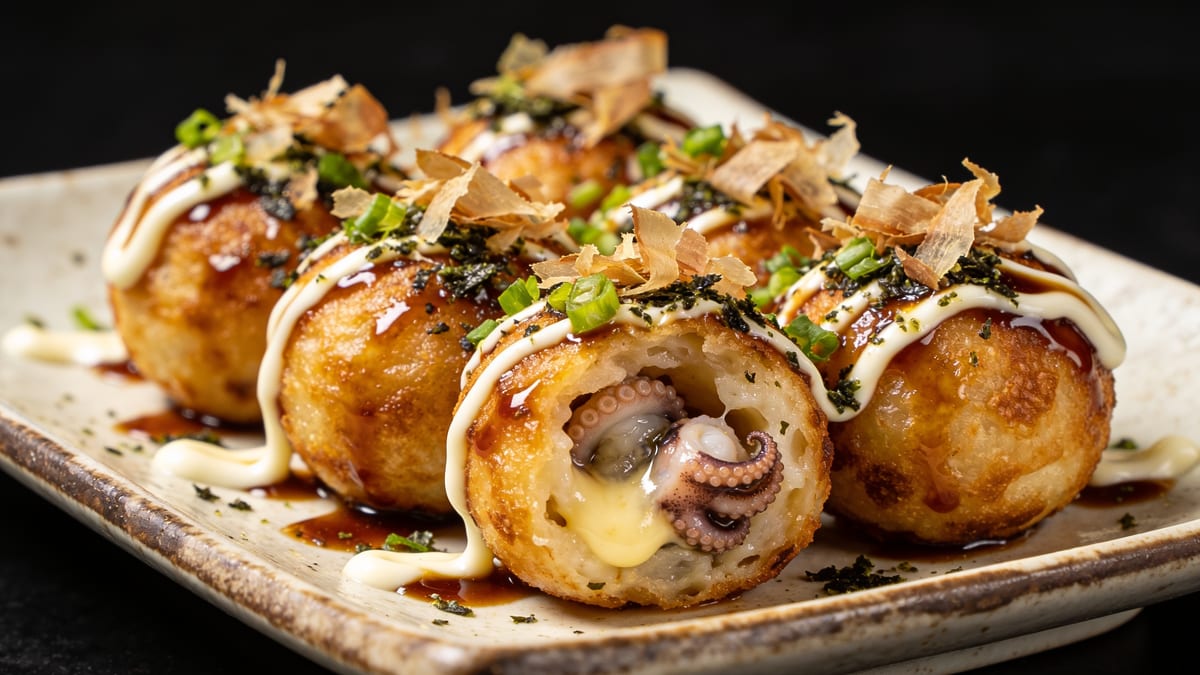
Bata uma massa fina à base de dashi (farinha, ovo, dashi, um pouco de shoyu). Aqueça bem a chapa de takoyaki e unte generosamente com óleo. Encha as cavidades até transbordar, coloque um pedaço de polvo cozido e alguns pedacinhos de gengibre em conserva e cebolinha em cada uma e, conforme o fundo firmar, use palitos para cortar a massa entre as cavidades e girar cada bolinha 90°, deixando a massa ainda líquida se dobrar para baixo. Continue virando até ficarem redondas, crocantes e douradas. Pincele com molho de takoyaki, regue com maionese e finalize com aonori e flocos de bonito.
- Uma massa fina e rica em dashi é o que deixa o interior cremoso e derretido — não busque uma massa grossa.
- Deixe a chapa bem quente e bem untada, depois vire as bolinhas com palitos, girando para dobrar a massa para dentro.
- Sirva imediatamente, pelando de quente — e avise a todos que o centro é pura lava.
Equipment
- Chapa de takoyaki (com cavidades)
- Dois espetinhos/palitos
- Bisnagas ou pincel
Ingredientes
Massa
- 200 g farinha de trigo comum
- 600 ml dashi, frio
- 2 ovos
- 1 colher (chá) de shoyu; ½ colher (chá) de sal
Recheios
- 200 g polvo cozido, em cubos pequenos
- Gengibre vermelho em conserva (beni shoga), picado
- Cebolinha em fatias finas; tenkasu (farelos de tempurá)
- Óleo neutro, para a chapa
Para finalizar
- Molho de takoyaki (ou molho de okonomiyaki)
- Maionese japonesa
- Aonori (alga verde) e katsuobushi (flocos de bonito)
Modo de preparo
- ETAPA01
Bata a farinha, os ovos, o shoyu e o sal com o dashi frio até obter uma massa fina e lisa (mais ou menos a consistência de creme de leite fresco líquido). Transfira para uma jarra para facilitar na hora de encher.
- ETAPA02
Aqueça a chapa de takoyaki em fogo médio-alto até ficar bem quente, depois pincele generosamente cada cavidade (e a superfície entre elas) com óleo.
- ETAPA03
Despeje a massa até transbordar de todas as cavidades e cobrir a superfície. Coloque um cubo de polvo em cada uma, depois espalhe beni shoga, cebolinha e tenkasu por cima de tudo.
- ETAPA04
Quando o fundo tiver firmado, use dois palitos para cortar a massa entre as cavidades e girar cada bolinha 90°, deixando a massa ainda líquida se dobrar para baixo. Continue cutucando e girando enquanto assam, para que fiquem bem redondas.
- ETAPA05
Continue virando até as bolinhas ficarem redondas, crocantes e douradas por igual, com o interior derretido. Transfira para os pratos, pincele com molho de takoyaki, faça zigue-zagues de maionese por cima e cubra com aonori e flocos de bonito (que vão dançar no calor). Coma na hora — com cuidado!
Make ahead
Adiante o preparo: faça o dashi e a massa, corte o polvo em cubos e pique o gengibre e a cebolinha. Asse as bolinhas na hora, à mesa — takoyaki foi feito para ser uma experiência mão na massa, de comer conforme sai.
Storage
Takoyaki é comida de fazer e comer na hora — o contraste entre casquinha crocante e centro derretido se perde no reaquecimento, e as bolinhas ficam pesadas. Faça só a quantidade que for comer fresca. A massa que sobrar dura um dia na geladeira; o polvo cozido dura 2 dias.
Variations
Queijo / mochi
Esconda um cubinho de queijo ou mochi junto com o polvo (ou no lugar dele).
Akashiyaki
O original de Akashi, com mais ovo na massa, é mergulhado em caldo dashi em vez de coberto com molho.
Negi / ponzu
Cubra com cebolinha extra e um fio de ponzu em vez do molho encorpado, para um acabamento mais leve.
Serve with
Nutrition per serving
Nutrition values are estimates based on the metric measurements. Adjust as needed.
Perguntas frequentes
Preciso de uma chapa especial de takoyaki?
Sim — a chapa com cavidades semiesféricas é o que molda as bolinhas e permite girá-las. Existem versões de ferro fundido para o fogão e elétricas de mesa. Sem ela, não dá para fazer takoyaki de verdade; a frigideira de aebleskiver é o substituto mais próximo, por ter cavidades arredondadas parecidas.
Por que meu takoyaki não fica redondo?
Geralmente a massa está grossa demais, a chapa não está quente ou untada o suficiente, ou você virou cedo demais. Use uma massa fina e rica em dashi, encha as cavidades até transbordar e cubra a superfície, e espere o fundo firmar antes de cortar a massa entre as cavidades e girar. Cada quarto de volta dobra massa mole para baixo e vai construindo a esfera.
O que posso usar no lugar do polvo?
O polvo (tako) é o tradicional, mas você pode rechear as bolinhas com camarão cozido, queijo, mochi, salsicha ou até cogumelo, para uma versão vegetariana. Mantenha os pedaços pequenos, para que as bolinhas consigam se fechar em volta deles e continuem derretidas no centro.
O que é molho de takoyaki?
Um molho marrom espesso e agridoce, parecido com o de okonomiyaki ou com um molho frutado no estilo inglês (Worcestershire), pincelado sobre as bolinhas quentes. Com maionese japonesa, aonori (alga verde em pó) e katsuobushi (flocos de bonito), compõe a finalização clássica. Dá para comprar molho de takoyaki pronto ou usar molho de okonomiyaki.
Por que o interior é tão mole — está cru?
Esse centro cremoso e derretido é justamente o objetivo de um bom takoyaki — a massa rica em dashi continua cremosa por dentro enquanto o exterior fica crocante. Não é massa crua, e sim um interior deliberadamente fluido, como um creme. Só tome cuidado: o centro sai extremamente quente da chapa.
Cooked this? Rate it.
Real ratings from real cooks. We only show a score once enough of you have weighed in — no fabricated stars.