Tibs — carne salteada etíope
A atração principal, chegando à mesa ainda chiando, de uma refeição etíope: cubos de carne bovina ou de cordeiro selados forte e rápido com cebola, alho, alecrim, pimenta e manteiga temperada, até o ponto exato e gloriosamente perfumados. Tibs é comida de celebração — rápida, defumada e profundamente saborosa — muitas vezes levada à mesa ainda estalando num braseiro de barro, para ser pega com pedaços de injera. Do suave ao ardido, é o prato que define um banquete.
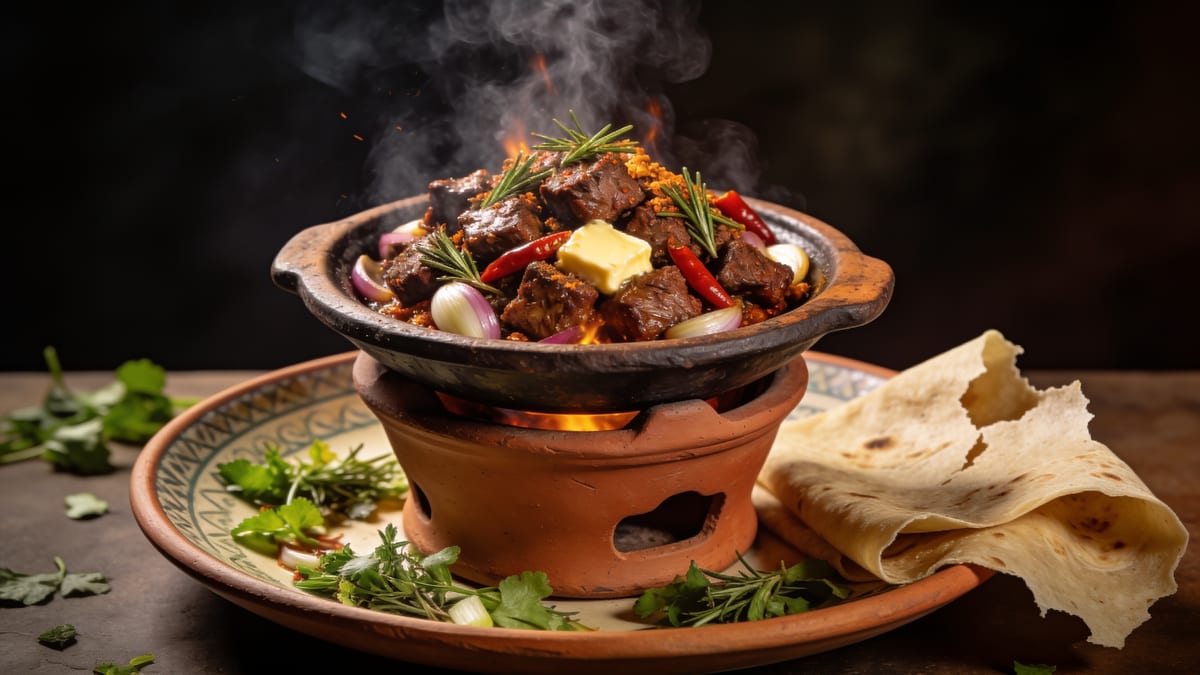
Deixe uma frigideira pesada esfumaçando de tão quente e sele os cubos de carne bovina (ou de cordeiro) com força, para que dourem em vez de cozinhar no próprio caldo; depois junte cebola fatiada, alho, gengibre, alecrim fresco, pimenta verde e uma colherada de niter kibbeh (manteiga clarificada temperada etíope), com berbere ou mitmita a gosto. Salteie em fogo alto só até a carne dourar e ficar suculenta, com a cebola ainda crocante, por poucos minutos. Sirva chiando, com injera para pegar.
- Sele forte e rápido em fogo alto — o tibs deve ficar dourado e suculento, não cozido no líquido.
- O niter kibbeh (manteiga clarificada temperada) e um ramo de alecrim dão ao tibs seu aroma inconfundível.
- Ajuste a ardência com berbere ou mitmita; sirva chiando, com injera — nada de talheres.
Equipment
- Frigideira pesada ou wok
- (Opcional) braseiro de barro para servir
Ingredientes
Tibs
- 600 g carne bovina (ou cordeiro), em cubos pequenos, de uma bocada
- 2 tbsp niter kibbeh (manteiga temperada etíope), ou manteiga + especiarias
- 1 cebola, fatiada
- 3 dentes de alho, 1 colher (chá) de gengibre ralado
Aromáticos e ardência
- 1–2 pimentas verdes (jalapeño), fatiadas
- 1 ramo de alecrim fresco
- 1–2 colheres (chá) de berbere ou mitmita, a gosto; sal
- Gomos de tomate ou pimentão (opcional)
Modo de preparo
- ETAPA01
Deixe uma frigideira pesada bem quente. Seque a carne com papel-toalha e tempere. Você quer um calor feroz, para os cubos selarem em vez de cozinhar no vapor.
- ETAPA02
Adicione um pouco de niter kibbeh e sele os cubos de carne na frigideira quente, em levas se necessário, até dourarem bem por fora mas continuarem suculentos. Não lote a frigideira.
- ETAPA03
Acrescente a cebola fatiada, o alho, o gengibre, o alecrim e a pimenta verde, mais o restante do niter kibbeh. Salteie em fogo alto para a cebola amaciar mas manter alguma crocância.
- ETAPA04
Polvilhe berbere ou mitmita a gosto e misture para envolver, juntando os gomos de tomate ou pimentão, se for usar. Cozinhe só mais um ou dois minutos — tibs é coisa rápida.
- ETAPA05
Sirva imediatamente, de preferência ainda chiando (tradicionalmente num braseiro de barro quente), com injera e mais pimenta ao lado. Rasgue pedaços de injera e use-os para pegar.
Make ahead
Prepare o niter kibbeh com antecedência (ele dura semanas e é a base de sabor de boa parte da cozinha etíope). Corte a carne e prepare os aromáticos antes; o tibs em si é um salteado rápido, de última hora e fogo alto, melhor feito na hora de servir.
Storage
Melhor fresco, direto da frigideira. As sobras duram 2 dias na geladeira e reaquecem rapidinho numa frigideira quente (sem cozinhar demais a carne). O niter kibbeh se conserva por semanas na geladeira, então faça uma leva com antecedência para um tibs rápido a qualquer hora.
Variations
Awaze / siga tibs
Misture com awaze (pasta de pimenta berbere) para uma versão mais picante e com mais molho.
Cordeiro (yebeg tibs)
Use cordeiro para a clássica versão festiva.
Zilzil tibs
Use tiras compridas de carne bovina em vez de cubos para o zilzil tibs.
Serve with
Nutrition per serving
Nutrition values are estimates based on the metric measurements. Adjust as needed.
Perguntas frequentes
O que é tibs?
Tibs é um prato etíope (e eritreu) de carne — geralmente bovina ou de cordeiro — salteada rapidamente em fogo alto com cebola, alho, pimenta, alecrim e manteiga temperada. Vai do suave ao ardido e do bem selado ao levemente molhado, e é um prato de celebração servido chiando, pego com pedaços de injera. Existem muitas versões regionais e de família.
O que é niter kibbeh?
Niter kibbeh é a manteiga clarificada temperada etíope — manteiga cozida suavemente com aromáticos como alho, gengibre, cardamomo, feno-grego e outras especiarias, depois coada. É um sabor fundamental da cozinha etíope e dá ao tibs seu gosto rico e perfumado característico. Você pode fazer uma leva com antecedência; ela dura semanas. Manteiga comum com algumas especiarias é um substituto rápido.
Qual é a diferença entre berbere e mitmita?
Ambos são misturas etíopes de especiarias com pimenta. O berbere é uma mistura vermelha complexa, um pouco mais suave (pimenta com alho, gengibre, feno-grego e especiarias quentes), de uso amplo. O mitmita é mais ardido: uma mistura laranja-avermelhada de fogo, à base de pimenta olho-de-pássaro com cardamomo e cravo. Use berbere para temperar em geral e mitmita (ou a pasta awaze) quando quiser mais ardência.
Como evito que o tibs cozinhe no próprio caldo?
Use uma frigideira pesada e bem quente, seque a carne e cozinhe em levas, sem lotar a panela. Frigideira lotada prende o vapor, e a carne fica cinzenta, fervida em vez de selada. Você quer calor rápido e feroz, para os cubos dourarem por fora e continuarem suculentos por dentro — tibs é um salteado rápido de fogo alto, não um cozido lento.
Com o que se come tibs?
Com injera — o pão chato etíope, esponjoso e levemente azedo — que faz as vezes de prato e talher: você rasga pedaços e pega a carne e a cebola. Mais pimenta (awaze ou mitmita), uma salada fresca de tomate e cebola e uma bebida como tej (vinho de mel) ou cerveja completam a refeição. Nada de talheres.
Cooked this? Rate it.
Real ratings from real cooks. We only show a score once enough of you have weighed in — no fabricated stars.