Shoyu Ramen — Soy-based Japanese Noodle Soup
A clear, savory chicken-and-dashi broth seasoned with a soy-based tare, ladled over springy ramen noodles and topped with chashu pork, a jammy marinated egg, scallion, and nori. A weeknight-feasible bowl built on real technique.
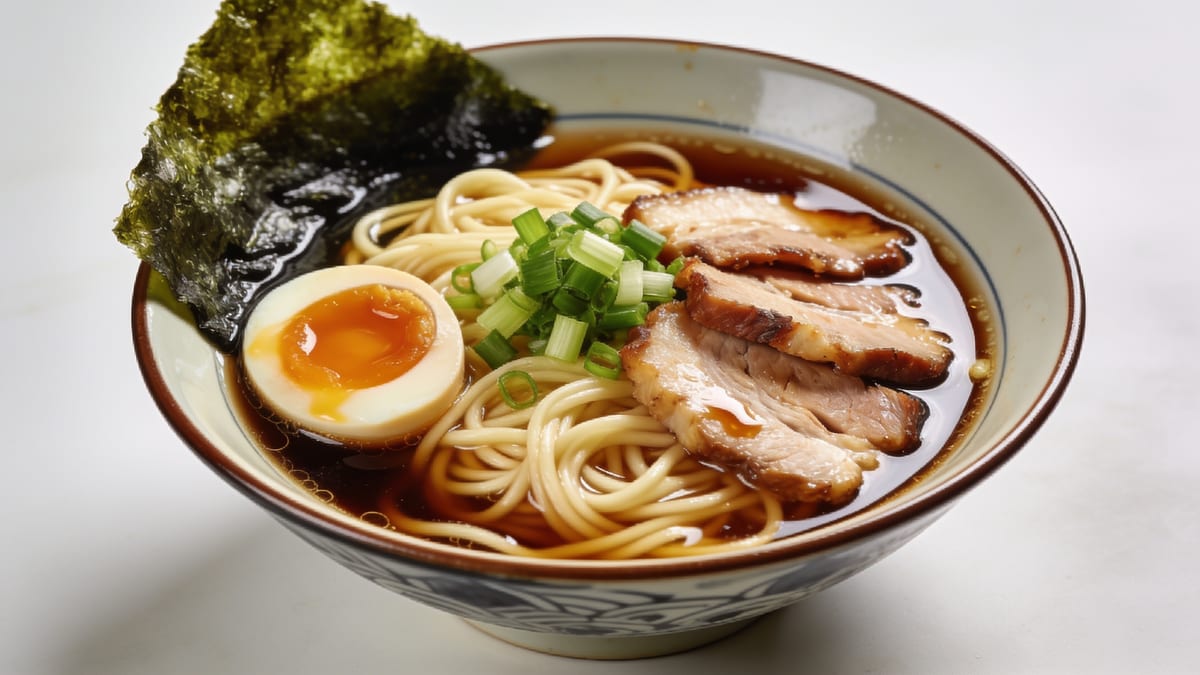
Simmer chicken bones with aromatics and a piece of kombu into a clean broth. Make a shoyu tare (soy, mirin, sake, a little sugar). Braise rolled pork belly (chashu) and marinate soft-boiled eggs in the tare. To serve, put tare in each bowl, fill with hot broth, add cooked ramen noodles, and top with sliced chashu, halved egg, scallion, and nori.
- Tare is the seasoning base that defines the bowl — put it in the bowl first, then broth, in roughly a 1:9 ratio.
- Keep the broth at a gentle simmer, never a hard boil, for a clean (not cloudy) shoyu broth.
- Components can be made ahead; final assembly is fast. The egg and chashu can marinate overnight.
Equipment
- Large stockpot
- Saucepan (for chashu and tare)
- Timer (for the eggs)
- Fine strainer
Ingredientes
Broth
- 1 kg chicken bones/wings
- 1 onion, halved
- 4 spring onions
- 1 thumb ginger, sliced
- 1 piece kombu (10 cm)
- 2.5 L water
Shoyu tare
- 120 ml soy sauce
- 60 ml mirin
- 30 ml sake
- 10 g sugar
Toppings & noodles
- 400 g fresh ramen noodles
- 400 g pork belly, rolled and braised (chashu), sliced
- 4 ajitsuke tamago (soy-marinated soft eggs), halved
- 4 spring onions, sliced
- 4 sheets nori
- Optional: menma (bamboo), corn, sesame
Preparação
- PASSO01
Cover the chicken bones with cold water, boil hard 5 minutes, then drain and rinse off the scum. This keeps the broth clean and clear.
- PASSO02
Return the bones to the clean pot with the onion, spring onions, ginger, and 2.5 L water. Bring to a gentle simmer (never a rolling boil) and cook 2 hours, skimming. Add the kombu for the last 20 minutes only — boiling kombu turns it bitter. Strain.
- PASSO03
Simmer the soy, mirin, sake, and sugar 3 minutes until slightly syrupy. This is your seasoning base — and the marinade for the eggs.
- PASSO04
Slice the braised chashu. Halve the marinated eggs. Slice the scallions. Have the nori ready. (Chashu and eggs are best made the day before and chilled.)
- PASSO05
Cook the fresh ramen noodles in boiling water per the packet — usually just 1–2 minutes. Drain very well; excess water dilutes the soup.
- PASSO06
Put 2–3 tbsp tare in the bottom of each hot bowl. Ladle in about 350 ml hot broth and stir. Add the drained noodles, then arrange chashu, egg, scallion, and nori on top. Serve immediately — ramen waits for no one.
Make ahead
This is a project best split across days: make broth, chashu, tare, and eggs ahead (all keep well). Then assembly is a 5-minute job. Ideal for a weekend cook-once, eat-twice.
Storage
Broth keeps 4 days refrigerated and freezes 3 months. Chashu and eggs keep 3–4 days in the tare. Cook noodles fresh to order — they don't store assembled.
Variations
Faster weeknight bowl
Use good chicken stock fortified with kombu and the tare; skip the 2-hour simmer. Top with shop-bought chashu or seared chicken.
Miso ramen
Swap the shoyu tare for a miso tare (miso, mirin, sake, a little doubanjiang) for a richer, cloudier bowl.
Vegetarian
Use a kombu-shiitake dashi broth and a soy tare; top with seared mushrooms, corn, and a marinated egg (or skip for vegan).
Serve with
Nutrition per serving
Nutrition values are estimates based on the metric measurements. Adjust as needed.
Perguntas frequentes
What is tare?
Tare is the concentrated seasoning base that sits in the bottom of the bowl before the broth is added — it's what makes a bowl 'shoyu' (soy), 'shio' (salt), or 'miso'. The broth itself is only lightly seasoned; the tare does the heavy lifting, in about a 1:9 ratio with broth.
How do I keep the broth clear?
Blanch the bones first to remove scum, then simmer gently — never a rolling boil. Hard boiling emulsifies fat and proteins into the broth and turns it cloudy. Clear shoyu broth comes from patience and low heat.
Can I make ramen on a weeknight?
A proper bowl is a project, but you can shortcut: use good chicken stock with kombu and a homemade tare, ready-made chashu, and quick marinated eggs. Or make the components on a weekend and assemble all week — the broth and toppings keep well.
What noodles should I use?
Fresh ramen noodles (sold refrigerated or frozen at Asian groceries) are best — they have the right springy, alkaline bite. Dried ramen noodles work in a pinch. Don't use the seasoning packets from instant ramen; your tare and broth replace them.
What's ajitsuke tamago?
The jammy soy-marinated egg. Soft-boil eggs (6½ minutes), peel, and marinate in the cooled shoyu tare (loosened with a little water/dashi) for a few hours or overnight. The yolk stays custardy and the white takes on a savory, lacquered flavor.
Cooked this? Rate it.
Real ratings from real cooks. We only show a score once enough of you have weighed in — no fabricated stars.