Flammkuchen — German-Alsatian Thin Crust Tart
The crackly-thin tart of the German-French Rhine borderland (Alsace and Baden): a paper-thin, unleavened dough spread with crème fraîche (or fromage blanc), scattered with thinly sliced onion and smoky lardons, and blasted in a hot oven until the edges char and the base turns shatteringly crisp. Its name means 'flame cake' — it was baked to test the bread oven's heat. Light, smoky and savoury, Flammkuchen (tarte flambée in French) is eaten in squares with the fingers, often as a sociable starter, and it comes together far faster and lighter than any pizza.
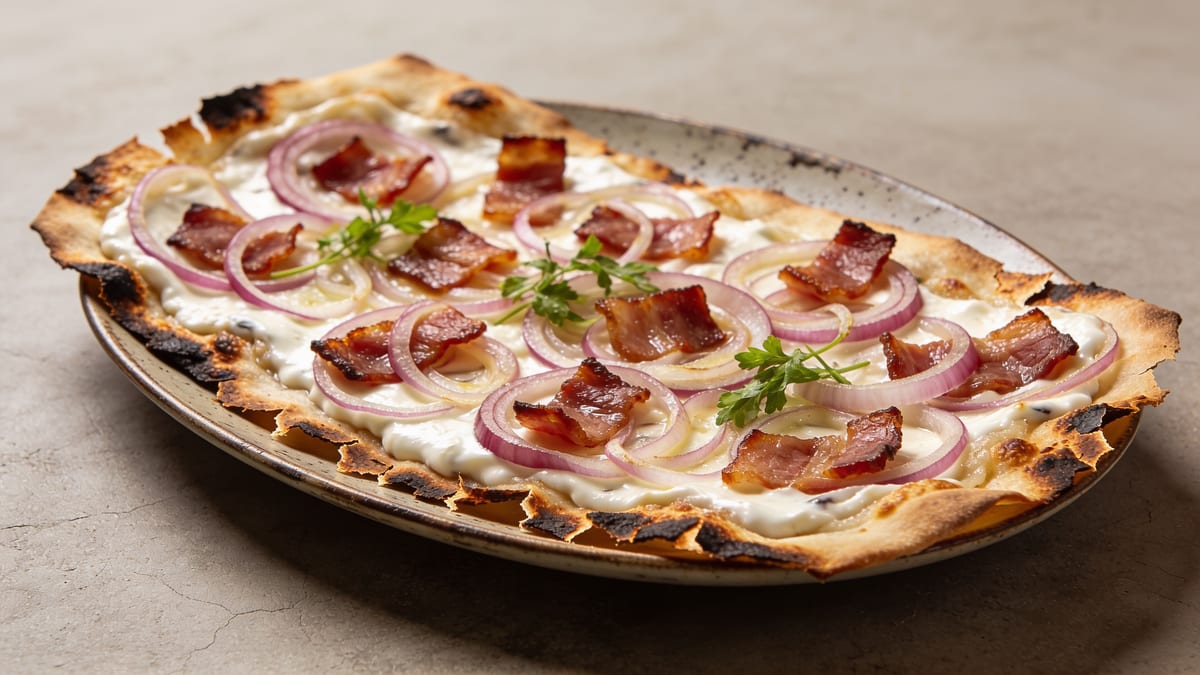
Make a simple unleavened dough of flour, water, a little oil and salt (no yeast), and let it rest briefly. Roll it out as thin as you possibly can — almost translucent — on baking paper, since the defining feature is a cracker-thin, crisp base. Spread it with a thin layer of seasoned crème fraîche (mixed with a little salt and nutmeg), leaving a small border, then scatter with very thinly sliced onion and smoky lardons (bacon). Bake in the hottest oven you have, on a preheated tray or stone, until the edges are charred and the base is crisp, just 10–15 minutes. Slide it out, cut into squares and eat immediately, while crisp and hot.
- Roll the dough as thin as you can — almost see-through — because the whole point is a cracker-crisp base.
- Use crème fraîche (not tomato sauce), and only a thin layer, so it doesn't go soggy.
- Bake in the hottest possible oven on a preheated tray/stone, and eat it straight away while crisp.
Equipment
- Rolling pin
- Baking tray or pizza stone
- Baking paper
Ингредиенты
Dough
- 250 g plain flour
- 125 ml warm water; 2 tbsp oil; ½ tsp salt
Topping
- 200 g crème fraîche
- 1 onion, very thinly sliced
- 150 g smoked lardons / bacon
- Salt, pepper, nutmeg; chives to finish
Приготовление
- ШАГ01
Mix the flour, warm water, oil and salt into a smooth dough, knead briefly, and let it rest 30 minutes. (No yeast — Flammkuchen dough is unleavened and thin.)
- ШАГ02
Heat your oven as hot as it goes (250°C+) with a baking tray or pizza stone inside to preheat.
- ШАГ03
Divide the dough and roll each piece out as thinly as possible on baking paper — almost translucent. The thinner it is, the crisper the tart.
- ШАГ04
Season the crème fraîche with a little salt, pepper and nutmeg, and spread a thin layer over the dough, leaving a small border. Scatter evenly with the thinly sliced onion and lardons.
- ШАГ05
Slide the tart (on its paper) onto the hot tray and bake until the edges are charred and the base is crisp, 10–15 minutes. Scatter with chives, cut into squares and serve immediately, while shatteringly crisp.
Make ahead
Make the dough ahead — it keeps a day in the fridge (bring back to room temperature to roll) — and prep the topping (slice onions, mix the crème fraîche) in advance, so you can roll and bake Flammkuchen to order in minutes. Because it's best eaten straight from the oven, the smart approach for a gathering is to prep everything ahead and then bake tarts one after another, serving each crisp and hot to share.
Storage
Flammkuchen is really only at its best fresh from the oven, crisp and hot — the thin base softens within minutes of cooling, so it's meant to be eaten right away. If you do have leftovers, they keep a day refrigerated and are best re-crisped in a hot oven (never the microwave, which makes them limp). Better to bake tarts to order in quick succession. The dough can be made ahead and the toppings prepped, so you can bake fresh ones fast.
Variations
Gratinée
Add grated Gruyère or Emmental for a richer, cheesier tart.
Vegetarian / mushroom
Skip the lardons; top with mushrooms, leek, or just onion and crème fraîche.
Süßer Flammkuchen
A sweet dessert version with apple, cinnamon and sugar (or crème fraîche and fruit).
Serve with
Nutrition per serving
Nutrition values are estimates based on the metric measurements. Adjust as needed.
Частые вопросы
What is Flammkuchen?
Flammkuchen (German) or tarte flambée (French) is a thin, crisp tart from the Alsace–Baden region on the French-German border. A paper-thin, unleavened dough is spread with crème fraîche, topped with thinly sliced onion and smoky lardons (bacon), and baked in a very hot oven until the edges char and the base is cracker-crisp. The name means 'flame cake', from baking it in a wood-fired oven to gauge the heat. It's light, smoky and savoury, eaten in squares as a sociable starter or light meal.
How is Flammkuchen different from pizza?
Though both are flatbreads with toppings, they're quite different. Flammkuchen dough is unleavened (no yeast) and rolled extremely thin for a crisp, cracker-like base, not a chewy bready one. Instead of tomato sauce and mozzarella, it's spread with crème fraîche and classically topped with just onion and lardons. It bakes very fast in a blazing oven and is meant to be thin, light and crisp rather than substantial. It's also traditionally cut into squares and eaten with the fingers.
Why is my Flammkuchen soggy instead of crisp?
Usually the dough wasn't rolled thin enough, the oven wasn't hot enough, or the topping was too wet. Roll the dough as thin as you can — almost translucent — bake on a preheated tray or stone in the hottest oven you have, and spread only a thin layer of crème fraîche (too much, or watery toppings, steam the base). Eating it immediately matters too, since the thin base softens as it cools. Thin dough + maximum heat + a light hand with the topping = crisp Flammkuchen.
Do I need yeast for the dough?
No — classic Flammkuchen dough is unleavened, made simply from flour, water, oil and salt, with no yeast. That's part of what keeps the base thin and crisp rather than puffy and bread-like. It needs only a short rest before rolling. (Some modern recipes use a little yeast or even ready-rolled pastry, but the traditional version is yeast-free and very quick to make.) The key is rolling it paper-thin, not letting it rise.
What toppings are traditional, and can I vary them?
The classic (à l'ancienne) topping is just crème fraîche, thinly sliced onion and lardons — simple and smoky. From there, popular variations include 'gratinée' with grated cheese, mushrooms, leeks, or a vegetarian version with just onion and crème fraîche. There's even a sweet Flammkuchen for dessert, topped with apple and cinnamon or fruit. The thin crème-fraîche base is the constant; the toppings are flexible, but keep them light and not too wet so the base stays crisp.
Cooked this? Rate it.
Real ratings from real cooks. We only show a score once enough of you have weighed in — no fabricated stars.