Kabsa — Spiced Arabian Chicken & Rice
The great rice dish of the Arabian Peninsula and a Saudi national favourite: long-grain rice cooked in a fragrant, tomato-tinged chicken broth scented with the warm spice blend baharat — cardamom, cloves, cinnamon, black lime (loomi) and more — then crowned with golden chicken and toasted nuts. Kabsa is the centrepiece of Gulf hospitality, shared from a huge communal platter, with a tangy tomato-chilli sauce (daqqus) on the side.
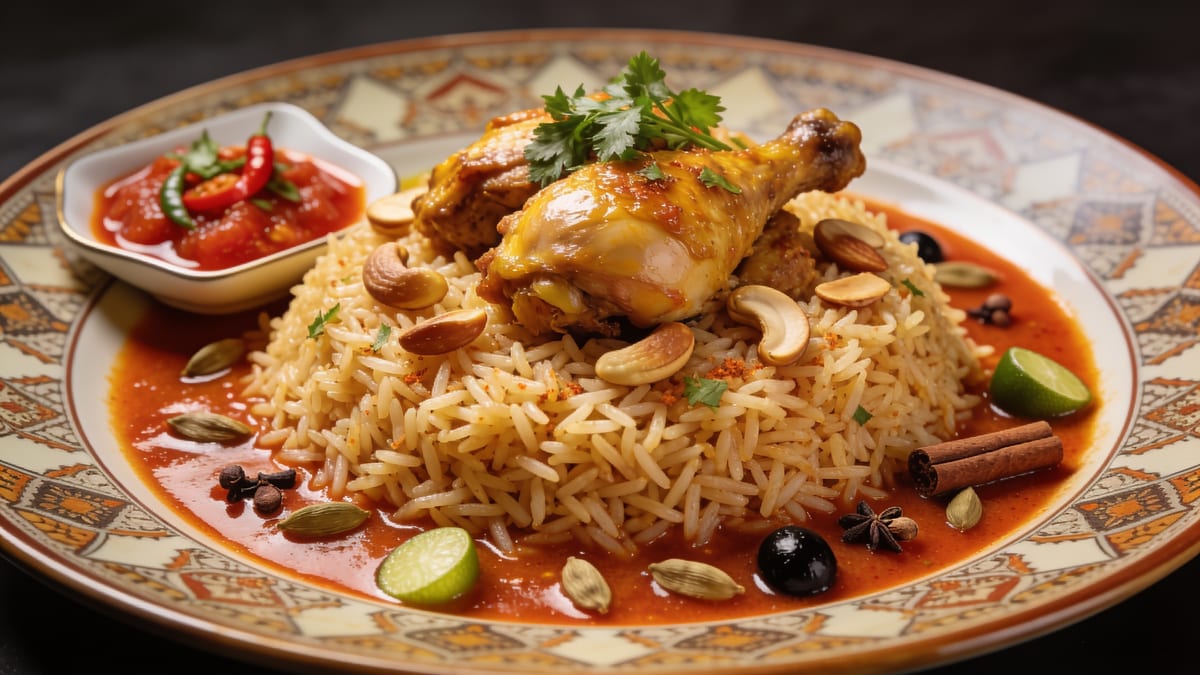
Brown chicken pieces, then soften onion, garlic and ginger and stir in tomato and a generous amount of kabsa spice (baharat — cardamom, cloves, cinnamon, cumin, coriander, black pepper) plus pierced dried black limes (loomi). Return the chicken with water to make a fragrant broth and simmer until cooked. Lift out the chicken and cook the soaked long-grain rice in that spiced broth until fluffy. Crisp or roast the chicken to finish, pile it on the rice, and scatter with toasted almonds and raisins. Serve with daqqus (tomato-chilli sauce).
- The flavour is all in the spiced broth — baharat plus dried black lime (loomi) is what makes it kabsa.
- Cook the rice in the chicken's spiced broth so every grain is fragrant.
- Finish the chicken golden (grill/roast) and top with toasted nuts; serve with daqqus sauce.
Equipment
- Large heavy pot with lid
- Frying pan (optional, to crisp chicken)
Ингредиенты
Chicken & broth
- 1 kg chicken pieces, bone-in
- 1 onion, garlic, 1 tsp grated ginger
- 2 tomatoes, grated (or 2 tbsp paste)
- 2 dried black limes (loomi), pierced; 2 tbsp kabsa spice (baharat)
Rice
- 500 g long-grain basmati rice, soaked
- Salt; a little of the broth as needed
To finish
- Toasted almonds (and/or pine nuts); raisins
- Daqqus (tomato-chilli sauce), to serve
Приготовление
- ШАГ01
Brown the chicken pieces in oil in a large pot, then set aside.
- ШАГ02
Soften the chopped onion, garlic and ginger, stir in the grated tomato and the kabsa spice (baharat), and add the pierced dried black limes. Cook a couple of minutes until fragrant.
- ШАГ03
Return the chicken, add water to cover and salt, and simmer until the chicken is cooked and you have a deeply flavoured broth, 25–30 minutes. Lift out the chicken.
- ШАГ04
Measure the broth (top up with water to the right ratio for your rice). Add the drained soaked rice to the spiced broth, bring to a boil, then cover and cook on low until the rice is fluffy and the liquid absorbed, about 15–18 minutes. Rest 10 minutes.
- ШАГ05
Meanwhile, crisp the chicken under a grill or in a hot oven until golden. Fluff the rice onto a big platter, top with the chicken, and scatter with toasted almonds and raisins. Serve with daqqus (tomato-chilli sauce) and salad.
Make ahead
Make the spiced chicken and broth ahead, then cook the rice in the broth closer to serving so it's fluffy and fresh. The whole dish reheats well for a crowd. Toast the nuts and make the daqqus fresh. Kabsa is natural party food made for big communal platters.
Storage
Keeps 3 days refrigerated and reheats well — sprinkle a little water and cover so the rice steams. The flavours deepen overnight. It freezes acceptably. Toast the nuts fresh for the best texture, and keep the daqqus sauce separate (it's best fresh).
Variations
Lamb kabsa
Use lamb instead of chicken — simmer longer until tender for kabsa laham.
Regional names
Closely related to machboos/majboos (Gulf), and similar in spirit to mandi and biryani — spicing and method vary by country.
Shrimp / fish
Make it with shrimp or fish for a coastal version.
Serve with
Nutrition per serving
Nutrition values are estimates based on the metric measurements. Adjust as needed.
Частые вопросы
What spices go in kabsa?
The signature is a warm spice blend (kabsa spice / baharat) typically including cardamom, cloves, cinnamon, cumin, coriander, black pepper and sometimes nutmeg, dried rose or saffron. The other defining flavour is dried black lime (loomi) — sun-dried limes that add a unique tangy, fermented citrus note. Together they give kabsa its distinctive, aromatic character.
What is loomi (dried black lime)?
Loomi are whole limes that have been boiled in brine and dried until hard, dark and intensely aromatic. Pierced and simmered in the broth (or ground), they release a tangy, slightly bitter, fermented-citrus flavour that's central to kabsa and many Gulf and Persian dishes. You can find them at Middle Eastern shops; they're worth seeking out.
What's the difference between kabsa and biryani?
Both are spiced rice-and-meat dishes, but they differ in technique and flavour. Kabsa cooks the rice in a tomato-tinged, baharat-and-loomi-spiced broth in one pot, with the meat on top — it's aromatic but not layered. Biryani layers separately-cooked rice and marinated meat and steams them together ('dum'), with a different (often hotter, yogurt-based) spice profile. Kabsa is milder and more citrus-warm.
How do I keep the rice fluffy and separate?
Use long-grain basmati, rinse and soak it, and cook it in the right ratio of spiced broth — too much liquid makes it mushy. Bring to a boil, then cover and cook gently on low until the liquid is absorbed, and let it rest 10 minutes off the heat before fluffing with a fork. Don't stir it while it cooks.
What is kabsa served with?
Kabsa is the centrepiece of a shared meal, piled on a large platter with the chicken or lamb on top and a scatter of toasted nuts and raisins. The classic accompaniment is daqqus — a tangy cooked tomato-and-chilli sauce — spooned over to taste, along with a fresh salad and sometimes plain yogurt (laban). It's eaten communally, often by hand.
Cooked this? Rate it.
Real ratings from real cooks. We only show a score once enough of you have weighed in — no fabricated stars.