Saltimbocca alla Romana — Veal with Prosciutto & Sage
Rome's quick, elegant classic whose name means 'jumps in the mouth': thin veal escalopes each topped with a slice of prosciutto and a sage leaf, pan-fried in butter and finished with a quick white wine pan sauce. Saltimbocca alla Romana is ready in minutes and tastes far more luxurious than the effort — the salty prosciutto, fragrant sage and tender veal in a glossy buttery sauce are a perfect, restrained trio.
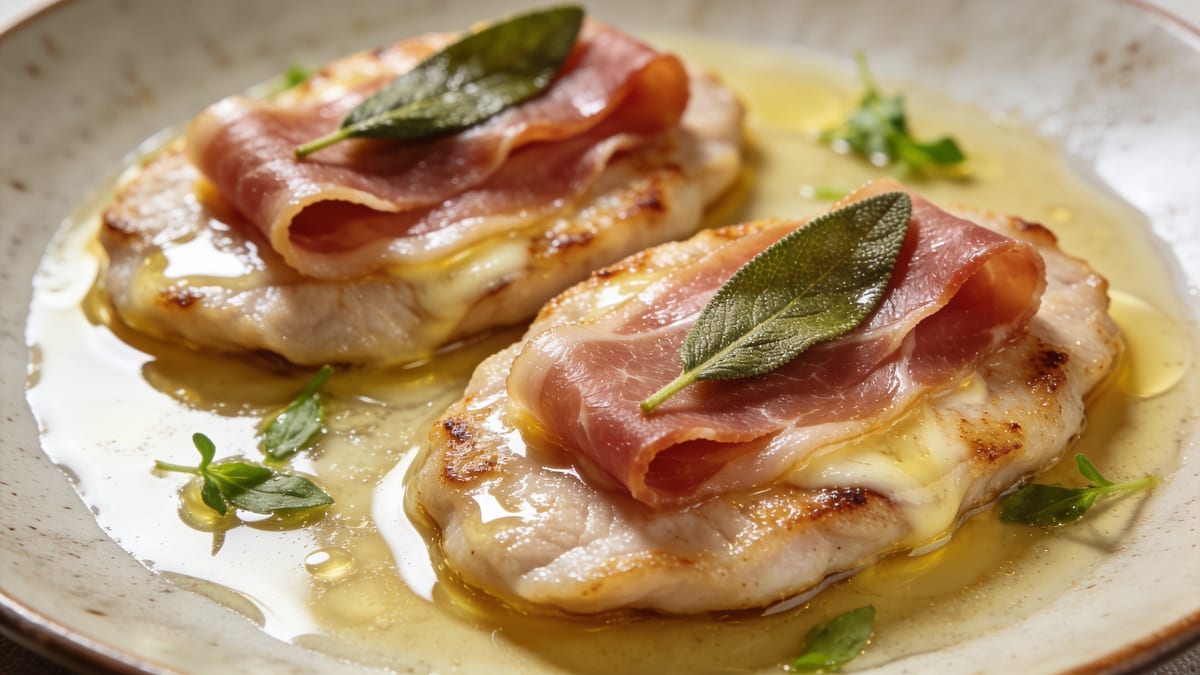
Gently flatten thin veal escalopes. Lay a slice of prosciutto on each, then a sage leaf, and secure with a toothpick (or press a little flour on to help it hold). Dust lightly with flour. Pan-fry in butter, prosciutto-side down first then turning, just a minute or two a side until the veal is just cooked and the prosciutto crisp. Remove, deglaze the pan with dry white wine, swirl in a little butter to make a glossy sauce, and pour it over. Serve immediately.
- Use thin veal escalopes, gently pounded — they cook in a minute or two, so don't overcook.
- Prosciutto + a fresh sage leaf on each is the whole flavour; secure with a toothpick.
- Deglaze with dry white wine and finish with butter for a quick, glossy pan sauce.
Equipment
- Frying pan
- Toothpicks
- Meat mallet
Ингредиенты
Saltimbocca
- 4 thin veal escalopes (about 400 g)
- 4 slices prosciutto crudo
- 4 fresh sage leaves (or more)
- Flour, for dusting; salt, pepper
Pan sauce
- 40 g butter
- 100 ml dry white wine
Приготовление
- ШАГ01
Gently pound the veal escalopes thin between sheets of plastic. Season lightly (go easy on salt — the prosciutto is salty).
- ШАГ02
Lay a slice of prosciutto over each escalope and press a sage leaf on top. Secure with a toothpick threaded through. Dust the veal side lightly with flour.
- ШАГ03
Melt the butter in a pan. Fry the saltimbocca prosciutto-side down first for a minute until crisp, then turn and cook the veal side a minute or two until just cooked through — don't overcook the thin veal. Remove to a warm plate.
- ШАГ04
Pour the wine into the hot pan and let it bubble and reduce, scraping up the bits, then swirl in a knob of butter to make a glossy sauce.
- ШАГ05
Remove the toothpicks, pour the pan sauce over the saltimbocca, and serve immediately — with sautéed spinach, or a simple salad and bread to mop up the sauce.
Make ahead
Assemble the escalopes (prosciutto and sage secured, ready to flour) a few hours ahead and refrigerate. The cooking takes only minutes and should be done just before serving, as saltimbocca is at its best straight from the pan. Have your wine and butter ready for the quick sauce.
Storage
Best cooked and eaten immediately — the thin veal toughens on reheating and the prosciutto softens. The components can be prepped (escalopes topped and secured) a few hours ahead and kept chilled, then pan-fried fresh to serve. It's a last-minute dish by design.
Variations
Chicken or pork
Use thin chicken breast or pork escalopes instead of veal — a popular, cheaper twist.
Rolled (involtini)
Some roll the veal around the prosciutto and sage into little bundles before frying.
With Marsala
Deglaze with Marsala instead of white wine for a sweeter, richer sauce.
Serve with
Nutrition per serving
Nutrition values are estimates based on the metric measurements. Adjust as needed.
Частые вопросы
What does 'saltimbocca' mean?
Saltimbocca literally means 'jumps in the mouth' (salta in bocca) in Italian — a nod to how irresistibly tasty and quick it is. The full name, saltimbocca alla romana, marks it as the Roman version: veal escalopes topped with prosciutto and sage. It's a classic of Roman trattoria cooking, prized for being fast yet elegant.
What cut of veal should I use?
Thin veal escalopes (scaloppine) cut from the leg or loin, gently pounded thin so they cook in a minute or two and stay tender. Thin, even slices are key — thick veal would overcook on the outside before the inside is done. If you can't get veal, thin chicken or pork escalopes are common, tasty substitutes.
Do I have to use a toothpick?
It helps keep the prosciutto and sage attached to the veal while it cooks and is turned, so each piece stays neat. Thread a toothpick through to secure the layers, and remember to remove it before serving. Some cooks instead just press the floured veal firmly so the prosciutto adheres; the toothpick is the more reliable method.
Should I flour the veal?
A light dusting of flour on the veal side helps it brown, gives the sauce a little body, and helps the prosciutto adhere. Flour only the veal, not the prosciutto side. Keep it light — you want a thin coating, not a thick crust. Shake off any excess before frying.
Why is my saltimbocca tough?
Almost always overcooking. The veal is thin and cooks in just a minute or two per side — leave it on too long and it turns tough and dry. Cook it briefly, just until the veal is opaque and the prosciutto crisp, and serve immediately. Pounding the escalopes evenly thin also helps them cook quickly and stay tender.
Cooked this? Rate it.
Real ratings from real cooks. We only show a score once enough of you have weighed in — no fabricated stars.