Apricot Jam
A classic French confiture d'abricots made the old-fashioned way: ripe apricots macerated in sugar and lemon juice, then boiled hard in a wide pan until glossy and softly set. Because apricots are naturally rich in pectin and acid, no commercial pectin is needed — the overnight-style maceration draws out the juices so the fruit cooks quickly and keeps its bright, honeyed tang instead of tasting caramelized.
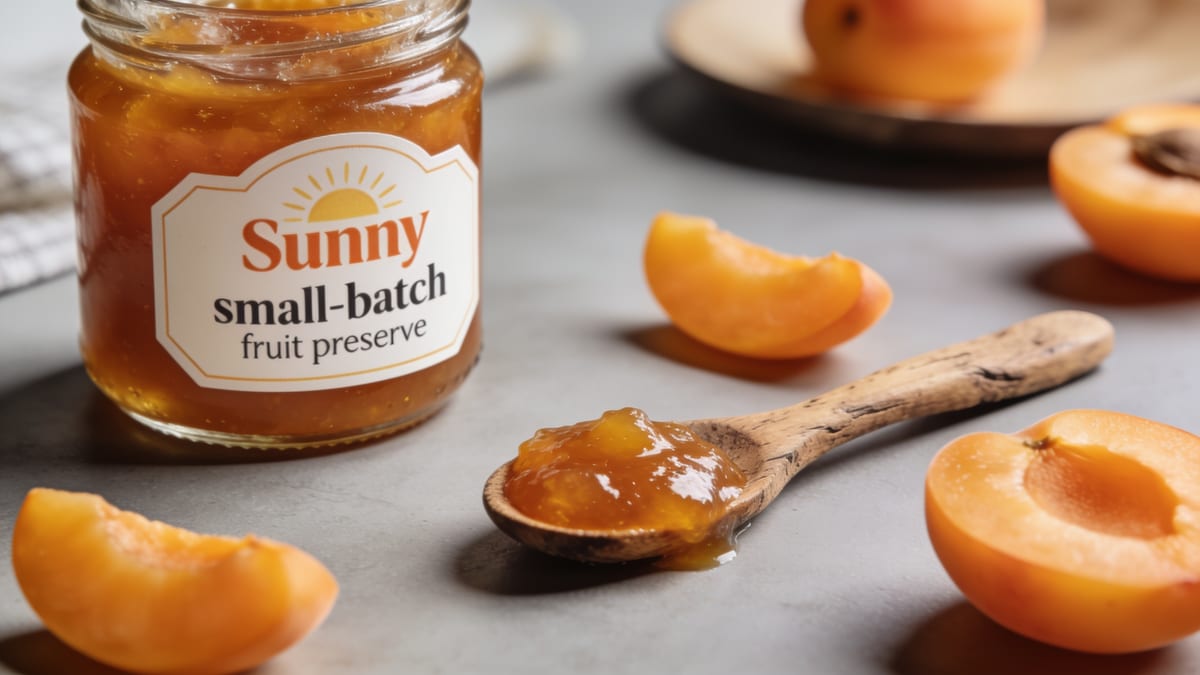
Pit and quarter 1 kg ripe apricots, toss them in a bowl with 750 g sugar and 45 ml lemon juice, and let them macerate 4 hours (or overnight in the fridge) until the sugar has mostly dissolved into syrup. Tip everything into a wide, heavy pan, bring to a rolling boil over medium-high heat, skim the pale foam, and boil hard for 12-18 minutes, stirring often near the end, until the jam reaches 104-105°C (219-221°F) or a spoonful wrinkles when pushed on a freezer-chilled plate. Ladle boiling-hot into sterilized jars, seal, and process 10 minutes in a boiling water bath for shelf-stable jars — or simply refrigerate.
- Macerate first: pre-dissolving the sugar means a shorter boil, brighter color, and fresher apricot flavor.
- Use a wide pan, not a tall pot — fast evaporation is what sets jam before the fruit dulls.
- Trust the cold-plate wrinkle test over the clock; apricot jam thickens noticeably as it cools.
Equipment
- Wide, heavy-bottomed pan (or copper jam pan), 5-6 liters
- Large mixing bowl
- Instant-read or candy thermometer
- Ladle and long-handled silicone spatula
- Four 250 ml (8 oz) canning jars with new lids
- Small plate chilled in the freezer
Malzemeler
Jam
- 1 kg ripe apricots, pitted and quartered, weighed after pitting; fragrant, slightly soft fruit gives the best flavor
- 750 g granulated sugar
- 45 ml fresh lemon juice, boosts pectin activity and balances sweetness
Optional flavoring
- vanilla bean, split lengthwise, a classic French touch; remove before jarring
Yapılışı
- ADIM01
Rinse the apricots, halve them along the seam, remove the pits, and cut each half in two. Weigh out 1 kg of prepared fruit — the sugar ratio (75% of the fruit weight) is what guarantees a reliable set and safe keeping.
- ADIM02
In a large bowl, toss the apricots with the sugar and lemon juice (add the split vanilla bean now if using). Cover and let stand at room temperature for 4 hours, stirring once or twice, until the sugar is mostly dissolved and the fruit is swimming in syrup. You can also refrigerate it overnight.
- ADIM03
Wash four 250 ml jars and lids in hot soapy water, then keep the jars hot in a 120°C (250°F) oven for at least 10 minutes, or in simmering water. Place a small plate in the freezer for testing the set later.
- ADIM04
Scrape the fruit and every bit of syrup into a wide, heavy pan. Set over medium-high heat and bring to a full rolling boil, stirring to prevent sticking. Skim off the pale orange foam that gathers at the edges — this keeps the finished jam clear.
- ADIM05
Keep the jam at a brisk boil, stirring more frequently as it thickens and the bubbles become glossy and slow. It is ready when a thermometer reads 104-105°C (219-221°F), usually 12-18 minutes. If you prefer a smoother texture, crush some of the fruit against the side of the pan with your spatula as it cooks.
- ADIM06
Take the pan off the heat. Drop a teaspoon of jam onto the freezer-cold plate, wait 30 seconds, then push it with a fingertip: it should wrinkle and hold a soft track. If it runs like syrup, boil 2-3 minutes more and test again. Remember apricot jam firms considerably as it cools.
- ADIM07
Remove the vanilla bean if used. Ladle the boiling-hot jam into the hot jars, leaving 6 mm (1/4 inch) of headspace. Wipe the rims, apply the lids, and screw the bands fingertip-tight. For shelf-stable jars, process in a boiling water bath for 10 minutes; otherwise cool completely and refrigerate.
Make ahead
Jam is the ultimate make-ahead preserve, and its flavor actually settles and rounds out after a week in the jar. You can also split the work: macerate the fruit and sugar in the refrigerator up to 24 hours before cooking — the longer soak only improves the texture and shortens the boil.
Storage
Water-bath-processed jars keep in a cool, dark cupboard for up to 12 months; check that each lid has sealed (it should not flex when pressed) before storing. Once opened — or if you skipped processing — keep the jam in the refrigerator and use within 3-4 weeks. Always use a clean spoon to prevent mold.
Variations
Lower-sugar version
Reduce the sugar to 500 g (2 1/2 cups) and increase the lemon juice to 60 ml (4 tbsp). The set will be softer and more spoonable, and the yield slightly smaller. Because sugar is the preservative, store this version in the refrigerator and use within 3 weeks, or freeze for up to 6 months.
Apricot-lavender
Tie 1 teaspoon of dried culinary lavender in a square of cheesecloth and drop it into the pan for the boil, removing it before jarring. A very Provençal pairing — use a light hand so the jam stays floral, not soapy.
Rosemary and orange
Swap the lemon juice for the juice of half an orange plus 1 tablespoon lemon juice, and steep a small sprig of fresh rosemary during the last 5 minutes of cooking. Excellent alongside cheese as well as on morning toast.
Serve with
Nutrition per serving
Nutrition values are estimates based on the metric measurements. Adjust as needed.
Sık sorulanlar
Do I need added pectin to make apricot jam?
No. Apricots are naturally high in both pectin and acid, which is why traditional French apricot jam is made with nothing but fruit, sugar, and lemon juice. The lemon juice lowers the pH so the fruit's own pectin can gel, and boiling to 104-105°C concentrates everything to the setting point. Commercial pectin only becomes useful if you want a very firm set with much less sugar.
Why is my apricot jam runny, and can I fix it?
It almost always means the jam didn't reach the setting point — either the temperature never hit 104°C or the pan was too deep for water to evaporate quickly. The fix is simple: pour the jam back into a wide pan, boil it again for 3-5 minutes, and re-test on a cold plate before re-jarring in clean, hot jars. Also remember that freshly cooked jam looks loose; judge it only after it has fully cooled.
Can I use frozen or slightly underripe apricots?
Frozen apricots work well — thaw them in the bowl with the sugar so no juice is lost, and expect a boil a few minutes longer. Slightly underripe fruit actually contains more pectin and sets easily, though the flavor is tarter, so a fully ripe majority with a handful of firmer fruit is the ideal mix. Avoid mealy, overripe fruit, which gives a dull-tasting jam.
Do I have to peel the apricots?
No — and you shouldn't. Apricot skins are thin, dissolve almost completely during cooking, and carry much of the fruit's pectin and rosy color. Just rinse the fruit, halve it along the natural seam, and pull out the pit. If you want an ultra-smooth texture, crush the cooked fruit with a spatula or give the finished jam a few quick pulses with an immersion blender off the heat.
How long does homemade apricot jam last?
Sealed in sterilized jars and processed 10 minutes in a boiling water bath, apricot jam keeps 12 months in a cool, dark pantry. Unprocessed jars, or any jar once opened, belong in the refrigerator and are best within 3-4 weeks. The 75% sugar-to-fruit ratio in this recipe is part of what preserves it, so if you cut the sugar, treat the jam as a refrigerator preserve.
Cooked this? Rate it.
Real ratings from real cooks. We only show a score once enough of you have weighed in — no fabricated stars.