Sweet and Sour Pork — Cantonese Gu Lou Yuk
The Cantonese classic (gū lōu yuk): cubes of pork coated in a light batter and fried until crisp, then tossed in a glossy sweet-and-sour sauce with pineapple, bell pepper and onion. The contrast of crunchy pork and bright, tangy, glistening sauce is what makes it a takeaway favourite the world over — far better made fresh.
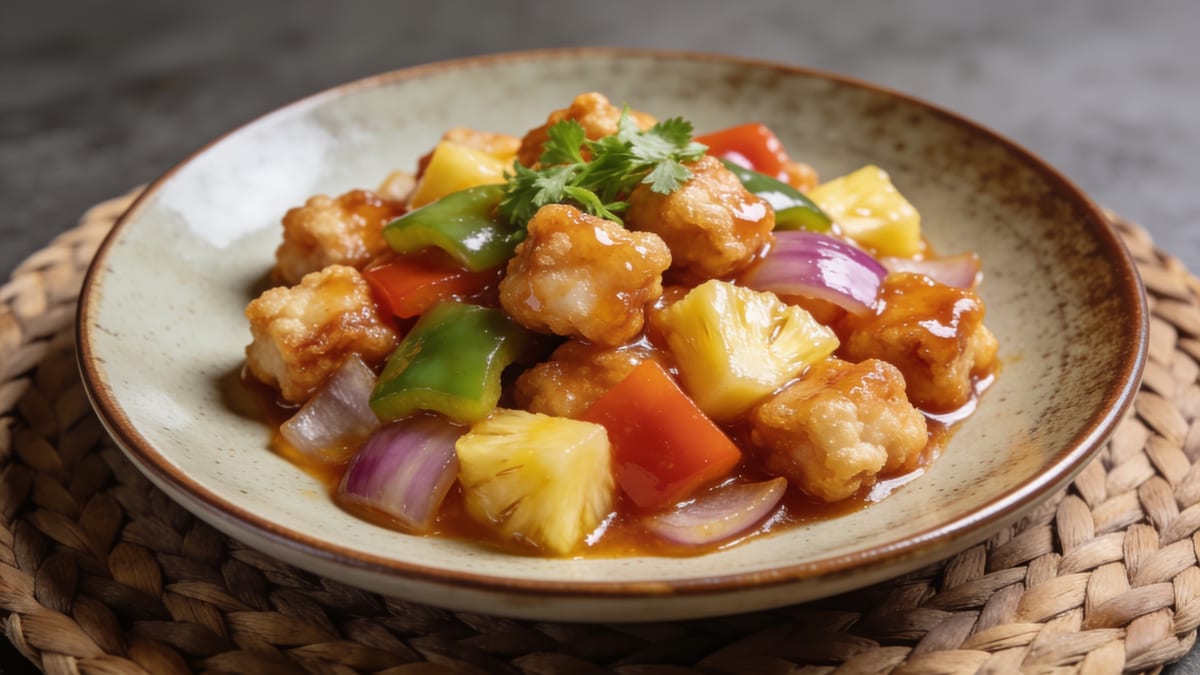
Marinate cubed pork in soy and a little egg, then coat in cornflour and fry until crisp and golden (frying twice gives extra crunch). Make a sweet-and-sour sauce from rice vinegar, ketchup or hawthorn, sugar, a little soy and a cornflour slurry. Stir-fry onion, bell pepper and pineapple, pour in the sauce to thicken and gloss, then toss the crisp pork through at the very end so it stays crunchy. Serve immediately with rice.
- Fry the pork twice (or very hot once) for a crust that stays crisp under the sauce.
- Toss the pork in the sauce at the very last moment so it doesn't go soggy.
- Balance the sauce sharp and sweet — rice vinegar and sugar in harmony, glossed with a cornflour slurry.
Equipment
- Wok or deep pan
- Bowl (for batter)
- Slotted spoon
Malzemeler
Pork
- 500 g pork shoulder, in 2.5 cm cubes
- 15 ml soy sauce
- 1 egg, beaten
- 80 g cornflour (cornstarch), for coating
- Oil, for deep-frying
Sweet & sour sauce
- 60 ml rice vinegar
- 60 g ketchup, or hawthorn/plum for traditional colour
- 50 g sugar
- 15 ml light soy sauce
- 1 tbsp cornflour slurry, to thicken
Vegetables
- 1 onion, in chunks
- 1 red and 1 green pepper, in chunks
- 150 g pineapple, in chunks
Yapılışı
- ADIM01
Toss the pork cubes with the soy and beaten egg, then dredge thoroughly in cornflour so each piece is well coated.
- ADIM02
Heat oil to 180°C and fry the pork until golden and cooked, then lift out. For extra crunch, fry a second time briefly until deep golden and crisp. Drain.
- ADIM03
Mix the rice vinegar, ketchup, sugar and soy. Keep the cornflour slurry ready.
- ADIM04
In a little oil in a hot wok, stir-fry the onion, peppers and pineapple 2 minutes until just crisp-tender.
- ADIM05
Pour the sauce into the wok and bring to a bubble, then stir in the slurry until glossy and thickened. Toss the crisp pork through at the very end to coat, and serve immediately with steamed rice.
Make ahead
Fry the pork and make the sauce ahead, keeping them separate. Re-crisp the pork in a hot oven and toss with the reheated sauce and freshly stir-fried vegetables just before serving so it stays crunchy.
Storage
Best eaten immediately while the pork is crisp. Leftovers keep 2 days but the coating softens; re-crisp the pork in a hot oven or air-fryer and re-toss in warmed sauce. Sauce and fried pork store best kept separate.
Variations
Traditional (no ketchup)
Colour the sauce with hawthorn (shan zha) or a little plum, as in older Cantonese recipes, for a cleaner sweet-sour flavour.
Sweet and sour chicken
Use cubed chicken thigh or breast in place of pork.
Lighter (no deep-fry)
Pan-fry the cornflour-coated pork in shallow oil for a less rich version.
Serve with
Nutrition per serving
Nutrition values are estimates based on the metric measurements. Adjust as needed.
Sık sorulanlar
How do I keep the pork crispy?
Two tricks: fry it twice (or once at a high 180°C) so the coating sets hard and golden, and — crucially — toss it in the sauce only at the very last moment before serving. Pork left sitting in the sauce goes soft quickly, so combine and serve immediately.
What gives the sauce its colour and tang?
The tang comes from rice vinegar balanced with sugar; the red colour usually from ketchup in modern recipes, or traditionally from hawthorn (shan zha) or plum. A cornflour slurry thickens it to a glossy coating that clings to the pork.
What cut of pork is best?
Pork shoulder (or a fattier cut) stays juicy and tender inside the crisp coating. Cut it into even 2.5 cm cubes so it cooks through quickly while frying. Very lean cuts like loin can turn dry.
Is this the same as the takeaway version?
It's the homemade original — Cantonese gū lōu yuk. Takeaway versions are often sweeter and redder. Made fresh, you control the balance: sharp rice vinegar against the sugar, crisp pork and crunchy vegetables, far better than it usually arrives in a box.
Can I bake or air-fry the pork instead?
You can air-fry or shallow-fry the cornflour-coated pork for a lighter dish, though deep-frying gives the crispest, most authentic crust. Whatever method, get it golden and crisp before tossing in the sauce at the last second.
Cooked this? Rate it.
Real ratings from real cooks. We only show a score once enough of you have weighed in — no fabricated stars.