Tonkatsu — Japanese Crispy Pork Cutlet
Japan's beloved pork cutlet: a thick loin coated in airy panko and fried to a deep gold that shatters at the bite, sliced and served with shredded cabbage, rice, and tangy tonkatsu sauce.
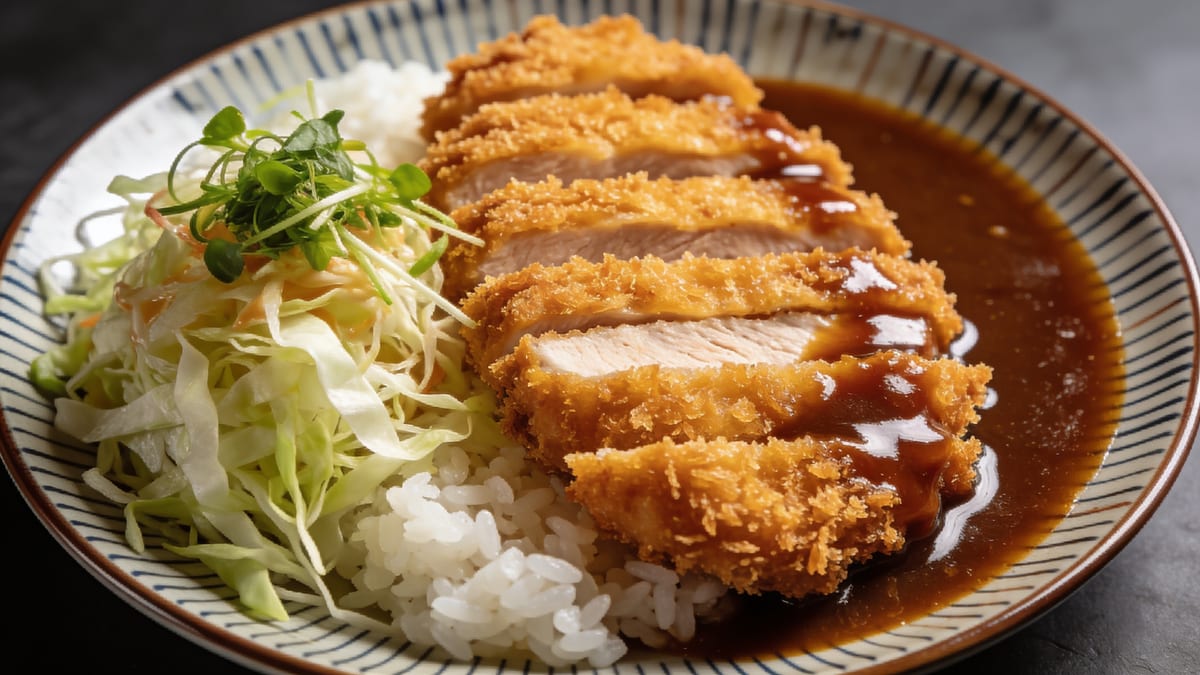
Score the fat edge of thick pork loin and pound lightly. Dredge in flour, then egg, then panko, pressing the panko on. Fry in 170°C / 340°F oil until deep gold and cooked through, 5–6 minutes total. Rest, slice into strips, and serve with shredded cabbage, rice, and tonkatsu sauce.
- Panko (Japanese breadcrumbs), not regular crumbs — the coarse flakes give the airy, shattering crust.
- Score the fat/silver-skin edge so the cutlet doesn't curl in the oil.
- Fry at a steady 170°C — too hot burns the panko before the pork cooks; too cool makes it greasy.
Equipment
- Heavy pot or deep pan
- Thermometer
- Wire rack
- 3 shallow bowls (for breading)
Malzemeler
Cutlets
- 2 thick boneless pork loin chops (about 2 cm)
- Salt and white pepper
- 40 g plain flour
- 1 egg, beaten
- 80 g panko breadcrumbs
- Neutral oil, for deep-frying
To serve
- ¼ head cabbage, very finely shredded
- Tonkatsu sauce (store-bought, or ketchup + Worcestershire + a little soy and sugar)
- Hot steamed rice
- Lemon wedge, Japanese mustard (karashi)
Yapılışı
- ADIM01
Make small cuts along the fat/connective edge of each chop so it won't curl. Pound lightly to an even ~1.5 cm. Season both sides with salt and white pepper.
- ADIM02
Three bowls: flour, beaten egg, and panko. Shred the cabbage now and soak in ice water for crispness.
- ADIM03
Dredge each cutlet in flour (shake off excess), then egg, then panko — press the panko on firmly for an even, thick coat.
- ADIM04
Heat 3–4 cm of oil to 170°C / 340°F. Lower in a cutlet and fry 5–6 minutes, turning once, until deep gold and an internal 63°C / 145°F. Don't crowd.
- ADIM05
Lift onto a wire rack (not paper) and rest 3 minutes — keeps the crust crisp and lets the juices settle.
- ADIM06
Slice the cutlet crosswise into 2 cm strips. Serve with a mound of drained shredded cabbage, hot rice, tonkatsu sauce, and a lemon wedge.
Make ahead
Bread the cutlets up to a few hours ahead and refrigerate. Fry to order — pre-fried katsu loses its crunch.
Storage
Best straight from the fryer. Leftovers reheat passably in a hot oven on a rack; the crust softens. Day-old katsu is great in katsudon or a katsu sando.
Variations
Katsudon
Simmer sliced katsu in a dashi-soy-mirin sauce with onion and bind with egg over rice.
Katsu sando
Layer a cutlet with cabbage and sauce between thick milk-bread slices for Japan's famous sandwich.
Chicken katsu
Use chicken breast or thigh instead of pork — same method.
Serve with
Nutrition per serving
Nutrition values are estimates based on the metric measurements. Adjust as needed.
Sık sorulanlar
What is panko and can I substitute it?
Panko is Japanese breadcrumb made from crustless bread, in large, dry, airy flakes that fry up extra crisp and light. Regular fine breadcrumbs give a denser, less shattering crust. Panko is widely available and worth using.
Why score the edge of the pork?
The band of fat and connective tissue around a loin chop contracts in hot oil and curls the cutlet, so it cooks unevenly. A few cuts through that edge keep it flat.
What oil temperature should I use?
A steady 170°C / 340°F. Hotter and the panko burns before the pork is done; cooler and the cutlet absorbs oil and turns greasy. A thermometer is the easiest way to nail it.
How do I know it's cooked?
Modern pork is safe at 63°C / 145°F internal with a short rest. For a 1.5 cm cutlet that's about 5–6 minutes at 170°C. Resting also lets carryover heat finish it gently.
What's in tonkatsu sauce?
A thick, tangy-sweet Japanese brown sauce (like a fruity Worcestershire). Buy it (Bull-Dog brand is classic) or approximate with ketchup, Worcestershire, a little soy sauce, and sugar.
Cooked this? Rate it.
Real ratings from real cooks. We only show a score once enough of you have weighed in — no fabricated stars.