Best Mashed Potatoes
Silky, cloud-light mashed potatoes built on starchy russets, warm cultured butter, and hot cream folded in off the heat. The secret is a ricer and restraint: you never overwork the starch, so the result is plush and glossy instead of gluey.
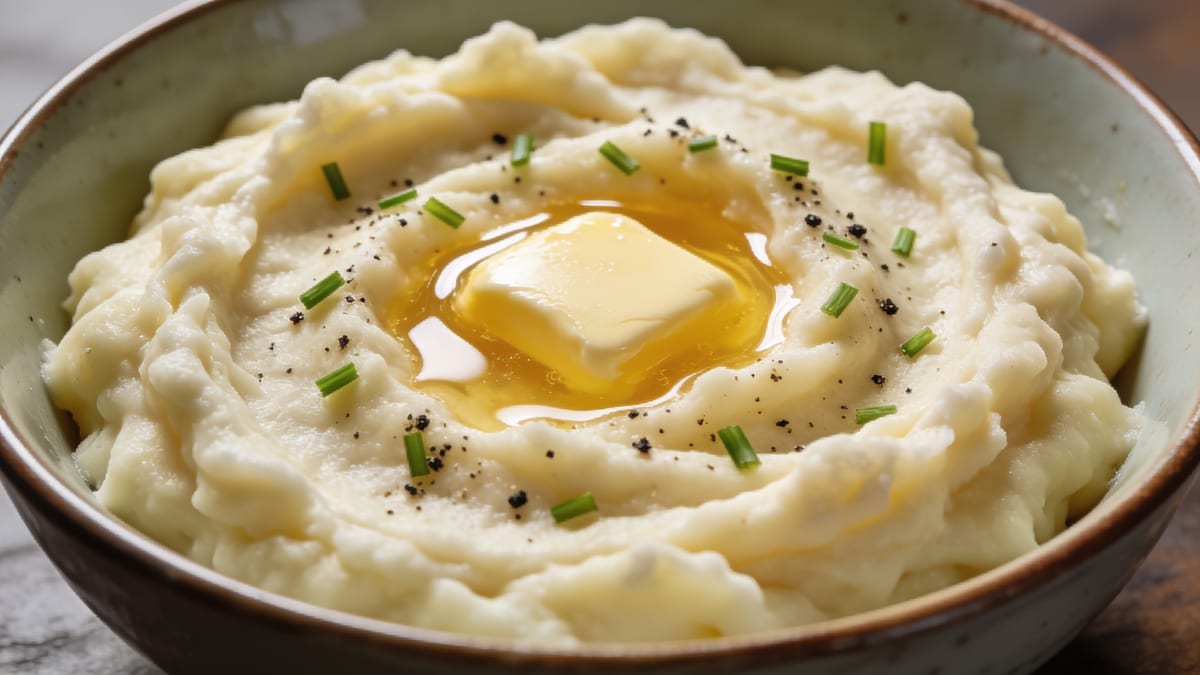
Start russets in cold, well-salted water and simmer until a knife slides through with zero resistance, then drain and let them steam-dry for two minutes so they don't turn watery. Rice the hot potatoes back into the warm pot, then fold in melted warm butter first and hot cream second, stirring gently just until glossy. Butter before liquid coats the starch and keeps the mash from going gluey. Season aggressively with salt and taste before serving.
- Use starchy russets or Yukon Golds, not waxy potatoes, for a fluffy mash
- Rice or mash while hot; cold potatoes turn pasty and heavy
- Butter goes in before the cream to keep the texture silky, never gluey
Equipment
- Large heavy pot
- Colander
- Potato ricer or food mill
- Small saucepan
- Flexible spatula
食材
Potatoes and cooking water
- 1.35 kg russet potatoes, peeled and cut into 2-inch (5 cm) chunks, Yukon Gold works too for a richer, more golden mash
- 30 g kosher salt, for the cooking water, The water should taste like mild seawater
To finish
- 170 g unsalted butter, cut into pieces, Cultured or European-style butter adds depth
- 180 ml heavy cream, Whole milk works for a lighter mash
- 6 g kosher salt, Plus more to taste
- freshly ground white or black pepper, White pepper keeps the mash pristine
步驟
- 步驟01
Put the peeled potato chunks in a large heavy pot and cover with cold water by 1 inch (2.5 cm). Add 2 tablespoons kosher salt. Starting in cold water lets the chunks cook evenly from the center out, so the outsides don't blow apart before the centers are done.
- 步驟02
Bring to a boil over high heat, then reduce to a steady simmer. Cook until a paring knife slides through a chunk with zero resistance, 15 to 20 minutes depending on size. Undercooked potatoes will never mash smooth, so err toward soft.
- 步驟03
While the potatoes simmer, combine the butter and cream in a small saucepan over low heat. Warm gently just until the butter melts, then keep warm off the heat. Adding cold dairy to hot potatoes shocks the starch and dulls the texture.
- 步驟04
Drain the potatoes well in a colander, then return them to the empty hot pot. Set over low heat and shake for 1 to 2 minutes to drive off surface moisture; you'll see a light film on the pot. Drier potatoes drink up more butter and cream without turning soupy.
- 步驟05
Working in batches, pass the hot potatoes through a ricer or food mill back into the warm pot. If you only have a masher, mash thoroughly but gently. Never use a food processor or blender, which whips the starch into glue.
- 步驟06
With a flexible spatula, fold in the warm butter mixture in two additions, stirring gently just until absorbed and glossy. Butter coats the starch granules first, which is what keeps the mash silky rather than gummy. Stop the moment it comes together.
- 步驟07
Stir in 1 1/2 teaspoons kosher salt and a few grinds of pepper. Taste and add more salt until the flavor pops; underseasoned mashed potatoes taste flat no matter how much butter is in them. Serve hot, with a knob of butter melting on top.
Make ahead
Mash up to a day ahead, transfer to a buttered baking dish or slow cooker, and dot the surface with extra butter. Reheat covered in a 325F (165C) oven for 30 to 40 minutes, or hold on LOW in a slow cooker for up to 3 hours, stirring in warm cream before serving to bring the texture back.
Storage
Refrigerate in an airtight container up to 4 days. Reheat gently in a covered pot over low heat or in a bowl in the microwave, stirring in a splash of warm milk or cream to loosen. Avoid boiling, which can turn reheated mash gluey.
Variations
Roasted garlic mash
Roast a whole head of garlic at 400F (200C) until soft, about 40 minutes, then squeeze the cloves into the warm butter and cream before folding in. Mellow and sweet, never sharp.
Sour cream and chive
Fold in 120 g (1/2 cup) sour cream along with the butter and finish with 2 tablespoons of thinly sliced chives for a tangy, brighter mash.
Brown butter mash
Cook the butter in a saucepan until it smells nutty and turns amber, about 5 minutes, before adding the cream. Adds a toasty, savory depth that reads almost like a restaurant side.
Serve with
Nutrition per serving
Nutrition values are estimates based on the metric measurements. Adjust as needed.
常見問題
What are the best potatoes for mashed potatoes?
Starchy potatoes make the fluffiest mashed potatoes. Reach for russets for a light, classic texture or Yukon Golds for a richer, buttery-yellow mash. Avoid waxy potatoes like red or new potatoes, which stay dense and can turn gummy when mashed.
Why are my mashed potatoes gluey?
Gluey mash comes from overworking the starch. Using a food processor or blender, mashing cold potatoes, or stirring too vigorously all release excess starch. Rice the potatoes while hot, fold in butter before the cream, and stop stirring the moment the mash is smooth and glossy.
Should I start potatoes in cold or hot water?
Cold water. Starting in cold, salted water lets the potato chunks heat gradually so they cook evenly from the center out. Dropping them into boiling water cooks the outsides to mush before the centers soften.
Can I make mashed potatoes ahead of time?
Yes. Mash up to a day ahead, keep refrigerated, and reheat gently in a covered pot or a 325F oven, stirring in warm cream or milk to loosen the texture. A slow cooker on LOW also holds them beautifully for a few hours.
How much potato do I need per person?
Plan on about 8 ounces (225 g) of raw potatoes per person as a side, or a bit more for a holiday table where the mash is a star. This recipe uses 3 pounds and serves 6 comfortably.
Cooked this? Rate it.
Real ratings from real cooks. We only show a score once enough of you have weighed in — no fabricated stars.