Masala Dosa — South Indian Crispy Rice Crepe
South India's iconic breakfast: a thin, golden, crackling-crisp crepe made from a naturally fermented rice-and-lentil batter, wrapped around a soft, spiced potato filling and served with coconut chutney and sambar. Masala dosa is a marvel of fermentation and technique — the lacy crispness comes from a well-fermented batter spread thin on a hot griddle — and dipping torn shards into cooling chutney and tangy sambar is pure joy.
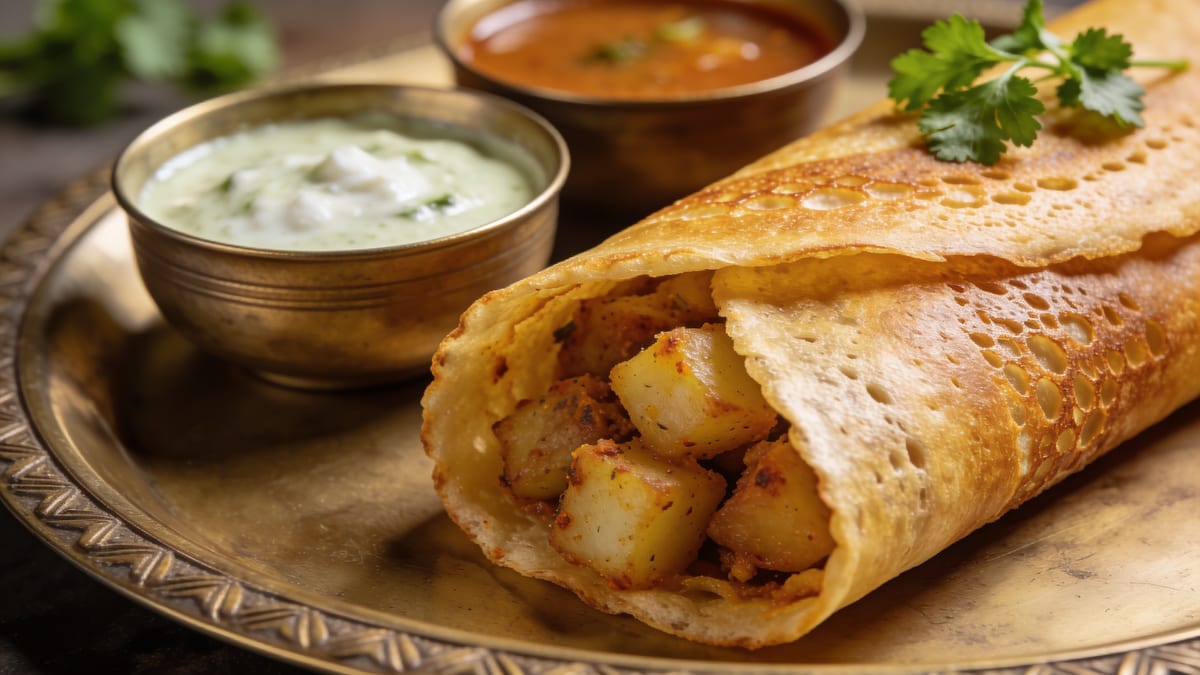
Soak rice and urad dal (with a little fenugreek) separately, then grind to a smooth batter and let it ferment overnight until risen, bubbly and pleasantly sour. Make a masala filling of potatoes cooked with mustard seeds, onion, turmeric, curry leaves and green chilli. Heat a flat griddle (cast iron or non-stick), pour a ladle of batter in the centre and quickly spread it outward in a spiral into a thin round, drizzle with oil/ghee, and cook until the base is deep golden and crisp. Add a line of potato masala, fold over, and serve with coconut chutney and sambar.
- Ferment the batter (8–12 hours in a warm spot) until risen and tangy — that's what makes dosas crisp and flavourful.
- Spread the batter thin on a properly hot griddle for lacy, crackling crispness.
- Serve hot with coconut chutney and sambar — the trio is the whole experience.
Equipment
- Blender/wet grinder
- Flat griddle or large non-stick pan
- Ladle
食材
Dosa batter
- 300 g rice (idli/dosa rice)
- 100 g urad dal (split black gram, skinned)
- ¼ tsp fenugreek seeds; salt
Potato masala
- 500 g potatoes, boiled and roughly mashed
- 1 onion, mustard seeds, turmeric, curry leaves, green chilli, ginger
To serve
- Coconut chutney
- Sambar (lentil-vegetable stew)
- Oil or ghee, for cooking
步驟
- 步驟01
Soak the rice in one bowl and the urad dal with fenugreek in another, both in plenty of water, for 4–6 hours.
- 步驟02
Grind the dal to a fluffy, smooth paste, then the rice to a slightly grainy paste; combine with salt into a pourable batter. Cover and leave in a warm place to ferment 8–12 hours, until risen, bubbly and pleasantly sour.
- 步驟03
Temper mustard seeds in oil, add onion, ginger, green chilli, curry leaves and turmeric, then fold in the boiled potatoes with a splash of water and salt to make a soft, spiced filling.
- 步驟04
Heat a flat griddle until hot (sprinkle water — it should sizzle). Pour a ladle of batter in the centre and, with the base of the ladle, quickly spread it outward in a spiral into a thin round. Drizzle oil/ghee around the edge.
- 步驟05
Cook until the base is deep golden and crisp and the edges lift. Place a line of potato masala down the middle, fold the dosa over it, and serve immediately with coconut chutney and sambar.
Make ahead
The batter must be made ahead anyway (overnight fermentation), and it keeps several days refrigerated — so dosa is a great 'batter on hand' breakfast. Make the masala, chutney and sambar ahead too. Cook the dosas fresh to order for crispness.
Storage
Dosas are best cooked and eaten immediately, while crisp. The fermented batter keeps 3–4 days refrigerated (it continues to sour — thin with a little water and adjust salt before using). The potato masala keeps 2 days. Chutney is best fresh; sambar keeps and freezes well.
Variations
Plain / sada dosa
Skip the filling for a plain crisp dosa, served with chutney and sambar.
Rava dosa
A quick, no-ferment lacy dosa from semolina and rice flour batter.
Mysore masala
Spread a layer of spicy red chutney inside before the potato for Mysore masala dosa.
Serve with
Nutrition per serving
Nutrition values are estimates based on the metric measurements. Adjust as needed.
常見問題
Why does dosa batter need to ferment?
Fermentation (from the wild yeasts and bacteria on the lentils and in the air) leavens the batter and develops the characteristic tangy flavour and the structure that lets dosas crisp up. A well-fermented batter rises, turns bubbly and smells pleasantly sour. Under-fermented batter gives dense, flat, less crisp dosas. Warmth speeds it up; in cold kitchens it takes longer.
What rice and lentils do I use?
Traditionally idli/dosa rice (a parboiled short-grain rice) and urad dal (skinned split black gram), in roughly a 3:1 or 4:1 rice-to-dal ratio, with a few fenugreek seeds that aid fermentation and colour. The urad dal provides the protein and structure for fermentation; the rice gives crispness. Grinding them to the right texture matters.
How do I get dosas crispy?
Three things: a properly fermented batter, spreading it thin on a hot griddle, and enough heat with a little oil/ghee. The griddle should be hot enough that a sprinkle of water sizzles. Spread the batter quickly and thinly in a spiral, and let the base cook undisturbed until deep golden and crisp before lifting. A well-seasoned cast-iron tawa helps a lot.
Is dosa gluten-free and vegan?
Yes — traditional dosa is made only from rice and lentils, so it's naturally gluten-free and (when cooked in oil rather than ghee) vegan. The potato masala is also plant-based, as is coconut chutney. Just use oil instead of ghee on the griddle and in the masala to keep it fully vegan.
What do you serve with masala dosa?
The classic trio: coconut chutney (cooling and rich), sambar (a tangy, spiced lentil-and-vegetable stew for dipping), and the dosa itself wrapped around spiced potato. Other chutneys (tomato, coriander) often join. You tear off crisp pieces and dip them into the chutney and sambar — and a South Indian filter coffee to finish.
Cooked this? Rate it.
Real ratings from real cooks. We only show a score once enough of you have weighed in — no fabricated stars.