Käsespätzle — German Cheese Spätzle
Germany's homey answer to mac and cheese: little free-form egg noodles scraped fresh into boiling water, then layered with mountain cheese until molten and crowned with a heap of deeply caramelised onions. Spätzle hails from Swabia, and Käsespätzle is its most comforting form — soft, eggy, cheesy and rich, the kind of Alpine soul food that turns a cold night around.
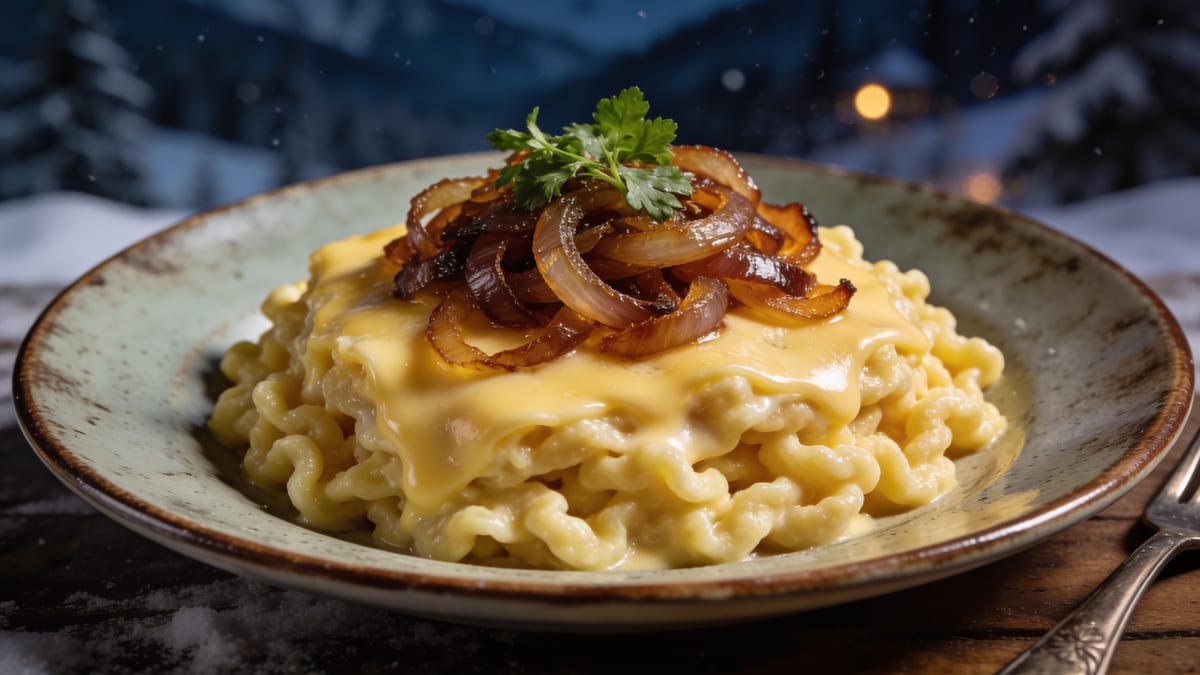
Whisk a thick, stretchy batter of flour, eggs and a little milk/water until it bubbles. Press or scrape it through a spätzle maker (or a colander with big holes) into a pot of salted boiling water; the little noodles are done when they float, after a minute or two. Lift them out, then layer the spätzle with grated mountain cheese (Emmental/Gruyère/Bergkäse) so it melts between the layers. Top with a generous pile of slowly caramelised onions and serve hot.
- The batter should be thick but stretchy — beat it until it forms bubbles, and let it rest briefly.
- Cook in batches; the spätzle are ready the moment they float to the surface.
- Caramelise the onions low and slow — that sweet, golden heap is what makes Käsespätzle.
Equipment
- Spätzle maker / colander / board
- Large pot
- Frying pan
食材
Spätzle batter
- 300 g plain (all-purpose) flour
- 4 eggs
- 100 ml milk or sparkling water, to loosen
- 1 tsp salt; grated nutmeg
To finish
- 250 g grated mountain cheese (Emmental/Gruyère/Bergkäse)
- 2 onions, thinly sliced
- Butter; chives or parsley
步驟
- 步驟01
Cook the sliced onions gently in butter, stirring often, until deeply golden and sweet, 15–20 minutes. Set aside.
- 步驟02
Whisk the flour, eggs, salt and nutmeg, adding milk/water a little at a time, until you have a thick, smooth, stretchy batter that drops slowly and forms bubbles when beaten. Rest 10 minutes.
- 步驟03
Bring a large pot of salted water to a boil. Press or scrape the batter through a spätzle maker (or colander) into the water in batches. When the little noodles float to the top, after 1–2 minutes, scoop them out into a colander.
- 步驟04
In a warm dish (or back in the pot), layer the hot spätzle with the grated cheese, a layer at a time, so the cheese melts into strands between them. Toss gently.
- 步驟05
Pile the caramelised onions on top, scatter with chives, and serve hot — ideally with a crisp green salad.
Make ahead
Cook the plain spätzle and caramelise the onions ahead. To serve, reheat the spätzle in a buttery pan, layer with cheese until molten, and top with the onions. Plain spätzle also freeze well — a great base to have on hand.
Storage
Keeps 3 days refrigerated. Reheat in a pan with a little butter (better than the microwave, which can make it rubbery). Plain cooked spätzle (without cheese) keep well and can be pan-fried crisp later, and they freeze well too.
Variations
Plain buttered spätzle
Skip the cheese and onions; toss the noodles in browned butter as a side dish for stews and roasts.
Pan-fried
Fry boiled spätzle in butter until the edges crisp before adding cheese, for extra texture.
Herb or spinach spätzle
Blend herbs or spinach into the batter for green spätzle.
Serve with
Nutrition per serving
Nutrition values are estimates based on the metric measurements. Adjust as needed.
常見問題
What is spätzle?
Spätzle are soft, free-form egg noodles (or tiny dumplings) from southern Germany (Swabia) and the Alpine region. A thick egg batter is pressed or scraped into boiling water, where it cooks into irregular little noodles in a minute or two. They're served as a side or, with cheese and onions, as Käsespätzle.
How do I make spätzle without a spätzle maker?
Use a colander or a box grater with large holes, pushing the batter through with a spatula into the boiling water. Traditionally they're scraped off a damp wooden board with a knife or dough scraper in thin strips. Any method that drops small pieces of batter into the water works — the noodles will just vary in shape.
What cheese is best for Käsespätzle?
A good melting Alpine/mountain cheese — Emmental, Gruyère, Bergkäse, or Swabian Bergkäse traditionally. A blend works well: something stretchy for melt plus a sharper aged cheese for flavour. Grate it so it melts evenly into strands between the hot layers of spätzle.
Why is my spätzle batter not working?
It's usually a consistency issue. The batter should be thick but stretchy — too thin and it disperses in the water; too thick and it won't press through. Beat it well until it forms bubbles (that's the gluten developing), and adjust with a little more flour or liquid. Letting it rest 10 minutes helps.
Can I make spätzle ahead?
Yes. Cook the plain spätzle, toss with a little oil or butter, and refrigerate or freeze. Reheat in a buttery pan (which can crisp the edges nicely), then layer with cheese and the caramelised onions to serve. Doing the noodles and onions ahead makes Käsespätzle a quick assembly job.
Cooked this? Rate it.
Real ratings from real cooks. We only show a score once enough of you have weighed in — no fabricated stars.