Tahchin — Persian Saffron Yogurt Rice Cake
One of the most spectacular dishes of Persian cuisine: a golden, saffron-stained cake of rice bound with yogurt and egg, baked until the outside forms a deep, crunchy crust (tahdig) and the inside stays tender, often layered around saffron chicken or lamb. Turned out and cut into wedges, tahchin reveals its glowing amber colour and shattering crust — at once a rice dish and a savoury cake. It's a celebration centrepiece, more refined and structured than everyday Persian rice, and the dramatic moment of unmoulding it whole, crust gleaming, is half the joy.
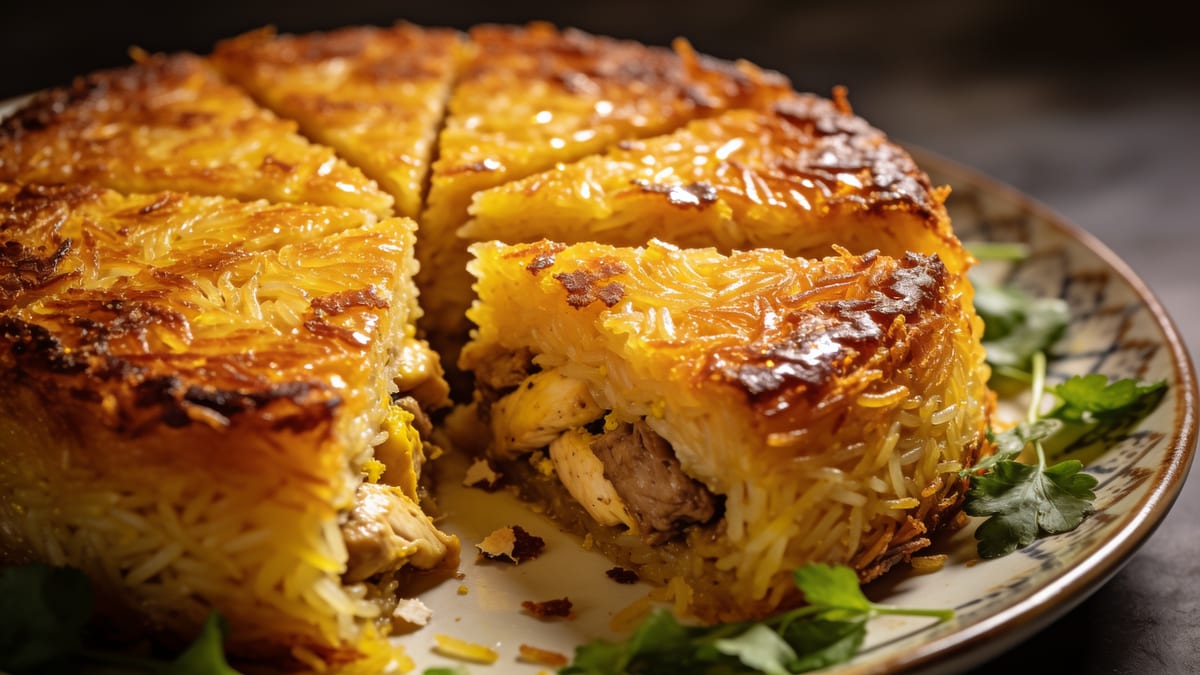
Parboil good basmati rice until just under-done, then drain. Make the tahchin base by whisking thick yogurt with egg yolks, lots of bloomed saffron, a little oil and salt, and fold a good portion of the parboiled rice through it so it's coated in golden custard. Press this saffron rice firmly into the bottom of a well-oiled dish to form the crust layer, add a layer of cooked saffron chicken or lamb if using, then top with the rest of the plain rice. Drizzle with oil, cover tightly, and bake low and slow until a deep golden, crisp crust forms on the bottom and the rice is fluffy, about an hour or more. Rest, then invert the whole tahchin onto a platter so the gleaming saffron crust is on top, and cut into wedges.
- Mix the parboiled rice with a yogurt-egg-saffron custard — that's what bakes into the golden, crisp crust.
- Press the saffron rice down firmly and bake low and slow so the crust (tahdig) sets deep gold and crunchy.
- Rest before inverting, then turn it out whole so the gleaming saffron crust shows on top; cut into wedges.
Equipment
- Oven dish or ovenproof pot (non-stick helps)
- Pot (to parboil rice)
- Bowl (for the custard)
食材
Rice & custard
- 400 g basmati rice, parboiled
- 250 g thick yogurt
- 3 egg yolks
- Large pinch saffron, bloomed; oil; salt
Filling (optional)
- Cooked saffron chicken or lamb, shredded
- Fried barberries (zereshk) and slivered pistachio/almond, to garnish
步驟
- 步驟01
Rinse and soak the basmati, then boil it in salted water until just under-done (still firm in the centre), and drain. It will finish cooking in the oven.
- 步驟02
Whisk the thick yogurt with the egg yolks, lots of bloomed saffron, a little oil and salt into a smooth, deep-gold custard. Fold a good portion of the parboiled rice through it until evenly coated.
- 步驟03
Oil a baking dish well. Press the saffron-custard rice firmly into the bottom (and up the sides) to form the crust layer. Add a layer of shredded saffron chicken or lamb, if using, then top with the remaining plain rice. Drizzle with oil.
- 步驟04
Cover tightly (foil and lid) and bake at 180°C until a deep golden, crisp crust has formed on the bottom and the rice is fluffy and cooked through, about 1 to 1½ hours. The longer, gentler bake builds a better crust.
- 步驟05
Let the tahchin rest 10–15 minutes, then run a knife around the edge and confidently invert it onto a platter so the gleaming golden crust is on top. Garnish with fried barberries and pistachios, and cut into wedges to serve.
Make ahead
Much of tahchin can be prepped ahead: cook the saffron chicken or lamb filling and bloom the saffron in advance, and you can parboil the rice ahead too. Assemble and bake closer to serving for the best, crispest crust. A baked tahchin can also be made a few hours ahead and gently re-crisped in the oven before inverting and serving. Its structured, sliceable nature makes it good for entertaining, served at room temperature or warm.
Storage
Tahchin keeps 2–3 days refrigerated. The crust softens on storage but can be revived: reheat in a hot oven or a dry pan to re-crisp the saffron crust, rather than the microwave (which makes it soft). It's substantial and reheats into a satisfying meal. You can refrigerate it whole or in wedges. The saffron chicken/lamb filling and the parboiled rice can be prepped ahead, which is the main work, then assembled and baked.
Variations
Tahchin-e morgh
The classic version layered with saffron chicken (morgh) — the most popular.
Vegetarian
Make it without meat, or layer with spinach or barberries, for a vegetarian saffron rice cake.
Stovetop tahdig
A related effect to the beloved tahdig (crispy rice crust) made in a pot on the stovetop.
Serve with
Nutrition per serving
Nutrition values are estimates based on the metric measurements. Adjust as needed.
常見問題
What is tahchin?
Tahchin is a Persian baked saffron rice dish — a savoury 'rice cake' in which parboiled basmati is bound with yogurt, egg yolks and lots of saffron, then baked until the outside forms a deep golden, crisp crust and the inside stays tender, often layered around saffron chicken or lamb. It's turned out whole and cut into wedges, revealing its glowing amber colour. More structured and refined than everyday Persian rice, it's a showstopping celebration dish, prized for its crunchy saffron crust and dramatic presentation.
How is tahchin different from regular Persian rice (tahdig)?
Both prize the crispy crust, but they differ. Tahdig is the crunchy crust that forms at the bottom of a pot of plain steamed Persian rice (chelo), broken up when served. Tahchin is a whole dish where the rice is mixed with a yogurt-egg-saffron custard and baked (or pot-cooked) into a firm, sliceable cake with an all-over golden crust, usually layered with chicken or lamb. So tahchin is essentially a structured, custard-bound, cake-like rice dish, while tahdig is just the crust of ordinary rice.
Why mix the rice with yogurt and egg?
The yogurt and egg yolks (plus saffron and oil) form a rich custard that coats the parboiled rice and, when baked, sets into the dish's signature firm, deeply golden, crisp crust while keeping the inside tender. The yogurt adds a subtle tang and helps the crust brown, and the egg binds everything so the tahchin holds its shape and can be turned out whole and sliced. This custard binding is exactly what makes tahchin a 'cake' rather than loose rice.
Why didn't my tahchin form a good crust?
A great crust needs enough oil in a well-greased dish, the saffron-rice layer pressed down firmly, and a long, gentle bake — rushing it or using too little oil gives a pale, soft base. Use a non-stick or well-oiled ovenproof dish, press the custard-rice layer compactly, cover tightly so the rice steams and cooks through, and give it ample time (an hour or more) at a moderate heat for the bottom to turn deep golden and crisp. Letting it rest before inverting also helps the crust release cleanly.
Can I make tahchin without meat?
Yes — while tahchin-e morgh (with saffron chicken) is the most famous version, you can make a vegetarian tahchin with just the saffron-yogurt rice, or layer it with cooked spinach, barberries (zereshk), or eggplant instead of meat. The crisp saffron crust and custardy rice are the stars, so it stands beautifully on its own as a vegetarian centrepiece. Garnished with fried barberries and pistachios, a meatless tahchin is just as striking and delicious.
Cooked this? Rate it.
Real ratings from real cooks. We only show a score once enough of you have weighed in — no fabricated stars.