بقلاوة
جوهرة الحلويات التركية والشامية: عشرات من طبقات الفيلو الرقيقة كالورق المدهونة بالزبدة، محشوّة بالفستق الحلبي أو الجوز المفروم ناعمًا، تُخبز حتى تصبح مقرمشة ذهبية هشّة، ثم تُغمر بالقطر العطري (أو العسل) لحظة خروجها من الفرن. البقلاوة درسٌ في التباينات — طبقات مقرمشة زبدية بالمكسرات تتشرّب من القطر ما يكفي لتكون حلوة فاخرة من دون أن تتهرّأ — تُقطَّع معيّنات لامعة للمناسبات وفناجين القهوة على السواء.
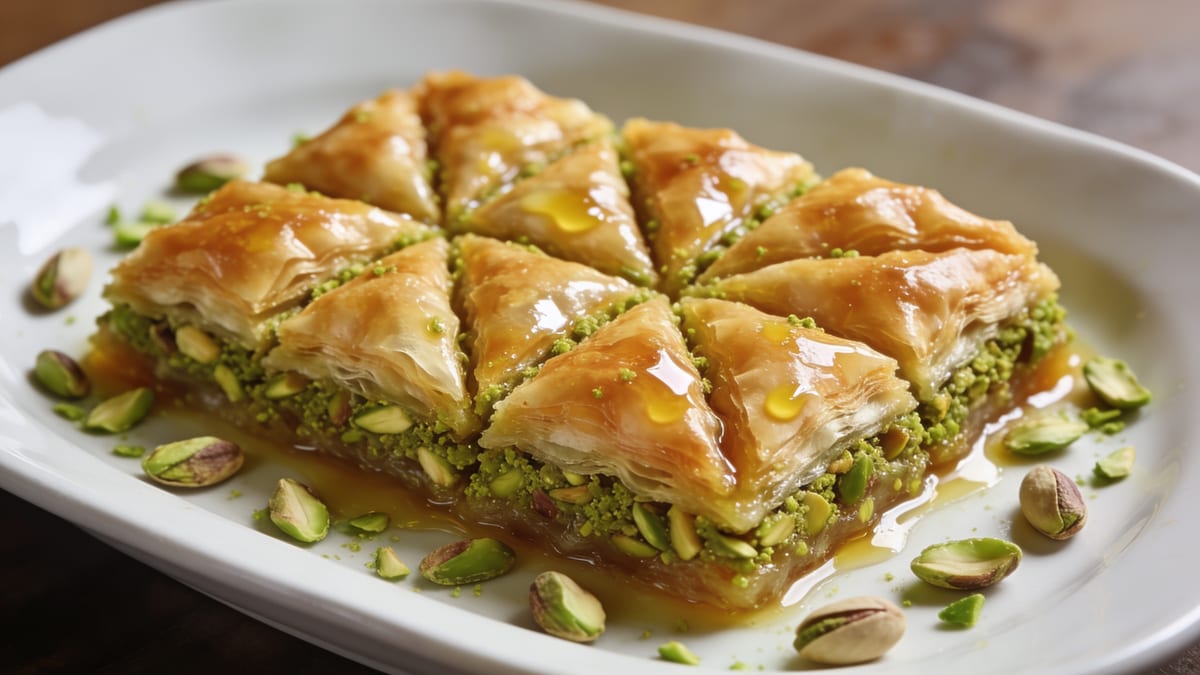
حضّر قطرًا من السكر والماء مع الليمون (وقليل من العسل أو ماء الورد) وبرّده. ادهن صينية خبز بالزبدة ورصّ نحو نصف عبوة رقائق الفيلو، مع دهن كل رقاقة بالزبدة المذوّبة. انثر طبقة سميكة من الفستق الحلبي أو الجوز المفروم ناعمًا، ثم رصّ بقية الفيلو فوقها مع دهنها بالزبدة. قطّعها معيّنات حتى القاع قبل الخبز. اخبزها حتى تتذهّب بعمق وتتقرمش، ثم — وهذه الخطوة الحاسمة — اسكب القطر البارد فوق البقلاوة الساخنة (أو الساخن فوق الباردة)، واتركها تتشرّب عدة ساعات لتصبح مقرمشة متشرّبة بالقطر، لا مبتلة طرية.
- حيلة الحرارة: قطر بارد على بقلاوة ساخنة (أو قطر ساخن على باردة) ليتشرّب فيها وتبقى مقرمشة.
- ادهن كل طبقة فيلو بالزبدة وقطّع المعيّنات قبل الخبز ليتغلغل القطر.
- اتركها ترتاح ساعات (ويُفضَّل ليلة كاملة) بعد السقاية ليتشرّب القطر تمامًا.
Equipment
- صينية خبز
- فرشاة حلواني
- سكين حادة
- قدر صغير (للقطر)
المكونات
القطر
- 400 g سكر
- 350 ml ماء
- عصرة ليمون؛ 1 ملعقة كبيرة عسل (اختياري)؛ رشّة ماء ورد (اختياري)
البقلاوة
- 1 packet عجينة فيلو، مذوّبة من التجميد
- 250 g زبدة، مذوّبة
- 300 g فستق حلبي أو جوز، مفروم ناعمًا
- اختياري: 1 ملعقة صغيرة قرفة (مع الجوز)؛ رشّة سكر
الطريقة
- خطوة01
اغلِ السكر والماء مع الليمون (والعسل/ماء الورد إن استخدمتهما) نحو 10 دقائق حتى يتكوّن قطر خفيف. اتركه يبرد ثم ضعه في الثلاجة — يجب أن يكون القطر باردًا ليُسكب فوق البقلاوة الساخنة.
- خطوة02
ادهن صينية خبز بالزبدة. رصّ نحو نصف رقائق الفيلو واحدة تلو الأخرى، مع دهن كل رقاقة بالزبدة المذوّبة. أبقِ الفيلو غير المستخدم تحت منشفة رطبة حتى لا يجف.
- خطوة03
انثر المكسرات المفرومة ناعمًا بالتساوي فوق قاعدة الفيلو (واخلط قليلًا من القرفة/السكر مع الجوز). رصّ بقية الفيلو فوقها مع دهن كل رقاقة بالزبدة، وادهن الوجه جيدًا.
- خطوة04
بسكين حادة، قطّعها حتى القاع معيّنات أو مربعات قبل الخبز (فهذا ما يسمح للقطر بالتغلغل). اخبزها على 170°C/340°F حتى تتذهّب بعمق وتتقرمش في كل أجزائها، نحو 45–50 دقيقة.
- خطوة05
فور خروج البقلاوة من الفرن، اسكب القطر البارد بالتساوي على العجين الساخن كله (ستسمع أزيزًا). اتركها تتشرّب عدة ساعات، ويُفضَّل ليلة كاملة، حتى تمتص القطر وتصبح مقرمشة فاخرة في آن. قدّمها بحرارة الغرفة.
Make ahead
البقلاوة مثالية للتحضير المسبق — فهي تحتاج أصلًا إلى ساعات (ويُفضَّل ليلة كاملة) ليتشرّب القطر تمامًا، وتُحفظ أيامًا كثيرة بحرارة الغرفة بل وتتحسّن. حضّرها قبل التقديم بيوم أو يومين. إنها حلوى المناسبات الكلاسيكية التي تُجهَّز سلفًا وتبقى في المتناول للضيوف.
Storage
تُحفظ جيدًا جدًا — حتى أسبوع أو أكثر بحرارة الغرفة، مغطاة تغطية خفيفة (لا تضعها في الثلاجة، فذلك يجعل الفيلو مبتلًا طريًا وقاسيًا). فالقطر يعمل عامل حفظ. وهي في الواقع تتحسّن بعد يوم مع استقرار القطر فيها. احفظها في مكان بارد وجاف في طبقة واحدة أو مرصوصة بعناية.
Variations
بالفستق الحلبي (فيستيكلي)
النسخة التركية الأثمن بالفستق الحلبي الأخضر الزاهي، وخاصة من غازي عنتاب.
بالجوز (جفيزلي)
بقلاوة الجوز، غالبًا مع قليل من القرفة — شائعة في أنحاء المنطقة.
بالعسل / ماء الورد
استخدم العسل في القطر، أو عطّره بماء الورد أو ماء زهر البرتقال للمسة شامية.
Serve with
Nutrition per serving
Nutrition values are estimates based on the metric measurements. Adjust as needed.
الأسئلة الشائعة
كيف أحافظ على قرمشة البقلاوة من دون أن تتهرّأ؟
المفتاح هو تباين الحرارة بين العجين والقطر: اسكب القطر البارد على البقلاوة الساخنة الخارجة لتوها من الفرن (أو القطر الساخن على بقلاوة باردة تمامًا). هكذا يتشرّب القطر بينما تبقى الطبقات مقرمشة. أما سكب قطر ساخن على بقلاوة ساخنة فيجعلها مبتلة طرية. وادهن كل طبقة جيدًا بالزبدة واخبزها حتى تتذهّب وتتقرمش فعلًا قبل السقاية.
لماذا تُقطَّع البقلاوة قبل الخبز؟
التقطيع حتى القاع معيّنات أو مربعات قبل الخبز يسمح للقطر بالتغلغل نزولًا عبر الطبقات عند سكبه، فتتشرّب كل قطعة بالتساوي. أما إذا قطّعت بعد الخبز والسقاية فلن يصل القطر إلى الوسط وستسحق الطبقات المقرمشة. استخدم سكينًا حادة واقطع بنظافة حتى القاع.
الفستق الحلبي أم الجوز — أيهما التقليدي؟
كلاهما تقليدي، ويختلف الأمر باختلاف المنطقة. البقلاوة التركية، وخاصة من غازي عنتاب، مشهورة بالفستق الحلبي الأخضر الزاهي (فيستيكلي). وبقلاوة الجوز (جفيزلي)، غالبًا مع لمسة قرفة، منتشرة أيضًا في تركيا والشام والبلقان. استخدم ما تفضّله — أو مزيجًا منهما — مفرومًا ناعمًا لا مطحونًا كالبودرة.
كم تدوم البقلاوة؟
تدوم على نحو لافت — حتى أسبوع أو أكثر بحرارة الغرفة، مغطاة تغطية خفيفة، لأن القطر يحفظها. لا تضعها في الثلاجة، فالبرودة تجعل الفيلو مبتلًا والزبدة قاسية. وهي في الواقع ألذّ بعد يوم من تحضيرها، حين يكون القطر قد استقر فيها تمامًا. ولهذا فهي حلوى ممتازة للتحضير المسبق.
كيف أتعامل مع عجينة الفيلو من دون أن تتشقق؟
ذوّبها تمامًا قبل فرد اللفافة، وأبقِ الرزمة مغطاة بمنشفة رطبة قليلًا أثناء العمل، لأن الفيلو يجف ويتشقق خلال دقائق من تعرّضه للهواء. اعمل بسرعة معقولة، وادهن كل رقاقة بالزبدة المذوّبة. وبضعة تمزقات صغيرة لا تهم بعد رصّ الطبقات وخبزها — إذ تتقرمش كلها معًا.
Cooked this? Rate it.
Real ratings from real cooks. We only show a score once enough of you have weighed in — no fabricated stars.