Japchae — Korean Glass Noodle Stir-Fry
Korea's glossy sweet-savoury glass noodle dish, served at every celebration: chewy sweet-potato starch noodles tossed with sesame-seasoned beef and a rainbow of vegetables cooked separately so each keeps its colour and bite. Light, springy and deeply moreish — good warm or at room temperature.
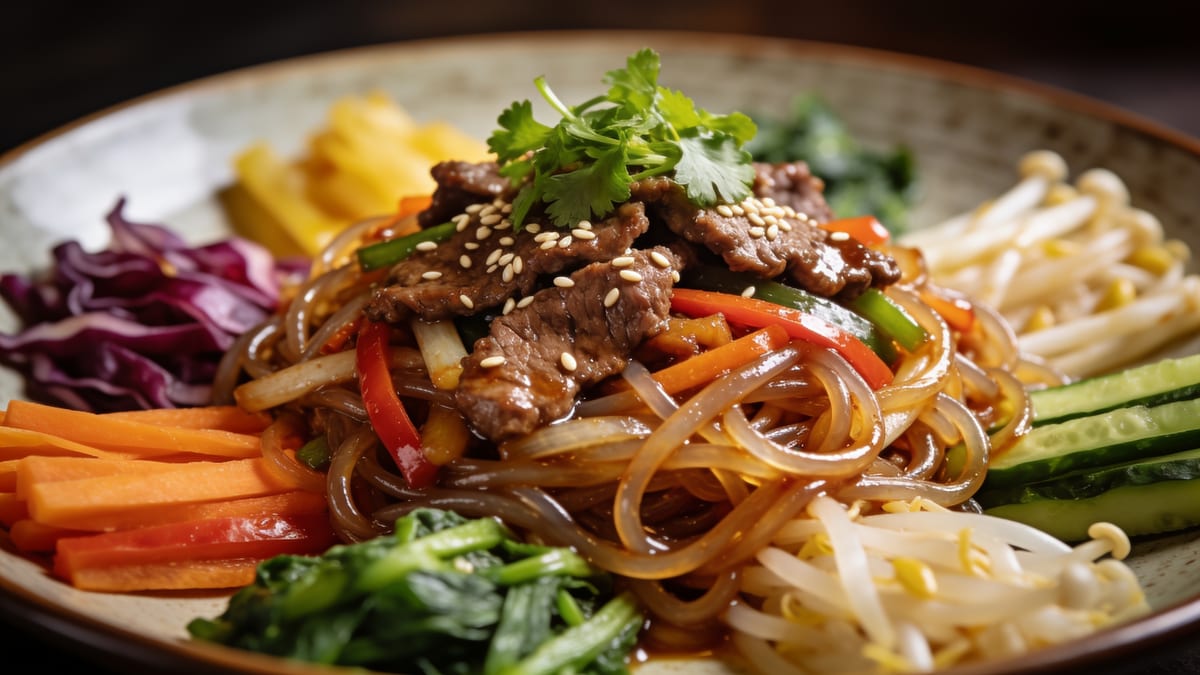
Soak and boil sweet-potato glass noodles (dangmyeon) until chewy, then cut and toss with soy and sesame oil. Stir-fry each vegetable and the marinated beef separately so colours stay vivid, then combine everything with a soy-sugar-sesame sauce. Finish with toasted sesame seeds. Serve warm or at room temperature.
- Cook the vegetables and beef separately, not in one heap — that's what keeps japchae vivid and distinct.
- Dress the noodles while warm so they drink up the sesame-soy seasoning.
- Balance the sauce sweet and savoury; a little sugar and sesame oil are essential.
Equipment
- Large pot
- Wok or large frying pan
- Mixing bowls
- Colander
المكونات
Noodles & beef
- 200 g dangmyeon (sweet potato glass noodles)
- 200 g beef sirloin, thinly sliced
- 15 ml soy sauce, for the beef
- 5 ml sesame oil, for the beef
- 1 tsp sugar, 1 clove garlic (grated)
Vegetables
- 1 carrot, julienned
- 1 onion, sliced
- 100 g spinach, blanched
- 100 g shiitake mushrooms, sliced
- ½ red pepper, sliced
- 2 spring onions, in batons
Sauce & finish
- 45 ml soy sauce
- 30 g sugar
- 15 ml sesame oil
- 2 cloves garlic, grated
- Toasted sesame seeds, to finish
الطريقة
- خطوة01
Toss the sliced beef with 1 tbsp soy, 1 tsp sesame oil, sugar and grated garlic. Set aside while you prep the vegetables.
- خطوة02
Boil the glass noodles until chewy-tender, 6–7 minutes, then drain, rinse briefly, and cut a few times with scissors. Toss with a splash of soy and sesame oil so they don't clump.
- خطوة03
In a hot, lightly oiled pan, stir-fry each vegetable briefly and separately — onion, carrot, pepper, mushrooms, spring onion — seasoning lightly, removing each to a big bowl. Blanch and squeeze the spinach. Finally stir-fry the beef until just cooked.
- خطوة04
Add the noodles to the big bowl with all the vegetables and beef. Pour over the sauce (soy, sugar, sesame oil, garlic) and toss thoroughly with your hands or tongs until everything is glossy and evenly seasoned.
- خطوة05
Taste and adjust soy and sugar. Pile onto a platter and shower with toasted sesame seeds. Serve warm or at room temperature.
Make ahead
An excellent make-ahead and party dish; it holds beautifully at room temperature and tastes great the next day. Prep and stir-fry the components ahead, then toss together shortly before serving.
Storage
Keeps 3 days refrigerated and is delicious cold or gently reheated — japchae is famously good as leftovers and in lunchboxes. Loosen with a few drops of sesame oil to refresh.
Variations
Vegetarian / vegan
Skip the beef and add extra mushrooms (king oyster, shiitake) and more vegetables; use a vegan-friendly soy seasoning.
Japchae-bap
Serve over a bowl of warm rice (japchae-bap) to turn the side dish into a full meal.
Extra mushrooms
Rehydrated wood-ear and shiitake add wonderful chew — a traditional touch.
Serve with
Nutrition per serving
Nutrition values are estimates based on the metric measurements. Adjust as needed.
الأسئلة الشائعة
What noodles are used in japchae?
Dangmyeon — Korean glass noodles made from sweet potato starch. They're chewy and springy and turn translucent when cooked. Don't substitute mung-bean vermicelli or rice noodles; the texture is quite different.
Why cook the vegetables separately?
Each vegetable has a different cooking time and colour. Stir-frying them separately keeps everything vibrant, crisp-tender and distinct, rather than a uniform, overcooked tangle. It's the hallmark of well-made japchae.
Can japchae be made ahead?
Yes — it's a classic party and lunchbox dish precisely because it holds so well. It's tasty warm, at room temperature, or cold. Make it a few hours (or a day) ahead and refresh with a drop of sesame oil before serving.
How do I stop the noodles clumping?
Rinse them briefly after boiling, cut them a few times, and toss immediately with a little soy and sesame oil. Dressing them while warm and keeping them lightly oiled prevents sticking.
Is japchae gluten-free?
The noodles themselves are (sweet potato starch), but standard soy sauce contains wheat. Use a certified gluten-free tamari and check your other seasonings to make the whole dish gluten-free.
Cooked this? Rate it.
Real ratings from real cooks. We only show a score once enough of you have weighed in — no fabricated stars.