Marinara-Sauce
Eine pure, knoblauchbetonte neapolitanische Tomatensauce aus nur sechs Zutaten, geköchelt, bis die Tomaten zu einer glänzenden, leuchtend roten Sauce mit echtem Körper zerfallen. Keine Zwiebeln, kein Fleisch, kein Zucker – nur der klare, sonnenwarme Geschmack guter Tomaten, mit Knoblauch, Olivenöl und gezupftem Basilikum herausgekitzelt.
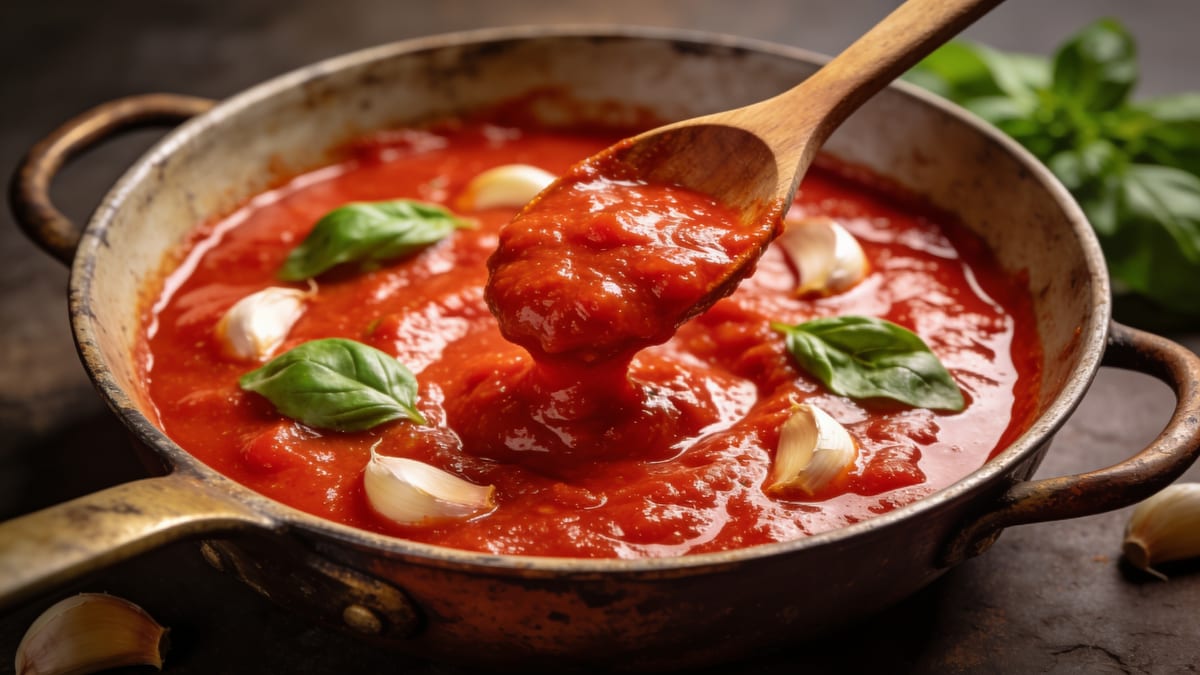
Geschnittenen Knoblauch sanft in einem großzügigen Schuss Olivenöl erwärmen, bis er gerade blassgold und duftend wird, von Hand zerdrückte ganze geschälte Tomaten zugeben, würzen, dann unbedeckt bei trägem Blubbern 30–35 Minuten köcheln, bis die Sauce tiefrot wird, ihre rohe Kante verliert und einen Löffel überzieht. Abseits der Hitze mit gezupftem Basilikum und einem letzten Faden rohem Olivenöl vollenden. Das ist authentische Marinara-Sauce – keine Zwiebeln, kein Zucker, keine Abkürzungen.
- Die besten ganzen geschälten Dosentomaten verwenden, die du finden kannst (San Marzano D.O.P. wenn möglich) – SIE sind das Rezept.
- Den Knoblauch nicht bräunen; blond und duftend ist das Ziel, sonst wird er bitter.
- Unbedeckt köcheln, damit die Sauce reduziert und konzentriert – daher kommt die Tiefe.
Equipment
- Breiter Topf mit schwerem Boden oder Bräter (etwa 24 cm / 3–4 l)
- Holzlöffel
- Kochmesser und Schneidebrett
- Große Schüssel zum Zerdrücken der Tomaten
- Feines Sieb oder Flotte Lotte (optional, für eine glatte Sauce)
Zutaten
Die Sauce
- 800 g ganze geschälte Dosentomaten, vorzugsweise San Marzano D.O.P., mit ihrem Saft; von Hand zerdrückt
- 60 ml natives Olivenöl extra, geteilt; ein gutes, fruchtiges verwenden
- 4 cloves Knoblauch, in dünnen Scheiben, nicht gehackt
- 6 g feines Meersalz, plus mehr zum Abschmecken
- 8 leaves frisches Basilikum, gezupft, Stiele beiseite legen
- 1 g getrockneter Oregano, optional, neapolitanischer Touch
- 0.5 g Chiliflocken, optional, für einen Hauch Schärfe
Zubereitung
- SCHRITT01
Die Dosentomaten mit ihrem ganzen Saft in eine große Schüssel geben. Jede Tomate mit der Hand (oder einem Kartoffelstampfer) zu groben, unregelmäßigen Stücken zerdrücken – du willst Textur, kein Püree. Harte weiße Kerne oder verirrte Basilikumstiele herauspicken und entsorgen. Die Schüssel in Reichweite des Herds stellen.
- SCHRITT02
Einen breiten, schweren Topf bei mittelniedriger Hitze aufsetzen. 45 ml (3 EL) des Olivenöls und den geschnittenen Knoblauch zugeben, solange das Öl noch kalt ist – der kalte Start lässt den Knoblauch sanft durchziehen. Unter Rühren 2–3 Minuten garen, bis die Scheiben blassblond werden und süß und nussig duften. Nicht über Gold hinaus färben lassen, sonst schmeckt die Sauce bitter.
- SCHRITT03
Falls verwendet, jetzt die Chiliflocken und den getrockneten Oregano zugeben und 15–20 Sekunden rühren, gerade bis es duftet. Dieses kurze Anrösten im warmen Öl holt weit mehr Geschmack heraus, als sie später zuzugeben.
- SCHRITT04
Etwas Abstand halten und die zerdrückten Tomaten zugeben – sie spritzen. Das Salz zugeben und die beiseite gelegten Basilikumstiele für extra Aroma hineingeben. Umrühren, die Hitze erhöhen und zu einem sanften Kochen bringen. Etwas Wasser (etwa 60 ml / 1/4 cup) in die leere Tomatenschüssel schwenken und ebenfalls zugeben, damit nichts verschwendet wird.
- SCHRITT05
Die Hitze auf ein träges, gleichmäßiges Blubbern reduzieren. Unbedeckt 30–35 Minuten köcheln, dabei alle 5–7 Minuten umrühren und den Boden abkratzen, damit nichts ansetzt. Die Sauce ist fertig, wenn sie zu einem tiefen Ziegelrot nachgedunkelt ist, das Öl sich leicht an den Rändern sammelt und ein durch die Pfanne gezogener Löffel kurz eine saubere Spur hinterlässt.
- SCHRITT06
Die Basilikumstiele herausfischen und entsorgen. Abschmecken: Ist sie zu scharf, ein paar Minuten länger köcheln; ist sie zu dick, mit einem Schuss heißem Wasser lockern. Nach Bedarf mit mehr Salz würzen. Für eine rustikale Sauce so lassen; für eine glatte Marinara durch eine Flotte Lotte passieren oder kurz mit dem Stabmixer pürieren.
- SCHRITT07
Die Hitze abschalten. Die gezupften Basilikumblätter und die restlichen 15 ml (1 EL) rohes Olivenöl einrühren. Dieser letzte Faden ungekochtes Öl gibt Glanz und einen frischen, pfeffrigen Auftrieb. Die Sauce 2 Minuten ruhen lassen, dann sofort verwenden oder aufbewahren.
Make ahead
Marinara ist besser, wenn sie einen Tag im Voraus gemacht wird – Knoblauch und Basilikum werden milder und verbinden sich mit der Tomate. Bis zu 3 Tage im Voraus zubereiten, kühlen und bei niedriger Hitze erwärmen, dabei das Finish-Basilikum und das rohe Öl erst kurz vor dem Servieren frisch einrühren für den hellsten Geschmack.
Storage
Vollständig abkühlen lassen, dann in einem luftdichten Behälter bis zu 5 Tage kühlen. Der Geschmack vertieft sich über Nacht. In Portionen bis zu 3 Monate einfrieren; im Kühlschrank auftauen und sanft erwärmen, mit einem Schuss Wasser oder Nudelwasser lockern. Eine dünne Schicht Olivenöl obenauf im Kühlschrank hilft ihr, sich zu halten.
Variations
Marinara Piccante (Richtung Arrabbiata)
Die Chiliflocken verdoppeln oder verdreifachen und eine ganze getrocknete Chilischote mit dem Knoblauch zugeben. Etwas länger garen, um zu konzentrieren. Mit Penne schwenken und mit gehackter Petersilie für eine feurige Wochentagssauce vollenden.
Sommerliche Marinara aus frischen Tomaten
Die Dosen durch 1 kg sehr reife frische Tomaten ersetzen. Einritzen, 30 Sekunden in kochendem Wasser blanchieren, im Eiswasser abschrecken, häuten, dann zerdrücken und weitermachen. 10 Minuten zum Köcheln hinzurechnen, um das zusätzliche Wasser auszutreiben.
Milde Version mit geröstetem Knoblauch
Den geschnittenen rohen Knoblauch durch die weichen Zehen einer ganzen gerösteten Knolle ersetzen. Den Aufschlussschritt überspringen und die Paste direkt in die Tomaten rühren für eine süßere, rundere, weniger scharfe Sauce.
Serve with
Nutrition per serving
Nutrition values are estimates based on the metric measurements. Adjust as needed.
Häufige Fragen
Was ist der Unterschied zwischen Marinara-Sauce und normaler Pasta- oder Spaghettisauce?
Marinara-Sauce ist bewusst minimalistisch: Tomaten, Knoblauch, Olivenöl, Basilikum und Salz, schnell geköchelt. Sie hat keine Zwiebeln, kein Fleisch und meist keine Möhre oder Sellerie. Eine typische amerikanische 'Spaghettisauce' enthält oft angeschwitzte Zwiebel, manchmal Hackfleisch, Zucker und eine längere Garzeit. Marinara ist heller, schneller und schmeckt klar nach Tomate.
Warum schmeckt meine Marinara-Sauce bitter oder säuerlich, und sollte ich Zucker zugeben?
Bitterkeit kommt meist von zu weit gebräuntem Knoblauch oder einer minderwertigen Tomatendose. Säure ist natürlich und kocht sich beim Reduzieren größtenteils weg. Den Zucker weglassen – authentische Marinara-Sauce braucht ihn nicht. Stattdessen ein paar Minuten länger köcheln, eine Prise mehr Salz zugeben oder mit einem Faden guten Olivenöls abrunden. Ein im Topf mitgeköchelter Basilikumstiel mildert die Kante ebenfalls.
Brauche ich San-Marzano-Tomaten für eine gute Marinara-Sauce?
Nein, aber die Tomaten sind die wichtigste Einzelentscheidung, also kauf die besten, die du bekommst. Echte San Marzano D.O.P. (auf das Siegel achten) sind säurearm, fleischig und süß, weshalb sie die klassische Wahl sind. Jede gute ganze geschälte Dosentomate ergibt hervorragende Marinara – meide vorzerkleinerte oder vorgewürzte Dosen, die tendenziell dünn und blechig sind.
Kann ich Marinara-Sauce mit frischen statt Dosentomaten machen?
Ja, im Hochsommer mit sehr reifen Tomaten. Etwa 1 kg blanchieren und häuten, zerdrücken und 10 Minuten länger köcheln, um das zusätzliche Wasser auszukochen. Außerhalb der Saison schlagen gute Dosentomaten aber jederzeit blasse frische – sie werden reif gepflückt und verpackt.
Wie lange hält selbst gemachte Marinara-Sauce, und kann ich sie einfrieren?
Gekühlt in einem luftdichten Behälter hält sie bis zu 5 Tage und wird nach einer Nacht sogar besser. Sie friert wunderbar bis zu 3 Monate ein – in Behälter oder flach gelegte Gefrierbeutel portionieren. Über Nacht im Kühlschrank auftauen und sanft erwärmen, mit etwas Wasser oder Nudelwasser lockern.
Cooked this? Rate it.
Real ratings from real cooks. We only show a score once enough of you have weighed in — no fabricated stars.