Vatapá — bahianische Garnelen-Brot-Kokos-Creme
Eine reichhaltige, samtige Ikone der afro-brasilianischen bahianischen Küche: ein dickes, herzhaftes Püree aus Brot, das eingeweicht und mit Kokosmilch, getrockneten und frischen Garnelen, gemahlenen Erdnüssen und Cashews sowie Dendê (rotem Palmöl) püriert wird, gewürzt mit Ingwer und Kräutern. Vatapá ist luxuriös und cremig mit einer sanften Wärme, serviert als eigenständiges Gericht mit Reis oder – am bekanntesten – als Füllung für Acarajé und Abará. Seine afrikanischen und indigenen Wurzeln machen es zu einem der Seelengerichte von Salvador.
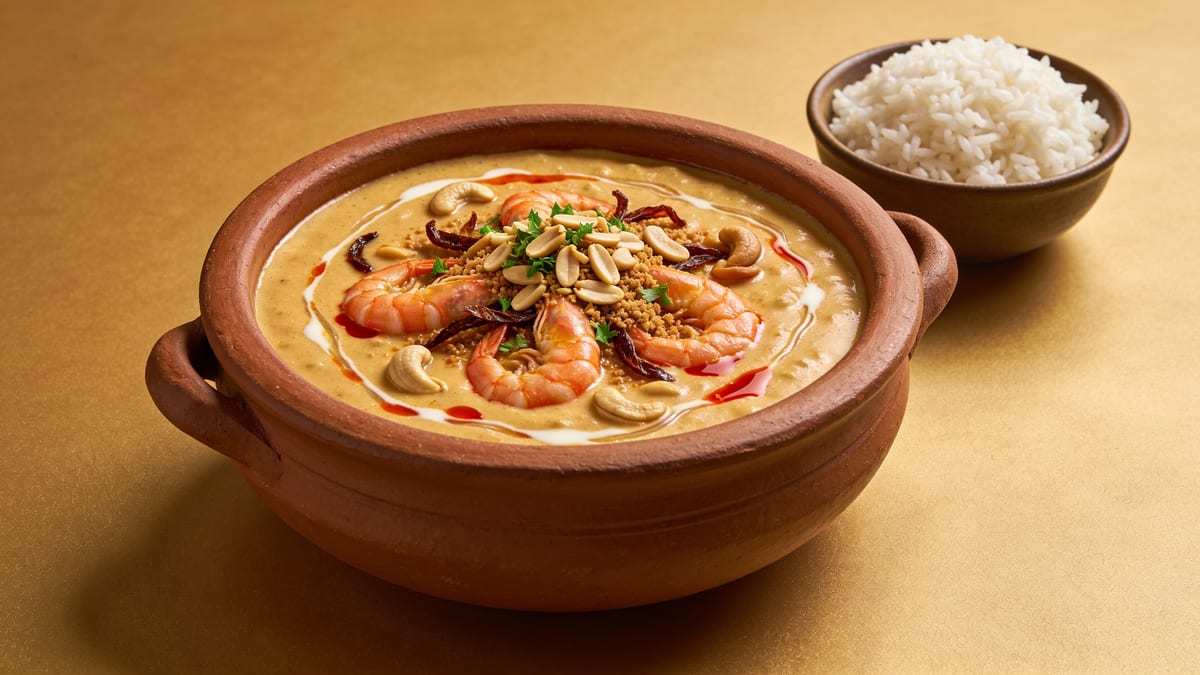
Altbackenes Brot in Kokosmilch einweichen, bis es weich ist. Eine Basis zubereiten, indem man Zwiebel, Knoblauch, Ingwer, Tomate und Kräuter anbrät, dann mit dem eingeweichten Brot, gemahlenen gerösteten Erdnüssen und Cashews, getrockneten Garnelen und mehr Kokosmilch zu einem glatten Püree pürieren. Dieses sanft in einem Topf garen, dabei ständig rühren (es ist dick und setzt leicht an), nach und nach Dendê (rotes Palmöl) und frische Garnelen zugeben, bis es reichhaltig, dick, cremig und glänzend ist und der rohe Geschmack verschwunden ist. Kräftig würzen und heiß mit weißem Reis servieren – oder als Füllung für Acarajé verwenden.
- Das Brot in Kokosmilch einweichen, dann mit den Nüssen und Garnelen zu einer glatten Basis pürieren.
- Sanft garen und ständig rühren – Vatapá ist dick und brennt leicht an.
- Dendê (rotes Palmöl) gibt die authentische Farbe und den Geschmack; nach und nach während des Garens zugeben.
Equipment
- Mixer
- Schwerer Topf
- Holzlöffel
Zutaten
Basis
- 200 g altbackenes Brot, ohne Kruste
- 400 ml Kokosmilch (plus mehr nach Bedarf)
- 1 Zwiebel, 3 Knoblauchzehen, 1 EL geriebener Ingwer, 1 Tomate
- Koriandergrün, Petersilie, Frühlingszwiebel
Nüsse & Garnelen
- 100 g geröstete Erdnüsse, gemahlen
- 60 g Cashews, gemahlen
- Getrocknete Garnelen (eingeweicht) + frische Garnelen
Zum Fertigstellen
- 4 tbsp Dendê (rotes Palmöl)
- Salz; weißer Reis, zum Servieren
Zubereitung
- SCHRITT01
Das altbackene Brot zerreißen und in der Kokosmilch einweichen, bis es vollständig weich und breiig ist.
- SCHRITT02
Die gehackte Zwiebel, den Knoblauch, Ingwer und die Tomate mit den Kräutern in etwas Öl anbraten, bis alles weich und duftend ist.
- SCHRITT03
Das eingeweichte Brot, die angebratene Basis, die gemahlenen Erdnüsse und Cashews, die eingeweichten getrockneten Garnelen und genug Kokosmilch zu einem glatten, dicken Püree pürieren.
- SCHRITT04
Das Püree in einen schweren Topf geben und bei mittlerer bis niedriger Hitze garen, dabei ständig mit einem Holzlöffel rühren (es ist dick und setzt leicht an). Nach und nach das Dendê einrühren und die frischen Garnelen zugeben und weitergaren, bis es dick, cremig, glänzend ist und der rohe Mehl-/Nussgeschmack verschwunden ist, 15–20 Minuten. Kokosmilch zugeben, falls es zu dick ist.
- SCHRITT05
Kräftig mit Salz würzen. Den Vatapá heiß mit weißem Reis (und Acarajé/Abará, wenn du magst) servieren – oder abkühlen lassen, um ihn als Füllung zu verwenden. Mit extra Koriandergrün bestreuen.
Make ahead
Vatapá lässt sich hervorragend vorbereiten – die Aromen verbinden und vertiefen sich, und er wird häufig im Voraus zubereitet, um Acarajé und Abará zu füllen. Mach ihn einen Tag vorher, dann sanft erwärmen (mit Kokosmilch auflockern) zum Servieren oder Füllen. Auch die Nüsse im Voraus rösten und mahlen. Er ist ein natürliches Gericht für große Mengen bei einem bahianischen Buffet.
Storage
Hält sich 3 Tage im Kühlschrank und der Geschmack vertieft sich – Vatapá wird oft im Voraus zubereitet, besonders als Füllung für Acarajé. Kalt wird er sehr dick, also mit etwas Kokosmilch auflockern und sanft unter Rühren erwärmen, um ihn zu einer cremigen Konsistenz zurückzubringen. Er lässt sich passabel einfrieren. Langsam erwärmen, damit er nicht ansetzt.
Variations
Vatapá de galinha
Eine Hühnerversion (Vatapá de frango/galinha) statt oder zusammen mit den Garnelen – beliebt im Norden und Nordosten.
Als Acarajé-Füllung
Vatapá (mit Caruru und Pfeffersauce) zum Füllen der frittierten Acarajé und gedämpften Abará verwenden.
Regional
Rezepte variieren in ganz Bahia und im Nordosten; manche sind dicker, manche flüssiger, mit unterschiedlichen Nussverhältnissen.
Serve with
Nutrition per serving
Nutrition values are estimates based on the metric measurements. Adjust as needed.
Häufige Fragen
Was ist Vatapá?
Vatapá ist ein reichhaltiges, cremiges afro-brasilianisches Püree aus Bahia, aus Brot, das in Kokosmilch eingeweicht und mit gemahlenen Erdnüssen und Cashews, getrockneten und frischen Garnelen, Ingwer und Kräutern püriert und dann mit Dendê (rotem Palmöl) zu einer dicken, herzhaften Paste gegart wird. Es kann als Gericht mit Reis gegessen oder als klassische Füllung für Acarajé und Abará verwendet werden. Es ist eines der Seelengerichte von Salvador, mit afrikanischen und indigenen Wurzeln.
Was ist Dendê und kann ich es ersetzen?
Dendê ist rotes Palmöl – leuchtend orange und erdig im Geschmack – und zentral für die bahianische Küche. Es verleiht Vatapá seine charakteristische Farbe und seinen unverwechselbaren Geschmack. Für Geschmack und Farbton gibt es wirklich keinen echten Ersatz; mit einem anderen Öl gelingt das Gericht zwar, aber es schmeckt nicht authentisch bahianisch. Halte im brasilianischen oder afrikanischen Lebensmittelladen nach Dendê Ausschau. Sparsam verwenden – ein wenig gibt viel Farbe und Geschmack.
Warum muss ich Vatapá ständig rühren?
Vatapá ist ein dickes, stärkehaltiges, nussiges Püree und setzt sich wie Polenta oder eine dicke Béchamel sehr leicht am Topfboden an und brennt an. Es bei mittlerer bis niedriger Hitze zu garen und ständig mit einem Holzlöffel zu rühren, dabei bis an Boden und Ecken zu reichen, hält es glatt und verhindert das Anbrennen. Wird es zu dick, nach und nach mit etwas mehr Kokosmilch auflockern.
Ist Vatapá ein Gericht oder eine Füllung?
Beides. Vatapá wird als eigenständiges Gericht gegessen, heiß mit weißem Reis serviert (und oft neben anderen bahianischen Gerichten wie Caruru und Moqueca). Es ist auch die berühmte cremige Füllung, die von den Baianas in Salvador in aufgeschnittene Acarajé (frittierte Krapfen aus Augenbohnen) und Abará (gedämpfte) gelöffelt wird. Du begegnest ihm also sowohl als Hauptgericht als auch als Herzstück von Bahias ikonischstem Streetfood-Snack.
Kann ich Vatapá ohne Garnelen machen?
Ja – Vatapá de galinha (oder de frango), mit Hühnchen statt Garnelen, ist eine beliebte Version, besonders im Norden und Nordosten Brasiliens (und es ist die Art, die man oft in den berühmten bahianisch geprägten Gerichten anderswo findet). Du kannst auch eine vegetarische Version machen, die für die Fülle auf das Brot, die Kokosnuss, die Nüsse und das Dendê setzt. Die Garnelen (besonders die getrockneten) geben die klassische bahianische Tiefe, aber es lässt sich gut anpassen.
Cooked this? Rate it.
Real ratings from real cooks. We only show a score once enough of you have weighed in — no fabricated stars.