Texas Sheet Cake (pastel de chocolate texano)
Texas sheet cake is a thin, ultra-moist chocolate cake baked in a big rimmed pan and flooded with warm fudge-pecan icing while the cake is still hot. Boiling the butter, cocoa, and water blooms the cocoa for deeper flavor and melts the sugar into a silky batter, while buttermilk keeps the crumb tender. Because the poured icing fuses into the top layer as everything cools, every square tastes half cake, half fudge.
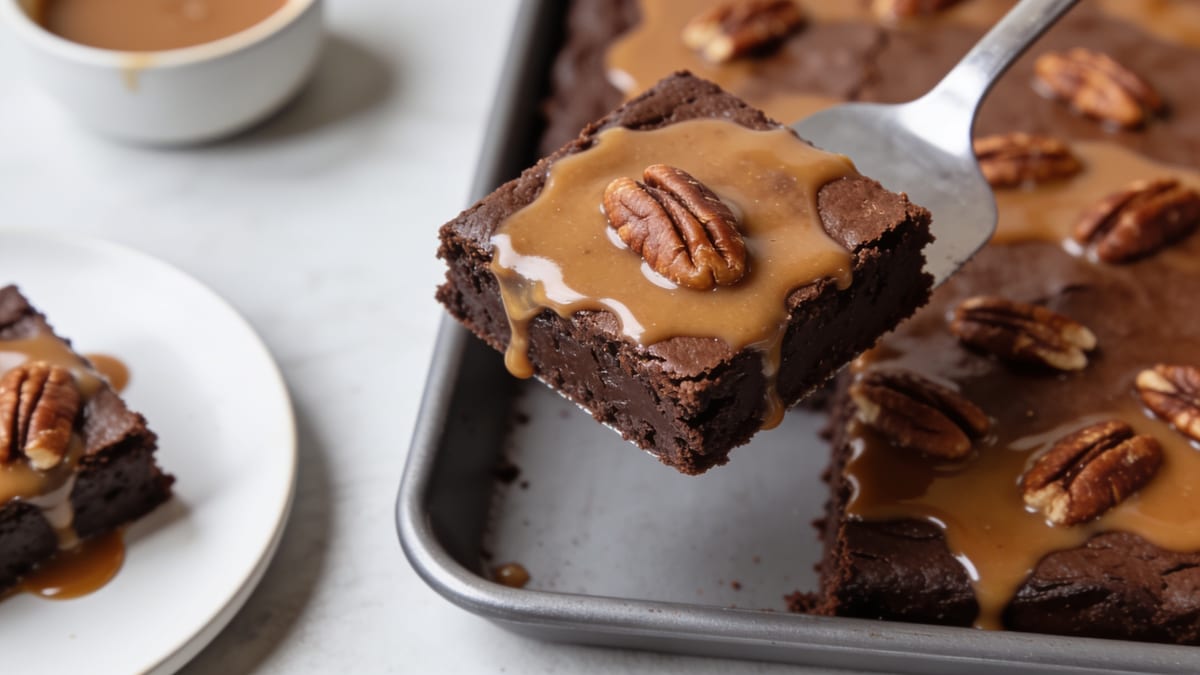
Heat the oven to 350°F (175°C) and grease an 18x13-inch rimmed half sheet pan. Whisk 250 g flour, 400 g sugar, 1 tsp baking soda, and 1/2 tsp salt in a large bowl. Boil 226 g butter with 25 g cocoa and 240 ml water, pour it over the dry mix, and stir; whisk in 120 ml buttermilk, 2 eggs, and vanilla, then spread the thin batter in the pan and bake 18-22 minutes, until a toothpick comes out clean. While it bakes, melt 113 g butter with 25 g cocoa and 80 ml milk, then beat in 450 g sifted powdered sugar, vanilla, and a pinch of salt. Pour the warm icing over the hot cake, spread to the edges, scatter with 110 g toasted pecans, and let set about 30 minutes before slicing into 24 squares.
- Pour the icing while the cake is still hot so it melts into the top and sets with that signature fudgy sheen.
- Sift the powdered sugar and cocoa for the icing; there is no time to whisk out lumps once it thickens.
- Use a rimmed 18x13-inch half sheet pan, not a flat cookie sheet; the batter is pourable and needs sides.
Equipment
- 18x13-inch (46x33 cm) rimmed half sheet pan
- Medium saucepan
- Large mixing bowl
- Whisk
- Fine-mesh sieve
- Offset spatula or rubber spatula
Ingredientes
Cake
- 250 g all-purpose flour, spooned and leveled
- 400 g granulated sugar
- 5 g baking soda
- 3 g fine sea salt
- 226 g unsalted butter, cut into pieces
- 25 g unsweetened natural cocoa powder
- 240 ml water
- 120 ml buttermilk, or 120 ml milk stirred with 1 1/2 tsp vinegar, rested 5 minutes
- large eggs, lightly beaten, room temperature
- 5 ml vanilla extract
Fudge-Pecan Icing
- 113 g unsalted butter
- 25 g unsweetened natural cocoa powder, sifted
- 80 ml whole milk
- 450 g powdered sugar, sifted
- 5 ml vanilla extract
- 1 g fine sea salt
- 110 g pecans, toasted and roughly chopped; optional
Elaboración
- PASO01
Set a rack in the middle of the oven and heat it to 350°F (175°C). Grease an 18x13-inch (46x33 cm) rimmed half sheet pan, or line it with parchment. Spread the pecans on a small tray and toast them in the warming oven for 6-8 minutes, until fragrant; chop and set aside.
- PASO02
In a large mixing bowl, whisk together the flour, granulated sugar, baking soda, and salt until evenly combined. Breaking up any clumps now means the hot cocoa mixture can be stirred in quickly without overmixing.
- PASO03
In a medium saucepan, combine the butter, cocoa powder, and water. Set over medium heat and stir until the butter melts, then bring just to a rolling boil. Immediately remove from the heat; boiling blooms the cocoa and gives the cake its deep chocolate flavor.
- PASO04
Pour the hot cocoa mixture over the dry ingredients and stir with a whisk until mostly smooth. Let it cool for a minute so the eggs will not scramble, then whisk in the buttermilk, beaten eggs, and vanilla until the batter is glossy and pourable, with no dry streaks.
- PASO05
Pour the batter into the prepared pan and tilt or spread it into an even layer. Bake for 18-22 minutes, until the center springs back when lightly pressed and a toothpick inserted in the middle comes out clean or with a few moist crumbs. The layer will be thin, about 2 cm; that is correct.
- PASO06
Wipe out the saucepan and melt the butter with the sifted cocoa and milk over medium heat, stirring, until it just begins to bubble at the edges. Remove from the heat and whisk in the sifted powdered sugar in two or three additions, then the vanilla and salt, until smooth and pourable. Work quickly; the icing thickens as it cools.
- PASO07
As soon as the cake comes out of the oven, pour the warm icing over the entire surface and nudge it to the edges with an offset spatula. Scatter the toasted pecans evenly over the top while the icing is still wet so they anchor as it sets.
- PASO08
Let the cake cool in the pan on a rack until the icing loses its shine and sets to a soft fudge layer, about 30 minutes. Cut into 24 squares with a thin knife, wiping the blade between cuts for clean edges. Serve slightly warm or at room temperature.
Make ahead
This cake is at its best made the day you serve it, since pouring the icing over the hot cake is what creates the fudgy top layer, but it holds beautifully overnight: bake and ice it, cool completely, then cover the pan and leave at room temperature until serving. You can toast and chop the pecans and whisk the dry ingredients up to 2 days ahead. Iced squares also freeze well, so it is a good bake-ahead dessert for parties.
Storage
Cover the pan tightly or move squares to an airtight container and keep at room temperature for up to 3 days; the icing seals in moisture, so it stays soft. Refrigerate for up to 5 days if your kitchen is warm, and bring pieces back to room temperature before serving. For longer storage, freeze fully cooled squares in a single layer, then stack with parchment between layers in a freezer container for up to 3 months; thaw at room temperature for about an hour.
Variations
Cinnamon Texas sheet cake
Whisk 1 teaspoon ground cinnamon into the dry ingredients and add a pinch to the icing. This Mexican-chocolate-leaning version is common in Texas kitchens and pairs especially well with coffee.
Nut-free
Skip the pecans entirely for a tree-nut-free cake; the fudge icing needs no help. If you want texture, scatter toasted sunflower seeds or flaky sea salt over the wet icing instead.
White Texas sheet cake
Omit the cocoa in both cake and icing, swap the water for whole milk, and add 1/2 teaspoon almond extract to the batter. You get a tender vanilla-almond sheet cake with a poured white icing, the classic counterpart served at the same potlucks.
Serve with
Nutrition per serving
Nutrition values are estimates based on the metric measurements. Adjust as needed.
Preguntas frecuentes
What size pan do I need for a Texas sheet cake?
This texas sheet cake recipe is written for an 18x13-inch (46x33 cm) rimmed half sheet pan, which gives the classic thin, fudgy squares. A 15x10-inch jelly roll pan also works; the cake will be a little thicker, so add 3-5 minutes to the bake time. Do not use a flat cookie sheet without sides, because the batter is pourable and will run off.
Why do you pour the icing on while the cake is hot?
The warm icing partially melts into the hot cake's surface, so the two fuse into a soft fudge layer instead of sitting as separate cake and frosting. That melded top is the defining trait of Texas sheet cake. If you wait until the cake is cool, the icing will have stiffened and you will end up spreading a thick frosting rather than pouring a glaze.
Can I make this without buttermilk?
Yes. Stir 1 1/2 teaspoons of white vinegar or lemon juice into 120 ml (1/2 cup) of milk and let it sit for 5 minutes before using. The acidity matters because it reacts with the baking soda for lift and keeps the crumb tender, so plain milk alone is not an equal swap.
Why did my icing turn out grainy or lumpy?
Almost always it is unsifted powdered sugar, or icing that cooled too much before the sugar went in. Sift the powdered sugar and cocoa, whisk them into the hot butter mixture in stages, and pour the icing promptly. If it stiffens before you pour, whisk in warm milk a teaspoon at a time over low heat until it flows again.
What makes a texas sheet cake recipe different from regular chocolate cake?
Three things: the cake is baked thin in a large sheet pan, the batter starts with a boiled butter-cocoa-water mixture instead of creamed butter, and a warm poured icing goes on while the cake is hot. The result is denser and moister than a layer cake, closer to a cross between cake and fudge, and it conveniently feeds about two dozen people from one pan.
Cooked this? Rate it.
Real ratings from real cooks. We only show a score once enough of you have weighed in — no fabricated stars.