Cassoulet — caçarola francesa de feijão branco e carnes
A grande caçarola de cozimento lento do sudoeste da França: feijões brancos cremosos assados por horas com linguiça, porco e confit de pato até ficarem ricos e untuosos, sob uma crosta dourada de farinha de rosca afundada repetidas vezes. Batizado em homenagem à cassole, o recipiente em que é assado, o cassoulet é comida de inverno rústica e profundamente saborosa — um trabalho de amor que recompensa a paciência.
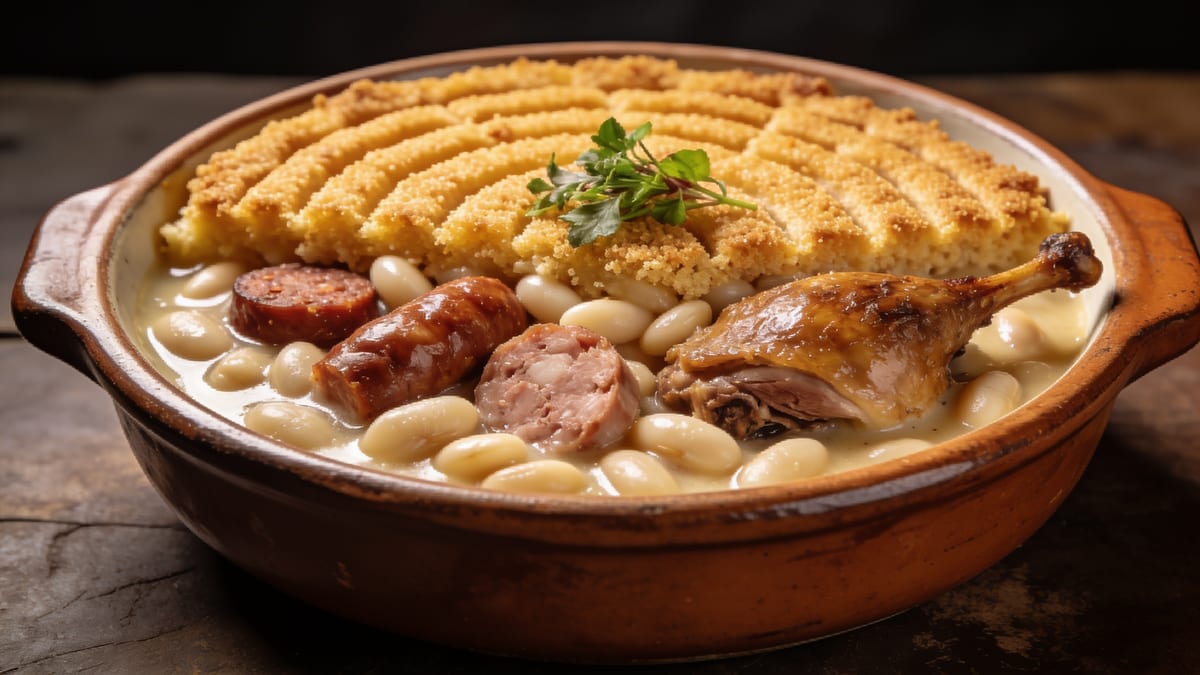
Deixe os feijões brancos secos de molho de um dia para o outro, depois cozinhe-os em fervura branda com aromáticos e pele/caldo de porco até ficarem apenas macios. Doure linguiças de Toulouse e o porco, e deixe o confit de pato à mão. Monte camadas de feijão e carnes em um recipiente fundo, junte conchas do líquido do cozimento do feijão até quase cobrir e asse em forno baixo por algumas horas — afundando várias vezes a crosta que se forma de volta nos feijões, para que um topo dourado vá se construindo enquanto o interior continua cremoso. Deixe descansar antes de servir.
- Use feijões brancos secos (os Tarbais são ideais), de molho e cozidos em fervura branda — eles precisam ficar inteiros e cremosos.
- Doure as carnes e use um líquido de cozimento rico, com gosto de porco; o cassoulet deve ser profundamente saboroso, não aguado.
- Afunde a crosta de farinha de rosca/feijão várias vezes durante o forno para construir um topo dourado.
Equipment
- Panela grande
- Recipiente fundo próprio para forno (cassole) ou panela de ferro
- Frigideira
Ingredientes
Feijões
- 500 g feijões brancos secos (Tarbais ou cannellini), de molho de um dia para o outro
- 1 cebola espetada com cravos, 1 cenoura, bouquet garni
- Um pedaço de pele/couro de porco e/ou um joelho de porco; alho
Carnes
- 4 linguiças de Toulouse (ou linguiças de porco de grão grosso)
- 400 g paleta de porco, em pedaços
- 4 pieces coxas de confit de pato (ou confit)
Crosta e finalização
- Farinha de rosca, para cobrir
- Sal, pimenta-do-reino; líquido do cozimento do feijão reservado
Modo de preparo
- ETAPA01
Escorra os feijões que ficaram de molho e cozinhe-os em fervura branda, em água limpa, com a cebola espetada, a cenoura, o bouquet garni, a pele/joelho de porco e o alho até ficarem apenas macios (sem desmanchar), por cerca de 1 a 1½ hora. Tempere e mantenha os feijões no líquido.
- ETAPA02
Doure bem as linguiças de Toulouse e a paleta de porco. Aqueça o confit de pato só o suficiente para soltar as coxas da gordura.
- ETAPA03
Descarte os aromáticos. Coloque uma camada de feijão em um recipiente fundo, junte as carnes (linguiça, porco, pato), depois o restante dos feijões, aconchegando as carnes. Adicione conchas do líquido de cozimento do feijão até quase cobrir.
- ETAPA04
Asse a 150°C/300°F por 2½ a 3 horas. Conforme uma película se formar por cima, afunde-a de volta nos feijões com as costas de uma colher, várias vezes — a cada vez, uma nova crosta dourada se forma. Junte um pouco do líquido do feijão se parecer seco. Espalhe farinha de rosca por cima para a crosta final.
- ETAPA05
Deixe descansar de 15 a 20 minutos (fica ainda melhor feito na véspera e reaquecido). Sirva direto do recipiente, com pão de casca crocante e uma salada verde.
Make ahead
O cassoulet é a própria definição de prato para fazer com antecedência — muitos cozinheiros insistem que fica melhor feito um ou dois dias antes e reaquecido, o que aprofunda o sabor. Cozinhe por completo, leve à geladeira e depois reaqueça no forno (formando a crosta de novo) para servir.
Storage
Dura 3 dias na geladeira e é famosamente melhor no dia seguinte, quando os sabores se fundem. Reaqueça com cuidado no forno, juntando um pouco de caldo ou do líquido do feijão se estiver seco, e deixe a crosta crocante de novo. Também congela bem.
Variations
Toulouse vs. Castelnaudary
As versões regionais variam — Castelnaudary é o coração do feijão com porco; Toulouse acrescenta a sua linguiça; Carcassonne às vezes acrescenta carneiro.
Simplificado
Use bons feijões brancos em lata e pule o confit, dourando linguiça e porco para uma versão mais rápida (ainda que menos tradicional).
Confit de pato em casa
Faça seu próprio confit de pato com antecedência, ou compre pronto — ele traz a riqueza característica.
Serve with
Nutrition per serving
Nutrition values are estimates based on the metric measurements. Adjust as needed.
Perguntas frequentes
Que feijão devo usar no cassoulet?
Feijões brancos secos — a escolha mais cobiçada é o feijão Tarbais, grande e cremoso, do sudoeste da França, mas cannellini ou outros feijões brancos secos funcionam. Deixe de molho de um dia para o outro e cozinhe em fervura branda até ficarem apenas macios; eles precisam permanecer inteiros e cremosos, sem desmanchar, já que são o coração do prato. Evite feijão em lata na versão tradicional.
Por que afundar a crosta?
Enquanto o cassoulet assa, uma película se forma por cima. Tradicionalmente, você rompe essa crosta e a afunda de volta nos feijões várias vezes durante o cozimento — a cada vez, uma nova crosta dourada se forma, criando camadas de sabor e textura enquanto o interior segue cremoso. É um ritual que define o prato (há quem conte sete vezes).
Preciso de confit de pato?
É tradicional e acrescenta um sabor profundo e rico, sobretudo no estilo de Toulouse. Você pode comprar o confit de pato ou fazer o seu com antecedência. Para um cassoulet mais simples, dá para omiti-lo e contar com a linguiça e o porco, mas o confit é parte do que o torna especial.
Posso fazer o cassoulet com antecedência?
Com certeza — ele possivelmente fica até melhor assim. Cozinhá-lo um ou dois dias antes e reaquecer deixa os sabores se fundirem e se aprofundarem. Reaqueça com cuidado no forno, com um pouco mais de líquido do feijão ou caldo se estiver seco, e forme a crosta de novo. Também congela bem.
Qual a diferença entre as versões regionais?
O cassoulet vem do Languedoc, e três cidades o reivindicam: Castelnaudary (a “original”, porco com feijão), Toulouse (acrescenta a linguiça de Toulouse) e Carcassonne (às vezes acrescenta carneiro ou perdiz). Todas compartilham a base de feijão branco com carnes, assada sob uma crosta; as carnes variam por região.
Cooked this? Rate it.
Real ratings from real cooks. We only show a score once enough of you have weighed in — no fabricated stars.