Injera — pão achatado de fermentação natural etíope
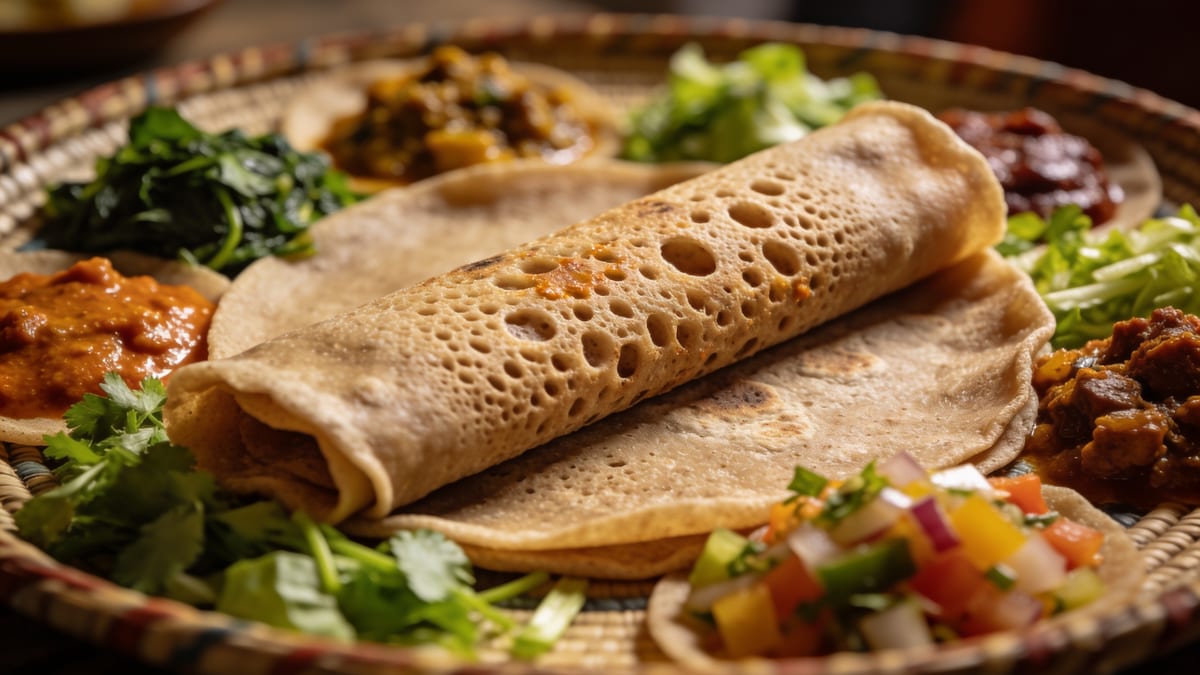
O pão achatado, macio e esponjoso, de fermentação natural, que está no coração de toda refeição etíope e eritreia: uma massa de teff fermentada naturalmente, despejada sobre uma chapa quente e cozida de um lado só até firmar como uma panqueca levemente azeda, flexível e cheia de furinhos. A injera é prato, talher e pão ao mesmo tempo — você rasga pedaços para pegar os ensopados (wot) e os legumes dispostos sobre uma travessa comunitária. Seu leve azedinho e seus "olhos" aerados vêm de dias de fermentação selvagem.
Misture farinha de teff com água até formar uma massa líquida e deixe fermentar em temperatura ambiente por 2–4 dias, mexendo, até ficar borbulhante, crescida e agradavelmente azeda (é essa fermentação selvagem que faz a injera). Mexa a massa fermentada — às vezes cozinhando uma pequena parte até virar o "absit", um mingau quente que é incorporado de volta —, até obter uma consistência fina, fácil de despejar. Despeje em espiral sobre uma chapa quente e seca (mitad), tampe e cozinhe de um lado só — nunca vire — até a superfície firmar, ficar opaca e coberta de pequenos "olhos" (furinhos). Retire a injera macia e esponjosa e deixe esfriar.
- Fermente a massa de teff por dias, até ficar borbulhante e azeda — esse azedinho e os "olhos" furadinhos definem a injera.
- Cozinhe de um lado só, com tampa, em chapa quente — injera nunca se vira.
- As bolhas ("olhos") pela superfície mostram que a fermentação e o despejo foram bem feitos.
Equipment
- Tigela grande (para fermentar)
- Frigideira antiaderente larga ou chapa mitad com tampa
- Concha
Ingredientes
Massa
- 400 g farinha de teff (de preferência, para uma injera autêntica)
- 750 ml água (e mais um pouco para ajustar)
- Pitada de sal
Modo de preparo
- ETAPA01
Misture bem a farinha de teff com a água até obter uma massa lisa e fina. Cubra frouxamente e deixe fermentar em temperatura ambiente por 2–4 dias, mexendo uma vez por dia, até ficar borbulhante, crescida e com um cheiro agradavelmente azedo. (Um líquido se forma na superfície — descarte a maior parte.)
- ETAPA02
Mexa a massa fermentada e acrescente água, se necessário, até chegar a uma consistência fina, fácil de despejar. (Tradicionalmente, uma pequena parte é cozida com água até virar uma pasta grossa, o "absit", que é incorporada de volta para melhorar a textura.) Junte uma pitada de sal.
- ETAPA03
Aqueça uma frigideira antiaderente larga ou a mitad em fogo médio até ficar bem quente. Ela deve estar seca (sem óleo) — passe um pano de leve, se preciso.
- ETAPA04
Despeje a massa sobre a chapa quente em uma espiral fina, de fora para dentro (ou de dentro para fora), cobrindo a superfície. Não espalhe com nenhum utensílio.
- ETAPA05
Tampe e cozinhe — sem virar — até a superfície passar de brilhante a opaca e ficar coberta de furinhos ("olhos"), com as bordas se soltando, 2–3 minutos. Deslize a injera macia para esfriar sobre um pano. Repita. Nunca vire a injera.
Make ahead
A fermentação já é, por si só, um preparo antecipado de vários dias — planeje com 2–4 dias de antecedência. Você pode manter uma massa sempre fermentando e fazer injeras conforme a necessidade. A injera pronta é melhor fresca, mas aguenta um ou dois dias; muitos cozinheiros fazem uma fornada grande para uma festa. Mantenha a massa como uma cultura de fermentação contínua se fizer injera com frequência.
Storage
É melhor no dia em que é feita, macia e flexível. Empilhe as injeras já frias com um pano ou papel-manteiga entre elas e mantenha cobertas; duram um ou dois dias em temperatura ambiente e vão firmando com o tempo (use as mais firmes para forrar travessas ou para o ful). A massa fermentada se conserva na geladeira e pode ser realimentada. Não leve a injera pronta à geladeira sem cobrir, pois ela resseca.
Variations
Mistura de teff
Fora da Etiópia, o teff às vezes é misturado com farinha de trigo, cevada ou arroz (atenção: misturas com trigo não são sem glúten).
Versão rápida (com fermento)
Algumas receitas mais rápidas usam um pouco de fermento biológico ou levain para acelerar a fermentação, embora a injera tradicional fermente naturalmente ao longo de dias.
Teff puro (sem glúten)
Feita com 100% teff, a injera é naturalmente sem glúten — use apenas farinha de teff para mantê-la assim.
Serve with
Nutrition per serving
Nutrition values are estimates based on the metric measurements. Adjust as needed.
Perguntas frequentes
O que é teff, e é obrigatório usar?
O teff é um grão ancestral minúsculo e nutritivo, nativo da Etiópia e da Eritreia, e a injera autêntica é feita com farinha de teff, que dá o sabor, a cor e a fermentação característicos. Ele é naturalmente sem glúten. Fora da região, o teff pode ser misturado com trigo ou outras farinhas (o que deixa de ser sem glúten), mas 100% teff resulta na injera mais autêntica — e sem glúten.
Por que a injera precisa fermentar por dias?
A longa fermentação selvagem (normalmente 2–4 dias) é o que dá à injera seu sabor azedinho característico e a estrutura borbulhante que forma os "olhos" (furinhos) pela superfície. Leveduras e bactérias presentes naturalmente levedam e acidificam a massa com o tempo. Uma fermentação mais curta dá um resultado mais sem graça e denso; a paciência produz a verdadeira injera esponjosa e azedinha.
Por que a injera só é cozida de um lado?
A injera é despejada em camada fina e cozida, tampada, de um lado só — nunca virada. O vapor preso sob a tampa cozinha a parte de cima, enquanto as bolhas que sobem da massa fermentada criam os característicos "olhos" furadinhos na superfície. Virá-la achataria esses olhos e arruinaria a textura macia e esponjosa. O lado cozido fica liso; o lado com olhos fica para cima.
Como se come injera?
Ela é o prato, o pão e o talher, tudo em um. A injera é estendida sobre uma grande travessa comunitária, e os ensopados (wot), como doro wat, lentilhas, shiro e legumes, são servidos por cima. Cada um rasga pedaços de injera com a mão direita e os usa para pegar a comida — sem precisar de talheres. Injeras extras, enroladas, são servidas à parte.
O que são os "olhos" da injera?
Os "olhos" são os pequenos furos que se formam pela superfície enquanto a massa fermentada cozinha e suas bolhas sobem e estouram. São o sinal de uma massa bem fermentada e de um cozimento correto, e dão à injera sua textura esponjosa e sua capacidade de absorver os molhos. Uma boa injera é coberta de olhos finos por igual.
Cooked this? Rate it.
Real ratings from real cooks. We only show a score once enough of you have weighed in — no fabricated stars.