Bossam — Korean Boiled Pork Belly Wraps
A celebrated Korean dish of pork belly gently boiled with aromatics — doenjang, ginger, garlic, scallion, sometimes coffee or onion — until meltingly tender, then sliced and served to be wrapped at the table. You take a leaf of napa cabbage or perilla, lay in a slice of warm pork, a dab of pungent ssamjang or salted shrimp (saeujeotgal), a piece of spicy radish salad or fresh kimchi, and eat the whole bundle in one bite. Lean yet luscious, savoury and fresh all at once, bossam is festive, communal food — the centrepiece of gatherings and traditionally made during kimchi-making season (kimjang).
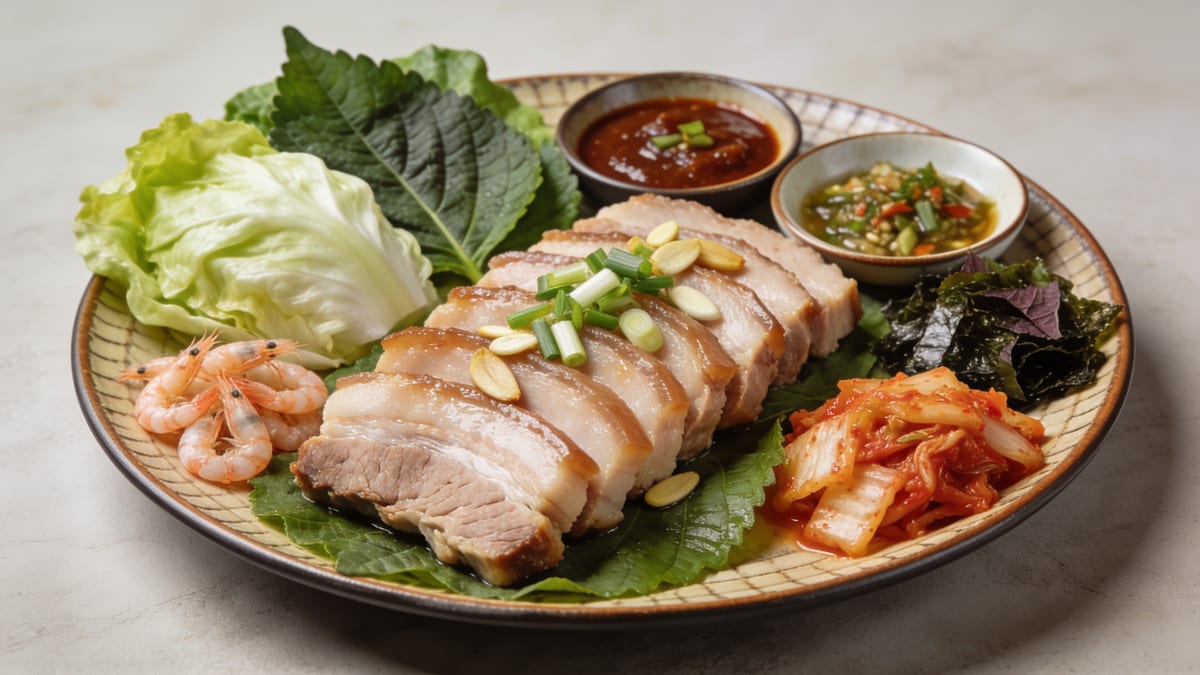
Simmer a piece of pork belly (skin off or on) gently in water flavoured with doenjang (soybean paste), ginger, garlic, scallion, onion and peppercorns — many cooks add a spoon of instant coffee or some soju, which deepen the colour and tame any porky smell — until completely tender, about an hour to ninety minutes. Don't boil it hard; a gentle simmer keeps it moist. Let it rest, then slice the warm pork into thin pieces. Serve it with leaves for wrapping (napa cabbage, perilla, lettuce), ssamjang, salted shrimp (saeujeot) for dipping, a spicy seasoned radish or cabbage salad (musaengchae), and kimchi. Everyone wraps their own bite. The pork should be tender and clean-tasting, not greasy.
- Simmer the pork belly gently (not a hard boil) with doenjang and aromatics until fully tender, so it stays moist.
- A spoon of coffee or some soju/onion in the water deepens the colour and removes any porky odour.
- Serve as a DIY wrap: leaves, ssamjang, salted shrimp, spicy radish salad and kimchi — everyone builds their own.
Equipment
- Large pot
- Knife (to slice)
المكونات
Pork
- 800 g pork belly, in one piece
- 2 tbsp doenjang; ginger, garlic, scallion, ½ onion
- Peppercorns; 1 tsp instant coffee or a splash of soju (optional)
To wrap & serve
- Napa cabbage leaves, perilla leaves, lettuce
- Ssamjang; saeujeot (salted shrimp); musaengchae (spicy radish salad); kimchi
الطريقة
- خطوة01
Bring a large pot of water to a boil with the doenjang, smashed ginger and garlic, scallion, onion and peppercorns (and the coffee or soju, if using, to deepen colour and remove any smell).
- خطوة02
Add the pork belly, return to a gentle simmer, and cook — not at a hard boil — until completely tender when pierced, about 60–90 minutes depending on thickness. Keep it at a gentle simmer so the meat stays moist.
- خطوة03
Lift out the pork and let it rest for a few minutes (some press it briefly under a weight for neater slices). It's served warm, not piping hot.
- خطوة04
Slice the warm pork belly into thin, bite-size pieces across the layers of meat and fat.
- خطوة05
Arrange the sliced pork with napa cabbage and perilla leaves, ssamjang, a little dish of salted shrimp (saeujeot), spicy radish salad and kimchi. To eat, lay pork and condiments on a leaf, wrap, and eat in one bite. Each person builds their own.
Make ahead
You can boil the pork ahead — it keeps a couple of days and reheats well by steaming or warming in its broth — which makes bossam convenient for entertaining, since the slicing and table setup are quick. The radish salad (musaengchae) and condiments can be made ahead too. For the best texture, slice the pork warm and serve soon after, with all the wrapping components laid out fresh.
Storage
Bossam pork is best warm and freshly sliced, but leftovers keep 2–3 days refrigerated. Reheat the sliced pork gently — a quick steam or a brief simmer in a little of the poaching broth keeps it moist (microwaving can dry it out). The poaching broth can be saved and reused or used as a base for soup. Prepare the wrapping greens, radish salad and condiments fresh. Cold leftover bossam is also good in fresh wraps.
Variations
Gul-bossam
Served with fresh raw oysters, a luxurious winter version that pairs the pork with briny oysters in the wrap.
Different greens
Wrap in napa cabbage, perilla, lettuce, or even the pickled wrappers from making kimchi.
Bo ssam (restaurant style)
Some serve a roasted/braised version, but the classic home bossam is gently boiled.
Serve with
Nutrition per serving
Nutrition values are estimates based on the metric measurements. Adjust as needed.
الأسئلة الشائعة
What is bossam?
Bossam is a Korean dish of pork belly boiled with aromatics until tender, then sliced and eaten wrapped in leaves at the table. You take a leaf of napa cabbage, perilla or lettuce, add a slice of pork, ssamjang (seasoned soybean paste), salted shrimp, spicy radish salad and kimchi, and eat the bundle in one bite. The name comes from 'ssam' (to wrap). It's a communal, festive dish — lean and clean-tasting rather than greasy — traditionally made during kimjang, the autumn kimchi-making, when fresh kimchi is on hand.
How do I keep the pork from tasting or smelling porky?
Korean cooks boil the pork in an aromatic broth specifically to remove any porky odour and add flavour: doenjang (soybean paste), ginger, garlic, scallion, onion and peppercorns are standard, and many add a spoonful of instant coffee or a splash of soju, which deepen the colour and neutralise the smell. Simmering gently (rather than a hard boil) and using fresh pork also helps. The result should taste clean, savoury and tender — not gamey or greasy.
What do you serve and wrap bossam with?
The classic accompaniments are leaves for wrapping (napa cabbage, perilla, lettuce), ssamjang for dabbing, saeujeot (salted fermented shrimp) for dipping, a spicy seasoned radish or cabbage salad called musaengchae or bossam-kimchi, and regular kimchi. To eat, you lay a slice of pork and a little of each condiment on a leaf, wrap it up and eat it whole. The fresh, spicy, briny condiments balance the rich pork, which is the whole point of the dish.
What is saeujeot and is it necessary?
Saeujeot is salted, fermented tiny shrimp — a salty, briny, umami-packed Korean condiment that's the traditional dip for bossam pork. A little goes a long way; its sharp saltiness cuts the richness of the pork beautifully and is considered the classic pairing. It's not strictly mandatory — you can use ssamjang alone — but saeujeot is what many Koreans consider essential to authentic bossam. You'll find it at Korean groceries; use sparingly.
Can I make bossam with a leaner cut?
Pork belly is traditional and prized because the layers of fat keep it succulent and give that melt-in-the-mouth quality after boiling. You can use a leaner cut like pork shoulder (it'll still be tasty and a bit less rich), but very lean cuts can turn dry, so they need careful, gentle simmering and shouldn't be overcooked. Part of bossam's appeal is that boiling renders some fat, leaving the belly tender but cleaner-tasting than fried pork — so belly really is the ideal cut.
Cooked this? Rate it.
Real ratings from real cooks. We only show a score once enough of you have weighed in — no fabricated stars.