Pastéis de Nata — Portuguese Custard Tarts
Lisbon's famous custard tart: a shatteringly crisp, laminated puff-pastry shell holding a silky cinnamon-and-lemon-scented custard, baked in a blistering oven until the top is scorched in signature dark caramel spots.
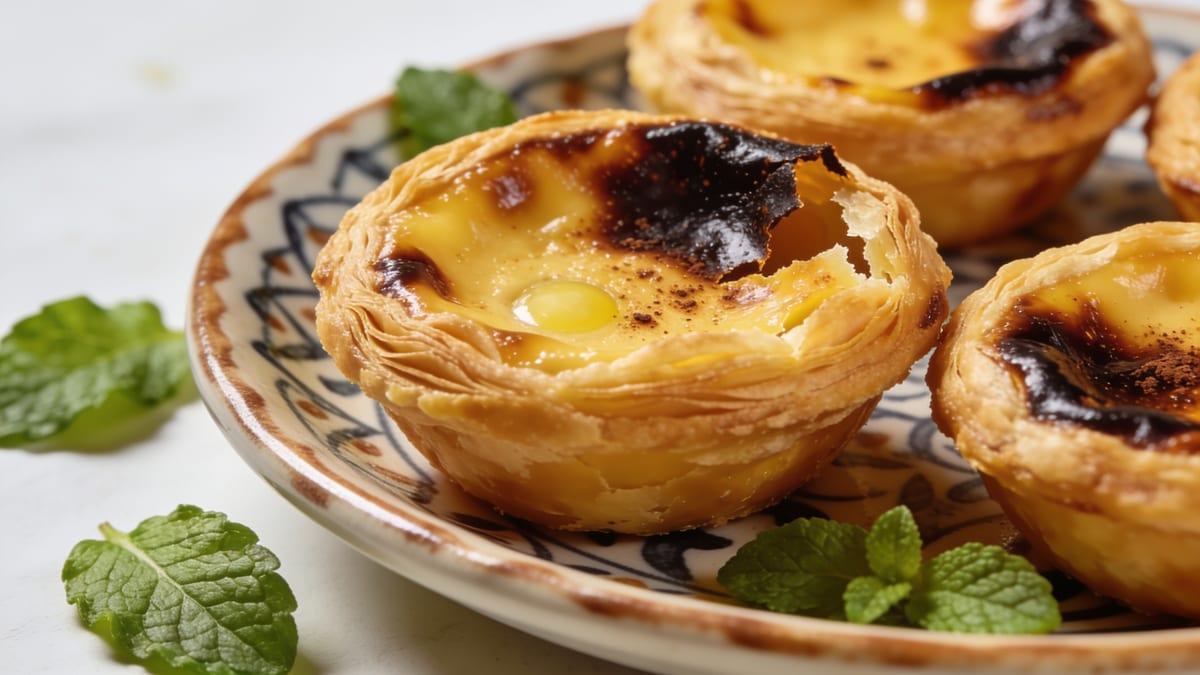
Roll puff pastry into a tight spiral, slice into discs, and press each into a muffin tin to form a shell with a high rim. Make a custard by whisking egg yolks into a hot sugar syrup combined with a flour-thickened milk infused with cinnamon and lemon. Fill the shells two-thirds, and bake in the hottest oven you have (250–290°C) until the pastry is crisp and the tops blister black.
- The oven must be as hot as it goes (ideally 270°C+) — the signature scorched tops need ferocious top heat.
- Roll the pastry into a spiral and cut discs, so the shell bakes up in flaky concentric layers with a tall rim.
- Cook the custard base to just-thickened and strain it silky — and don't overfill the shells.
Equipment
- 12-hole muffin tin
- Saucepan
- Whisk
- Sieve
- Rolling pin
المكونات
Shells
- 320 g all-butter puff pastry, good quality
- Flour, for dusting
Custard
- 200 g sugar
- 120 ml water
- 1 cinnamon stick
- 1 strip lemon peel
- 30 g plain flour
- 300 ml whole milk
- 6 egg yolks
- 5 ml vanilla extract
الطريقة
- خطوة01
Roll the puff pastry sheet up into a tight log. Cut into 12 equal discs. Place each cut-side up in a muffin hole and, with a wet thumb, press it out and up the sides into a thin shell with a rim slightly above the tin. Chill while you make the custard.
- خطوة02
Combine the sugar, water, cinnamon stick, and lemon peel in a saucepan. Heat to 100–105°C / boil gently for a few minutes to a light syrup. Remove from heat; discard cinnamon and peel.
- خطوة03
Whisk the flour with a little of the cold milk to a smooth slurry, then whisk in the rest of the milk. Heat, whisking constantly, until it thickens to a smooth paste, 2–3 minutes.
- خطوة04
Pour the hot syrup into the thickened milk in a thin stream, whisking. Let it cool slightly, then whisk in the egg yolks and vanilla. Strain through a sieve for a perfectly silky custard. It should be pourable.
- خطوة05
Heat the oven as hot as it goes — ideally 270–290°C / 520–550°F, or your max. Fill each chilled shell about two-thirds with custard (it rises). Bake 10–15 minutes until the pastry is deep golden and crisp and the custard tops are blistered with dark caramel spots.
- خطوة06
Let the tarts cool a few minutes in the tin, then lift out. Eat warm, dusted with cinnamon and a little icing sugar — the way they're served in Lisbon.
Make ahead
Shape and chill the shells and make the custard a few hours ahead, kept separate. Fill and bake just before serving — the crisp-shell-to-soft-custard contrast is the whole point and doesn't survive long.
Storage
Best within hours of baking, while the pastry is crisp. They keep a day at room temperature but soften. Re-crisp briefly in a hot oven; never refrigerate (it makes the pastry soggy).
Variations
Quick version
Use store-bought all-butter puff pastry (as here) for a weeknight-feasible tart. Lisbon bakeries use a special laminated dough, but good puff gets you most of the way.
Orange-scented
Infuse the syrup with orange peel instead of (or with) lemon for a citrusy twist.
Extra-torched
If your oven won't scorch the tops, finish them under a hot broiler or with a kitchen torch for the classic black-spotted look.
Serve with
Nutrition per serving
Nutrition values are estimates based on the metric measurements. Adjust as needed.
الأسئلة الشائعة
Why does my oven not scorch the tops?
Most home ovens don't get as hot as the 350°C+ commercial ovens in Lisbon. Crank yours to its maximum (ideally 270–290°C), bake on a high shelf, and if needed finish the tops under a hot broiler or with a blowtorch to get the signature blistered dark spots.
Can I use store-bought puff pastry?
Yes — good all-butter puff pastry makes excellent pastéis de nata at home. The traditional dough is a special laminated pastry, but rolling store-bought puff into a spiral and cutting discs gives you the flaky, layered shell with far less work.
Why roll the pastry into a spiral?
Cutting discs from a rolled log means the layers run in concentric circles. When pressed into the tin and baked, they puff into the characteristic flaky, shattering rim that holds the custard — quite different from just pressing in a flat round.
My custard is lumpy or eggy — what happened?
Either the milk wasn't whisked smooth while thickening, or the yolks scrambled when the hot syrup was added too fast. Whisk constantly, add the syrup in a thin stream, and always strain the finished custard through a sieve for silkiness.
Should I eat them warm or cold?
Warm, ideally within an hour or two of baking, dusted with cinnamon — that's how they're served in Lisbon, when the pastry still shatters and the custard is soft. They lose their magic in the fridge, so don't refrigerate.
Cooked this? Rate it.
Real ratings from real cooks. We only show a score once enough of you have weighed in — no fabricated stars.